Flange Installation Errors: Common Mistakes & Prevention Tips

Flanges are critical components in piping systems, providing a reliable connection point for pipelines, valves, and equipment. However, improper installation can lead to leaks, operational downtime, and safety hazards.

Understanding common flange installation mistakes and how to avoid them ensures optimal system performance and longevity.

Flange Installation Mistakes and Their Prevention Tips

Installing flanges correctly is critical for the safety and efficiency of your piping system. Incorrect installation can lead to leaks, operational downtime, and equipment damage. To ensure optimal performance, always use high-quality flanges, which meet global standards and provide reliable connections.

Below are the most frequent flange installation mistakes and their recommended prevention techniques.

Misalignment of Flanges

One of the most frequent errors in flange installation is misalignment. Improper alignment can cause uneven stress distribution, leading to gasket failure and pipeline leaks. Always ensure flanges are aligned both axially and radially before tightening bolts.

Causes of Misalignment

Misalignment often occurs due to pipe sag, thermal expansion, or inaccurate fabrication. Using laser alignment tools or proper measuring techniques can help maintain precise flange positioning.

Prevention Techniques

  • Inspect flange faces for damage before installation
  • Use alignment pins or guide rods for large flanges
  • Gradually tighten bolts in a cross pattern to avoid twisting.

For projects requiring precise fit and alignment, a slip-on flange can simplify installation and improve system reliability.

Incorrect Gasket Selection

Choosing the wrong flange gasket is another common issue. Gaskets must match the pressure rating, material compatibility, and flange type to prevent leaks. Using a gasket with insufficient chemical resistance can lead to premature failure.

Material Considerations

Select gaskets based on media type, temperature, and pressure. For example, PTFE gaskets are ideal for corrosive chemicals, while spiral wound gaskets suit high-pressure systems.

Installation Best Practices

Ensure the gasket is centered properly and avoid over-compressing, as both can compromise sealing integrity. Always follow manufacturer torque specifications for bolting. For safely sealing closed ends, consider using blind flanges designed for leak-proof performance.

Improper Bolt Tightening

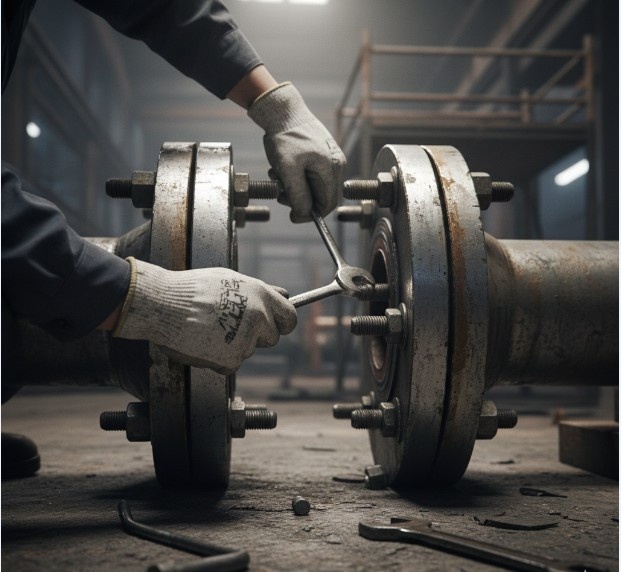
Bolt tightening errors, such as uneven torque or using the wrong bolt material, frequently cause flange leaks.Both extremes are harmful: over‑tightening crushes gasket material, under‑tightening leaves inadequate clamping force.

Using a calibrated torque wrench and a criss‑cross tightening pattern (often across three stages: 30%, 60%, and 100% of target torque) ensures uniform compression. This method distributes load evenly and reduces stress concentrations that can warp flanges.

Torque Techniques

  • Use a calibrated torque wrench
  • Tighten bolts incrementally in a cross pattern
  • Apply lubricant where specified to achieve uniform torque

Surface Damage and Contamination

Flange faces must be clean and free from scratches, nicks, or debris. Surface imperfections compromise gasket sealing, leading to pressure loss or chemical leaks.

Inspection Guidelines

  • Examine flange faces visually and with feeler gauges
  • Clean surfaces with non‑abrasive tools and approved solvents
  • Avoid handling flanges with bare hands to reduce contamination

Ignoring Thermal Expansion and Pipe Stress

Temperature changes cause materials to expand and contract, which affects bolt preload and gasket compression over time. This is especially pronounced in high‑temperature or cyclic conditions.

Failure to consider thermal expansion or external pipe stresses can warp flanges and stress the connection. This is especially critical in steam, chemical, or high-temperature pipelines.

Mitigation Strategies

  • Use expansion joints where appropriate
  • Support pipes to minimize stress on flanges
  • Conduct stress analysis during system design

Skipping Retorquing After Initial Operation

Gaskets can relax after 24 hours or post-heating cycles, reducing joint compression and sealing efficiency.

How to Prevent Retorquing Problems

  • Re-check bolt torque after 24 hours or after the system reaches operating temperature
  • Follow manufacturer’s retorque schedule for optimal performance

Overlooking Flange Standards and Ratings

Flanges come in various standards such as ANSI, DIN, and JIS. Installing a flange that does not meet system pressure or temperature ratings can lead to catastrophic failures. For high-pressure or welded connections, a socket weld flange ensures long-term durability and reliability.

Compliance Tips

  • Verify flange pressure class matches system requirements
  • Check material certifications and traceability
  • Document installation to ensure regulatory compliance

Best Practices for Flange Installation

  • Inspection: Always check flanges, bolts, and gaskets for defects before installation
  • Use Correct Tools: Calibrated torque wrenches and proper-sized tools ensure accuracy
  • Documentation: Record torque, alignment, and material info for compliance and maintenance
  • Training: Ensure staff are trained in best practices for bolt tightening, gasket handling, and alignment

FAQs

What is the most common flange installation mistake?

The most frequent error is uneven bolt tightening, leading to unequal gasket compression and leaks if not corrected. Uniform torque application in a cross pattern minimizes this risk.

How often should flange bolts be retightened after installation?

Flange bolts should be checked and possibly retorqued after initial startup and thermal cycling, especially in high‑temperature systems. Regular maintenance schedules help maintain seal integrity.

Can I reuse a gasket during flange reinstallation?

No; once compressed, gaskets lose elasticity and sealing ability, increasing the risk of leaks when reused. Always install a new gasket for reliable sealing.

What torque sequence should be used for flange bolts?

Always tighten flange bolts in a star or criss‑cross pattern and do it incrementally to ensure even gasket compression and prevent joint distortion.

Conclusion

Proper flange installation is essential for ensuring safety, preventing leaks, and maintaining the efficiency of piping systems. Addressing bolt tightening, gasket selection, flange alignment, torque accuracy, surface condition, and thermal expansion minimizes operational failures and extends equipment life. Following best practices, performing inspections, and using the right tools ensures reliable, long-term performance.

Sourcing from a trusted supplier guarantees quality and consistency, and K. Hashim LLC is a leading flange and coupling supplier in the UAE, providing premium components and expert guidance for industrial, chemical, and marine applications.

Contact our technical specialists to ensure the right solution for maximum operational efficiency.

Explore More Expert Insights

Explore our expert insights to stay updated on the latest piping solutions, flange types, and industrial best practices.

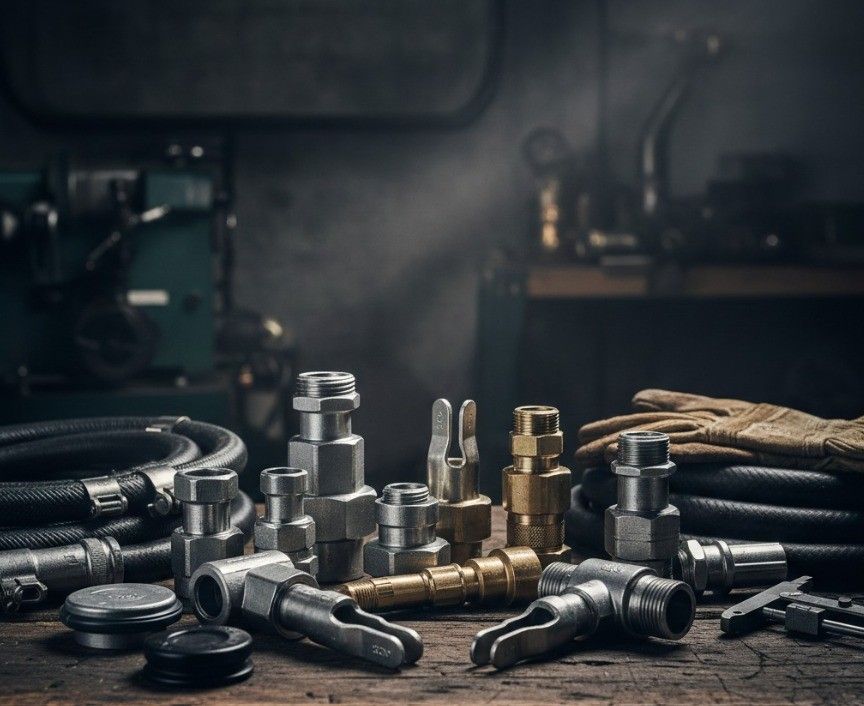
Complete Guide to Camlock Couplings: How They Work & Applications

Camlock couplings are critical components in fluid handling systems, widely used across industries such as chemical, petroleum, and food processing. Their design ensures quick, secure, and leak-free connections, enabling efficient transfer of liquids, powders, and gases.

Understanding the types, materials, and applications of camlock couplings can help businesses choose the right solution for safety and operational efficiency.

What Are Camlock Couplings?

Camlock couplings, also known as cam and groove fittings, are mechanical connectors that join hoses and pipelines without the need for tools. They feature a cam arm mechanism that locks the male and female ends together, providing a reliable seal. These fittings are designed to withstand high pressure and frequent disconnections, making them indispensable in industrial operations.

Key Components of Camlock Couplings

  • Cam Arms: Lever mechanisms that lock the coupling securely.
  • Gasket: Creates a leak-proof seal, typically made from EPDM, Nitrile, or PTFE.
  • Female Coupler: Receives the male adapter and houses cam arms.
  • Male Adapter: Inserts into the female coupler for connection.
  • Body Material: Stainless steel, aluminum, or brass options are chosen based on fluid type and pressure.

Types of Camlock Couplings

Camlock couplings are categorized based on end connections and material compatibility:

  • Type A: Female coupler to male NPT thread
  • Type B: Female coupler to male adapter
  • Type C: Male adapter to female coupler
  • Type D: Female coupler to female coupler
  • Type E: Male adapter to male NPT thread
  • Type F: Female coupler to male adapter with threads

Each type serves specific industrial requirements, including chemical transport, petroleum, and food-grade applications.

Materials Used in Camlock Couplings

Selecting the right material ensures durability, safety, and operational efficiency:

  • Stainless Steel 304 & 316: These couplings are widely used in chemical, marine, and food-grade applications because of their corrosion resistance and strength. For example, SS camlocks are commonly installed in high-pressure chemical lines where hygiene and durability are critical.
  • Aluminum: Lightweight and resistant to corrosion, aluminum couplings are ideal for low-pressure water or irrigation systems, providing easy handling without compromising performance. Aluminium Camlocks are frequently selected for portable fluid transfer setups and temporary connections.
  • Brass: Known for excellent compatibility with petroleum and chemical fluids, brass couplings provide long-lasting, leak-proof connections in fuel distribution or lubrication systems. Brass Camlocks are often used in industrial fuel lines and chemical transfer setups.
  • Polypropylene: Resistant to acids, alkalis, and many industrial chemicals, polypropylene couplings are used in agriculture and food processing applications, especially where lightweight, corrosion-resistant fittings are needed.

Material choice depends on factors such as fluid type, temperature, and environmental exposure.

How Camlock Couplings Work

The operation of camlock couplings is simple yet highly effective. The cam arms on the coupler are pulled back to allow insertion of the adapter, then closed to lock it in place. This mechanism creates a secure, leak-proof connection without tools.

Key functional aspects include:

  • Quick connect and disconnect capabilities for fast operations
  • Sealing gaskets that prevent leaks and contamination
  • Pressure handling to maintain system integrity under varying loads

Regular inspection and cleaning of gaskets ensure long-term reliability and prevent costly downtime.

Applications of Camlock Couplings

Industries relying on efficient fluid transfer benefit significantly from camlock couplings:

Chemical Processing

Camlock couplings are widely used in chemical plants to transfer acids, solvents, and other reactive fluids safely, minimizing spillage and contamination risks.

Agriculture

In agriculture, camlocks facilitate efficient irrigation and fertilizer distribution, allowing quick setup and secure hose connections for large-scale operations.

Petroleum and Fuel Distribution

These couplings ensure leak-free handling of petroleum, diesel, and other fuels, providing safe and reliable fluid transfer in transport and storage systems.

Food and Beverage

Stainless steel camlocks are ideal for food-grade applications, maintaining sanitary conditions while transferring liquids like juices, oils, and dairy products.

Marine and Offshore

Marine and offshore operations rely on corrosion-resistant camlocks for water, fuel, and chemical lines, ensuring durability in harsh environments.

Selecting the correct type and material ensures operational efficiency and compliance with industry standards.

Advantages of Using Camlock Couplings

Camlock couplings offer several operational benefits:

  • Reduce installation time with tool-free connections
  • Provide reliable leak-proof performance
  • Compatible with a wide range of fluid types
  • Easy to clean and maintain, ensuring hygiene in food applications
  • Durable under high pressure and harsh environments

These advantages make camlock couplings an industry-standard solution for many fluid handling systems.

Maintenance and Safety Tips

Proper maintenance of camlock couplings extends lifespan and ensures safety:

  • Inspect gaskets regularly for wear and tear
  • Ensure cam arms operate smoothly without obstruction
  • Clean after each use to prevent chemical or microbial build-up
  • Avoid using damaged or mismatched couplings to prevent leaks or system failure

Following these guidelines enhances system reliability and reduces operational risks.

Choosing the Right Camlock Coupling

When selecting a camlock coupling, consider:

  • Material Compatibility: Ensure the coupling material is resistant to the specific fluid being transferred, whether it’s chemicals, fuel, or food-grade liquids.
  • Operating Pressure and Temperature: Select a coupling that can withstand the system’s pressure levels and temperature ranges to maintain safety and performance.
  • Coupling Type: Choose the appropriate type based on hose or pipe configuration, such as Type A, B, C, D, E, or F, for a secure and efficient connection.
  • Frequency of Use: Consider how often the coupling will be connected and disconnected; high-use applications require more durable materials and design.

Selecting the correct specifications helps prevent operational delays, reduces maintenance issues, and ensures long-term system performance.

Future Trends & Innovations in Camlock Couplings (2026 Update)

The camlock coupling industry is evolving rapidly to meet growing demands for efficiency, safety, and sustainability. New innovations focus on advanced materials, such as high-performance polymers and corrosion-resistant alloys, which extend service life and reduce maintenance costs.

Smart coupling technologies are emerging, integrating IoT sensors to monitor pressure, flow, and connection integrity in real time, enabling predictive maintenance and minimizing downtime. Environmental sustainability is also a priority, with eco-friendly manufacturing processes and recyclable materials gaining traction in industrial applications.

Additionally, ergonomic designs with lighter, more durable couplings improve operational efficiency and worker safety, especially in high-frequency fluid transfer systems. These trends indicate that camlock couplings are not just functional components but increasingly intelligent and sustainable solutions for modern industrial needs.

FAQ

What is the main difference between camlock couplings and threaded fittings?

Camlock couplings offer quick connect/disconnect, whereas threaded fittings require tools and more installation time.

Can camlock couplings be used for chemical transfers?

Yes, selecting the right material like stainless steel or polypropylene ensures safe chemical transfer.

How do I prevent leaks in camlock connections?

Regular inspection of gaskets and proper alignment of cam arms prevents leaks and ensures secure connections.

Are camlock couplings suitable for food-grade applications?

Yes, stainless steel couplings with sanitary gaskets are ideal for food and beverage fluid transfer.

Conclusion

Camlock couplings provide fast, reliable, and safe connections for a wide range of industrial and commercial fluid transfer applications. Proper selection, material choice, and maintenance are critical for optimal performance.

Sourcing from a trusted supplier guarantees quality and reliability, and K. Hashim LLC is a leading camlock coupling supplier in the UAE, offering top-grade couplings for industrial, chemical, and marine applications.

Contact our technical specialists to ensure the right fit for enhanced operational efficiency.

Explore More Expert Insights

Explore our expert insights to stay updated on the latest piping solutions, flange types, and industrial best practices.

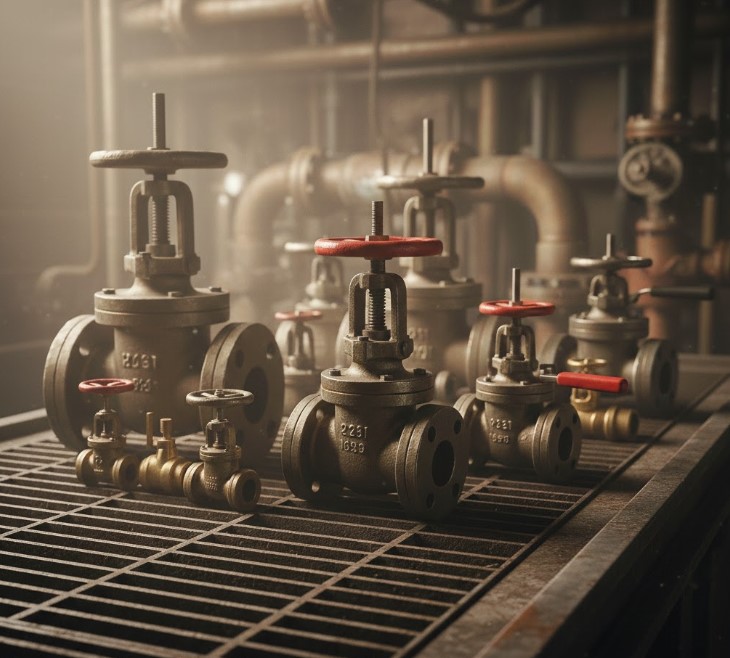
Marine Valves Explained: Types, Uses & Applications

Marine valves are critical components in maritime engineering, ensuring the safe and efficient operation of ships and offshore installations. From regulating fuel flow in engines to managing ballast water for stability, marine valves are indispensable in all shipboard systems.

Understanding their types, functions, and applications is essential for marine engineers, ship operators, and industrial maintenance professionals.

In this guide, we’ll explore the main marine valve types, their applications, maintenance considerations, and industry standards, providing a comprehensive resource for professionals in the maritime sector.

What Are Marine Valves?

Marine valves also called ship valves, are mechanical devices that control the flow of liquids and gases in maritime piping systems. These valves maintain operational integrity of systems such as cooling circuits, ballast water lines, fuel transfer systems, and firefighting networks.

In high-stress marine environments, corrosion resistance, pressure tolerance, and reliable actuation are non-negotiable features. Operators must ensure that every valve complies with classification society standards and can withstand wide temperature swings, saline exposure, and cyclic loads.

Core Functions of Marine Valves

Valves perform several foundational functions in marine systems:

  1. Isolation Control to stop flow while equipment is serviced.
  2. Throttling and Regulation to fine-tune flow rates.
  3. Backflow Prevention to prohibit reverse flow that could damage critical equipment.
  4. Pressure Relief Management to safeguard against overpressure conditions that pose safety risks.

Each valve type has a specific role and must be selected with knowledge of fluid characteristics, system pressure, and expected operating conditions.

Main Types of Marine Valves

Marine valves are designed for specific functions and fluid types, from water and fuel to gases. Here are the most commonly used types:

1. Ball Valves

Ball valves use a rotating spherical ball with a hole through its center to control flow. Turning the handle rotates the ball, aligning the hole with the pipe for flow or perpendicular to stop it.

Ball valves are one of the most widely used valve types in marine applications. Selecting the correct marine ball valve involves ensuring material compatibility and actuator reliability to withstand saltwater exposure and vibration.

Key benefits:

— Quick operation (quarter-turn)

— Durable and leak-resistant

— Suitable for fuel, water, and gas systems

Applications: Fuel lines, engine cooling, and onboard water systems

2. Gate Valves

Gate valves feature a sliding gate that moves vertically to start or stop fluid flow. They are ideal for applications where full flow or complete shutoff is required and are not recommended for throttling.

Advantages:

— Minimal pressure drop when fully open

— Reliable sealing for liquids and gases

— Long service life

Applications: Ballast water systems, main engine cooling circuits, cargo fluid control

3. Globe Valves

Globe valves regulate flow with a movable plug or disc against a stationary seat. They provide precise flow control but are less suitable for full-flow systems due to higher pressure drops. Because of their design, they offer better throttling characteristics than gate valves, though they may present higher pressure drop.

For marine engineers, specifying the correct globe valve means balancing control precision with acceptable head loss.

Advantages:

— Accurate throttling capability

— Resistant to vibration in piping systems

— Robust design for high-pressure applications

Applications: Lubrication systems, steam lines, fuel injection control

4. Butterfly Valves

Butterfly valves use a rotating disc to control flow. These valves are lightweight and compact, making them suitable for large pipeline systems where space is limited and fast actuation is required. Their design allows for quick response but requires careful sizing to avoid cavitation and ensure sealing integrity.

Advantages:

— Quick quarter-turn operation

— Cost-effective for large pipelines

— Low maintenance requirements

Applications: Ballast water management, HVAC systems, cooling water lines

5. Check Valves

Check valves allow fluid to flow in one direction only, preventing backflow that could damage pumps or engines. These valves automatically close when flow reverses, protecting pumps, compressors, and other sensitive equipment. Common types of check valves used in marine settings include swing check and lift check designs.

Applications: Engine cooling, bilge pumps, fuel transfer systems

Marine Valve Applications Onboard

Marine valves are used across multiple ship systems. Understanding their applications ensures proper valve selection and operational safety.

System Valve Type Purpose
Engine Cooling Ball, Globe Control coolant flow, prevent overheating
Fuel Transfer Ball, Globe Regulate fuel delivery to engines
Ballast Systems Gate, Butterfly Adjust ship stability by controlling water intake
Gas Lines Ball, Globe, Check Manage compressed gases safely
Bilge and Sewage Check, Gate Prevent backflow and control drainage

Maintenance and Safety Tips for Marine Valves

Proper maintenance is crucial to prevent leaks, corrosion, and mechanical failure. Key practices include:

  1. Regular Inspection – Check for leaks, wear, and valve integrity
  2. Lubrication – Ensure smooth operation of moving parts
  3. Pressure Testing – Validate that valves meet operational standards
  4. Corrosion Protection – Apply coatings or select corrosion-resistant materials for seawater exposure
  5. Documentation – Maintain maintenance logs to comply with maritime regulations

Material Selection and Corrosion Resistance

Marine valves must withstand harsh maritime conditions, including saltwater, high pressures, and temperature fluctuations. Common materials include:

— Bronze and Brass: Excellent corrosion resistance, ideal for freshwater and seawater systems

— Stainless Steel: High strength, suitable for high-pressure systems and chemical resistance

— Cast Iron: Economical choice for low-pressure applications

Selecting the right material increases valve longevity and reduces operational risks.

Industry Standards for Marine Valves

Compliance with standards ensures safety, reliability, and certification for marine operations:

— ABS (American Bureau of Shipping) – Certification for shipboard equipment

— DNV (Det Norske Veritas) – Quality and safety standards

— ISO 9001 / ISO 14001 – Quality management and environmental compliance

Meeting these standards is crucial for ship operators, manufacturers, and maintenance teams.

FAQs

What is the primary purpose of marine valves?

Marine valves control the flow of liquids and gases, isolate system sections, and maintain pressure stability. They are essential for safe and efficient shipboard operations.

How often should marine valves be maintained?

Valves should be inspected regularly, with monthly visual checks and quarterly detailed maintenance to prevent leaks and mechanical issues.

Which valve type is best for precise flow control?

Globe valves are ideal for regulating flow because their design allows gradual adjustments in engine cooling and auxiliary circuits.

What materials are best for marine valve construction?

Marine-grade stainless steel, bronze, and duplex alloys resist corrosion and wear, ensuring long-term reliability in harsh saltwater environments.

Conclusion

Marine valves play a crucial role in maintaining the safety, efficiency, and reliability of shipboard systems. From ball and gate valves to globe and butterfly valves, each type serves a specific purpose in controlling fluids, gases, and ballast water onboard.

Proper selection, material consideration, and regular maintenance ensure long-term performance, reduce operational risks, and prevent costly downtime. Sourcing from a trusted supplier guarantees quality and reliability, and K. Hashim LLC is a leading marine valve supplier in UAE, offering top-grade valves for industrial, marine, and offshore applications.

Connect with our technical specialists today to secure the right valves for enhanced ship safety and long‑term operational efficiency.

Discover Guides on Marine Hardware and Repair Solutions

The Role of Eye Bolts and Nuts in Marine and Outdoor Environments: Essential hardware for securing loads in marine and outdoor settings.

Why Stainless Steel Studs Are Ideal for Marine Applications: Durable fasteners designed to resist corrosion in harsh maritime conditions.

The Role of K.Hashim LLC Copper and Washer Kit in Marine Engine Repairs: Reliable components ensuring leak-free and efficient engine maintenance.

How Devcon Marine Epoxies in UAE Extend Ship Lifespan: Innovative marine adhesives that protect vessels from wear and corrosion.

Top Reasons to Choose Devcon Marine Epoxies UAE: Proven performance solutions for long-lasting marine repairs.

Which Expansion Joint Is Better: Rubber or Metal?

When it comes to designing piping systems for industrial, commercial, or residential projects, expansion joints play a crucial role. They absorb thermal expansion, reduce vibration, and protect piping integrity.

Choosing between rubber and metal expansion joints can be challenging for engineers, procurement managers, and facility owners. This guide breaks down the differences, benefits, and selection criteria to help you make an informed choice.

What Are Expansion Joints?

Expansion joints are flexible connectors installed between sections of pipes, ducts, or equipment to absorb movement caused by thermal changes, pressure variations, or mechanical forces. They prevent damage such as cracking, leakage, or fatigue in systems that experience regular expansion and contraction.

Types of Expansion Joints

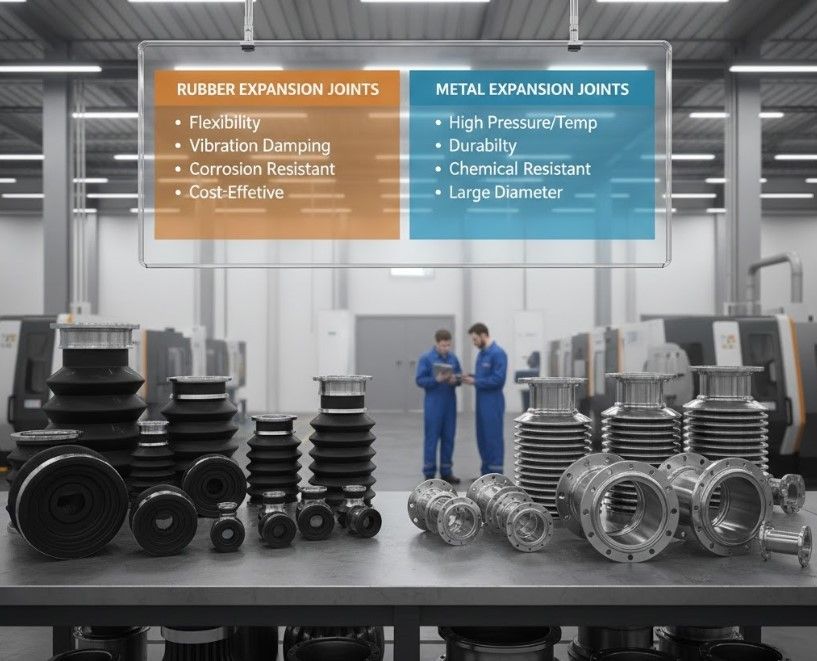
  • Rubber Expansion Joints: Made from elastomeric materials with fabric reinforcement
  • Metal Expansion Joints: Fabricated from stainless steel, carbon steel, or alloy steel

These joints are widely used across industries including HVAC, chemical processing, water treatment, oil and gas, and power generation.

Rubber Expansion Joints

Rubber expansion joints are flexible connectors made from elastomeric materials such as EPDM, Neoprene, or Nitrile. They often feature fabric reinforcement to handle pressure and are widely used in water, chemical, and HVAC systems.

Features and Benefits

Flexibility

Rubber joints provide high elasticity, accommodating axial, lateral, and angular movement in piping systems.

Vibration and Noise Reduction

They absorb vibrations and reduce operational noise, making them ideal for HVAC and water pipelines.

Corrosion Resistance

Resistant to mild chemicals and water, rubber joints prevent early degradation in low to medium pressure applications.

Lightweight and Easy Installation

Rubber expansion joints are easy to handle and install, even in confined spaces, reducing labor and installation time.

Ideal Applications

  • Steam lines in power plants
  • High-pressure chemical processing
  • Petrochemical and refinery piping
  • High-temperature exhaust systems

Popular Brands and Suppliers

  • Belman
  • James Walker
  • KSB

Evaluation Criteria for Metal Joints

  • Pressure and temperature rating
  • Movement absorption capability
  • Material grade and corrosion resistance
  • Compliance with standards such as ASME or EN
  • Warranty, service, and technical support

Metal Expansion Joints

Metal expansion joints, often made from stainless steel, carbon steel, or alloyed metals, use bellows to absorb movement. They are engineered for high-temperature and high-pressure applications.

Features and Benefits

Metal expansion joints are preferred for high-pressure, high-temperature, and corrosive environments. Key features include:

High-Pressure Tolerance

Metal joints withstand high pressure, making them suitable for steam, gas, and chemical applications.

Temperature Resistance

They maintain integrity at extreme temperatures, often up to 600°C, ensuring long-term performance.

Durability and Longevity

Metal expansion joints are strong and long-lasting, performing reliably in harsh industrial environments.

Customizable Design

These joints can be tailored for complex piping layouts, handling multiple movement types efficiently.

Ideal Applications

  • Steam lines in power plants
  • High-pressure chemical processing
  • Petrochemical and refinery piping
  • High-temperature exhaust systems

Popular Brands and Suppliers

  • Belman
  • James Walker
  • KSB

Evaluation Criteria for Metal Joints

  • Pressure and temperature rating
  • Movement absorption capability
  • Material grade and corrosion resistance
  • Compliance with standards such as ASME or EN
  • Warranty, service, and technical support

Rubber vs Metal Expansion Joints Comparison

Feature Rubber Expansion Joints Metal Expansion Joints
Flexibility High Moderate
Vibration & Noise Excellent Moderate
Temperature Range Up to 100°C Up to 600°C
Pressure Rating Low to Medium High
Chemical Resistance Good for mild chemicals Excellent for harsh chemicals
Installation Easy, lightweight Heavy, requires precise alignment
Maintenance Low Moderate to high
Cost Affordable Higher upfront cost

This table provides a quick reference for buyers to evaluate which type suits their project requirements.

How to Choose the Right Expansion Joint

Selecting the right expansion joint is critical for system reliability, safety, and long-term performance. Understanding the importance of expansion joints can help you determine where different types of joints are essential, while several key factors should guide your decision.

System Pressure and Temperature

The operating pressure and temperature of your system largely determine the type of expansion joint required. High-pressure steam lines, hot gases, or chemical pipelines typically need metal joints for durability and safety.

Low-pressure water, HVAC, or wastewater pipelines can usually rely on rubber joints, which provide sufficient flexibility and performance at lower costs.

Chemical Compatibility

Expansion joints must be compatible with the fluids or gases they come in contact with. Rubber joints are suitable for mild chemicals, water, or non-corrosive fluids.

For aggressive chemicals, corrosive gases, or abrasive fluids, metal joints with specialized alloys or coatings are recommended to prevent premature wear and system failure.

Movement Requirements

Different systems experience different types of movement, including axial (lengthwise), lateral (sideways), and angular (bending) shifts.

Rubber joints excel at absorbing multiple types of movement, while metal joints can be engineered to handle high-stress movements in extreme environments. Understanding the exact movement requirements ensures the joint performs reliably over time.

Installation Constraints

Space limitations, pipe layout, and access for maintenance can influence joint selection. Rubber expansion joints are lightweight and flexible, making them easier to install in tight or complex piping networks.

Metal joints are heavier and require precise alignment during installation, which may require additional labor and equipment.

Budget and Lifecycle Costs

While initial cost is a consideration, lifecycle costs are equally important. Rubber joints are more affordable upfront and suitable for standard applications.

Metal joints may have higher initial costs but offer extended service life, reduced maintenance, and superior performance in demanding conditions, often resulting in better value over time.

Maintenance and Lifespan

Rubber Expansion Joints

  • Typically last 5 to 10 years depending on system conditions
  • Regular inspection for cracks, deformation, or leaks is recommended

Metal Expansion Joints

  • Can last 15 years or more with proper installation
  • Regular inspection of bellows and welded joints ensures longevity

Tips for Maintenance

  • Avoid exceeding rated pressure and temperature
  • Ensure proper alignment during installation
  • Schedule periodic inspections for signs of wear or corrosion

FAQs

What is the main difference between rubber and metal expansion joints?

Rubber joints provide flexibility and absorb vibrations, while metal joints handle higher pressure and extreme temperatures for industrial applications.

Which expansion joint is better for high-temperature steam systems?

Metal expansion joints are ideal for high-temperature steam due to their heat resistance and durability under extreme operating conditions.

Can rubber expansion joints resist chemicals?

Rubber joints resist mild chemicals and water, but aggressive chemicals or corrosive fluids require metal joints with specialized alloys.

How often should expansion joints be inspected?

Expansion joints should be inspected at least once a year or according to manufacturer recommendations to ensure system safety and longevity.

Final Verdict: Which Expansion Joint Is Best

Choosing the right expansion joint is critical for system safety, efficiency, and longevity. Rubber expansion joints offer flexibility, vibration absorption, and easy installation, making them ideal for low to medium pressure applications.

Metal expansion joints provide high-pressure and high-temperature resistance, chemical compatibility, and long-term durability for demanding industrial systems. By considering factors such as pressure, temperature, chemical exposure, movement requirements, and lifecycle costs, buyers can select the best solution for their project.

Sourcing from a trusted supplier ensures reliability, and K. Hashim LLC is a leading expansion joint supplier in UAE, providing high-quality rubber and metal joints for industrial, HVAC, chemical, and water applications.

Connect with our engineering team today to choose the right expansion joint for reliable, long-term performance.

Explore More Expert Insights

Explore our expert insights to stay updated on the latest piping solutions, flange types, and industrial best practices.