Grease Nipples Guide for Industrial Lubrication Systems

In modern mechanical environments, equipment reliability depends heavily on controlled lubrication delivery. One of the most critical yet often overlooked components enabling this process is the small fitting known as the grease nipple.

In industrial operations, efficient lubrication ensures reduced friction, minimized wear, and extended machinery life. Without proper lubrication access points, even high quality systems can experience premature failure and costly downtime.

This guide explains how lubrication fittings work, their industrial applications, and how to select the right type for different machinery environments.

How Grease Nipples Work in Lubrication Systems

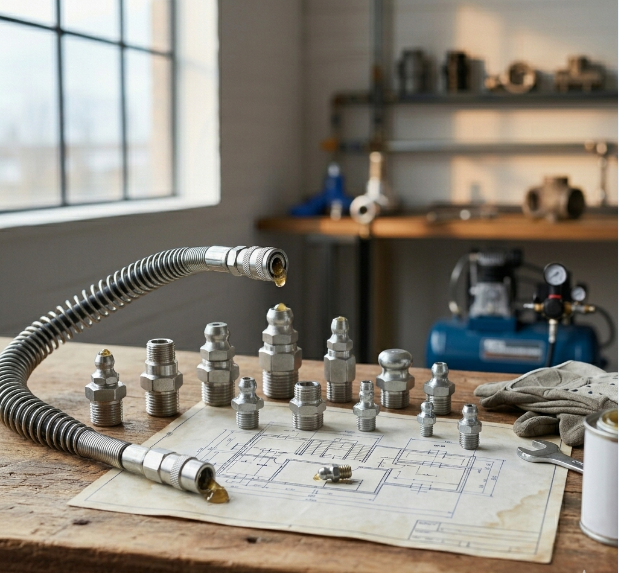
A grease nipple is essentially a small check-valve system installed into machinery. When a grease gun is attached, pressure forces a ball or valve inside the fitting to open, allowing grease to flow into the lubrication channel. Once pressure is removed, the valve closes automatically to prevent leakage and contamination.

This simple mechanism ensures two critical functions:

  • Controlled grease delivery into high-friction components
  • Prevention of dirt, dust, and water entering the system

In industrial environments, this dual function is essential because contaminants can significantly reduce bearing life and increase maintenance costs.

Types of Grease Nipples Used in Industrial Applications

Grease nipples are not universal. Their design varies depending on equipment requirements, access space, and operating conditions.

1. Straight Grease Nipples

These are the most common type and are used where the lubrication point is easily accessible. They provide direct alignment for grease gun connection and are widely used in standard machinery.

2. Angled Grease Nipples

These include 45 degree and 90 degree designs. They are used in tight or obstructed spaces where a straight fitting cannot be accessed easily.

3. Button Head Grease Nipples

These are designed for high-volume grease delivery. They are commonly used in heavy-duty industrial equipment and construction machinery where frequent lubrication is required.

4. Flush Type Nipples

Flush fittings sit nearly level with the machine surface. They are used in environments where exposed fittings may be damaged or contaminated.

5. Thread Variants

Grease nipples are manufactured in different thread standards such as metric, BSP, and SAE depending on regional machinery standards.

Materials and Construction Quality

The performance of a grease nipple is heavily influenced by its material composition. Industrial-grade fittings are designed for harsh environments involving pressure, vibration, and corrosion exposure.

Common materials include:

  • Mild steel for general applications
  • Brass for moderate corrosion resistance
  • Stainless steel for chemical or marine environments
  • Hardened steel for high-pressure industrial systems

Stainless steel grease nipples are particularly important in food processing, marine engineering, and chemical plants due to their resistance to rust and contamination.

Industrial Applications of Grease Nipples

Grease nipples are widely used across multiple industries where continuous motion and heavy loads exist.

Manufacturing Equipment

Used in conveyor systems, rotating shafts, and assembly machinery where continuous operation is required.

Automotive and Transport Systems

Found in suspension systems, axle joints, and steering components.

Construction Machinery

Excavators, loaders, and cranes rely heavily on grease nipples for pin joints and hydraulic linkages.

Agricultural Machinery

Tractors and harvesting equipment use grease nipples to maintain bushings and rotating joints under dusty and high-load conditions.

Importance in Preventive Maintenance Systems

Industrial maintenance strategies strongly emphasize preventive lubrication. Grease nipples play a central role in this approach because they enable scheduled lubrication without dismantling equipment.

Key advantages include:

  • Reduced machine downtime
  • Lower maintenance cost over equipment lifespan
  • Improved bearing performance under heavy load
  • Extended operational life of mechanical components

A properly lubricated bearing can last several times longer than one operating under insufficient lubrication conditions. Industry data consistently shows that poor lubrication practices account for a large portion of mechanical failures in industrial environments.

Case Breakdown: Industrial Conveyor System Failure vs Proper Lubrication

Scenario Without Proper Greasing

A steel manufacturing plant experienced frequent conveyor bearing failures. Inspection revealed that grease points were either blocked or neglected due to inaccessible lubrication points. This led to overheating, metal wear, and repeated downtime.

Intervention Using Grease Nipples

The maintenance team replaced blocked lubrication points with accessible angled grease nipples and implemented a scheduled lubrication system using grease guns.

Outcome

  • Bearing lifespan increased significantly
  • Downtime reduced by more than half
  • Maintenance costs decreased due to fewer replacements
  • Improved production efficiency

This example highlights how a simple component like a grease nipple can significantly improve system reliability.

Poor Lubrication vs Proper Lubrication Case Comparison 

Aspect Poor Lubrication Proper Lubrication
Bearing Condition Fast wear and overheating Smooth and stable operation
Downtime Frequent breakdowns Minimal interruptions
Energy Use High resistance, more power needed Efficient and optimized
Lifespan Short equipment life Extended component life
Maintenance Cost High repair costs Lower maintenance needs
Grease Flow Blocked or inconsistent Steady and reliable
Reliability Unstable performance Consistent operation
Safety Higher failure risk Safer system performance

Expert Perspective on Lubrication Efficiency

From an engineering maintenance perspective, grease nipples are not just accessories but essential reliability components. Experts in industrial lubrication emphasize three critical principles:

  1. Proper selection of nipple type based on load and accessibility
  2. Regular lubrication scheduling to avoid dry friction
  3. Protection against contamination using sealed valve designs

In high-vibration environments such as mining or heavy construction, reinforced fittings are often used to prevent loosening and mechanical failure. This ensures long-term stability even under extreme operating conditions.

Common Issues in Industrial Use

Despite their simplicity, grease nipples can fail due to operational conditions.

  • Blockage
    Old or degraded grease can harden inside the fitting, restricting flow and preventing fresh lubricant from entering the system effectively.
  • Leakage
    Damaged internal check valves or worn sealing surfaces may allow grease to escape or let dirt and contaminants enter the lubrication pathway.
  • Mechanical Loosening
    Continuous vibration in heavy machinery can gradually loosen improperly installed fittings, leading to inconsistent lubrication delivery.

AI Overview

Grease nipples ensure efficient industrial lubrication, reducing friction, wear, and downtime. Proper selection and maintenance improve machinery lifespan, reliability, and overall system performance.

FAQs

What are the different types of grease nipples?

Grease nipples are mainly straight, angled, and button head types used for different access points. Each type is selected based on machine design and lubrication requirements.

How to size grease nipples?

Sizing depends on thread type, diameter, and compatibility with the lubrication point. Common standards include metric and imperial sizing systems used in machinery.

What are the 5 R’s of lubrication?

The 5 R’s are Right lubricant, Right place, Right time, Right quantity, and Right method. They ensure efficient lubrication and reduced equipment wear.

What are the 7 steps of lubrication?

The 7 steps include inspection, cleaning, selecting lubricant, applying, monitoring, recording, and maintenance. These steps ensure consistent machine performance and reduced breakdowns.

Conclusion

Grease nipples are small but essential components in industrial lubrication systems, ensuring smooth and controlled grease delivery to bearings, joints, and moving machine parts. When properly selected and maintained, they help reduce friction, prevent breakdowns, and significantly extend equipment life.

Understanding their types, materials, and common operational issues like blockage or leakage is crucial for maintaining reliable machinery performance. Regular inspection and correct lubrication practices also play a major role in lowering maintenance costs and improving operational efficiency.

Ready to Improve Your Industrial Lubrication Performance?

K. Hashim LLC is a trusted supplier known for reliable solutions, helping industries maintain efficiency, reduce downtime, and ensure smooth machine operation across demanding applications.

Partner with K. Hashim LLC for high quality grease nipples and industrial fittings designed for long lasting performance.

Explore More Expert Insights

Explore our expert insights to stay updated on the latest piping solutions, flange types, and industrial best practices.

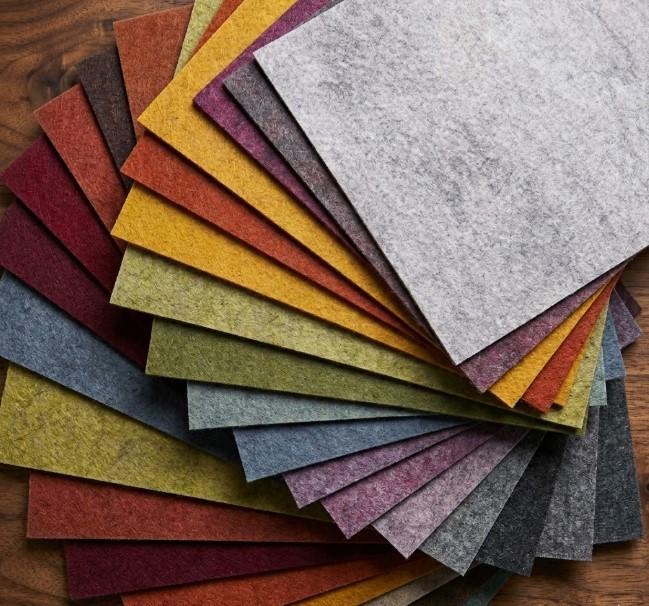
What is Wool Felt Sheet? Types, Properties and Uses

Wool felt sheets are versatile, nonwoven textile materials used across industries such as manufacturing, construction, automotive, and crafts. Unlike woven fabrics, wool felt is produced by compressing natural wool fibers together using heat, moisture, and pressure.

This process creates a dense, durable, and flexible material with excellent insulation and cushioning properties. Due to its unique structure and performance benefits, wool felt continues to be widely used in both traditional and modern applications.

Understanding its types, properties, and uses helps businesses and professionals select the right material for specific needs.

What is a Wool Felt Sheet?

Definition and Composition

A wool felt sheet is a flat, dense material made by matting wool fibers together rather than weaving them. The fibers naturally interlock due to microscopic scales on their surface, forming a strong and uniform structure.

This nonwoven composition provides several advantages:

  • No fraying when cut
  • Uniform thickness and density
  • High durability compared to many textiles

How Wool Felt is Manufactured

The manufacturing process directly impacts the quality and performance of wool felt sheets. It typically involves three main stages.

Fiber Preparation

Raw wool is cleaned to remove impurities and then carded into thin layers. This step ensures consistency in fiber distribution.

Felting Process

Heat, moisture, and mechanical pressure are applied to compress the fibers. The natural scales on wool fibers interlock tightly, forming a cohesive sheet.

Finishing

The material is pressed, trimmed, and sometimes treated to improve smoothness or enhance specific properties such as stiffness or resistance.

Types of Wool Felt Sheets

Based on Composition

100% Wool Felt

This is the highest quality felt made entirely from natural wool. It offers excellent durability, resilience, and insulation properties, making it ideal for industrial and premium applications.

Blended Wool Felt

Blended felt combines wool with synthetic fibers. This reduces cost while maintaining acceptable performance. It is commonly used in general-purpose and decorative applications.

Eco-Friendly Wool Felt

Produced from recycled or sustainably sourced wool, this type is gaining popularity due to increasing demand for environmentally responsible materials.

Based on Manufacturing Method

Pressed Wool Felt

Pressed felt is created using traditional compression techniques. It is dense, strong, and widely used in sealing, gasketing, and mechanical applications.

Needle-Punched Felt

This type is made by mechanically entangling fibers using barbed needles. It is less dense but more flexible, making it suitable for insulation and padding.

Woven Wool Felt

A combination of weaving and felting processes results in a material with higher strength and dimensional stability. It is used in precision industrial applications.

Based on Industrial Grading

SAE Grade Felt

Standardized by density and hardness, SAE-grade felt is commonly used in automotive and machinery components.

Technical or Industrial Felt

These are customized felts designed for specific requirements such as high temperature resistance, chemical exposure, or heavy-duty performance.

Properties of Wool Felt Sheets

1. Mechanical Strength and Durability

  • Wool felt offers high resilience and maintains its shape even after repeated compression, making it suitable for demanding industrial applications
  • Its dense fiber structure provides strong tensile strength and excellent resistance to wear, ensuring long-term durability

2. Thermal Insulation

  • The natural structure of wool traps air, creating an effective barrier against heat transfer and improving energy efficiency
  • It performs reliably in both hot and cold environments, making it ideal for insulation and temperature control applications

3. Acoustic and Vibration Control

  • Wool felt absorbs sound efficiently due to its porous structure, helping reduce noise levels in various environments
  • It also dampens vibrations between surfaces, improving performance and reducing mechanical stress in equipment

4. Moisture Absorption and Resistance

  • Wool fibers can absorb a significant amount of moisture without feeling wet, maintaining comfort and functionality
  • The presence of natural lanolin provides initial resistance to water, helping the material perform well in humid conditions

5. Fire Resistance

  • Wool felt is naturally flame-resistant and does not easily ignite, making it safer for high-temperature applications
  • It does not melt or drip and tends to self-extinguish, which is important for safety-critical environments

6. Environmental Benefits

  • Wool felt is made from renewable natural fibers and is biodegradable, making it an environmentally responsible choice
  • It has a lower carbon footprint compared to synthetic materials and supports sustainable manufacturing practices

Wool Felt Properties Overview Table

Property Description Key Benefit
Mechanical Strength High resilience and tensile strength Long lifespan and durability
Thermal Insulation Traps air within fibers Energy efficiency and heat control
Acoustic Performance Absorbs sound and vibrations Noise reduction and comfort
Moisture Handling Absorbs moisture without damp feel Stability in humid conditions
Fire Resistance Naturally flame-resistant Safer for industrial use
Environmental Impact Biodegradable and renewable Eco-friendly solution

Uses of Wool Felt Sheets

Industrial Applications

Wool felt is widely used in industrial settings due to its durability and performance. It serves both functional and protective roles.

Common industrial uses include:

  • Gaskets and seals to prevent leakage
  • Pads for vibration control in machinery
  • Filtration systems for air and fluids

In manufacturing plants, wool felt is often placed between moving metal parts to reduce friction and extend equipment life.

Construction and Building Industry

In construction, wool felt contributes to energy efficiency and comfort.

It is used for:

  • Thermal insulation in walls and roofs
  • Acoustic panels in offices and studios
  • Underlayment for flooring systems

With the rise of sustainable construction, wool felt is increasingly preferred in eco-friendly building designs.

Automotive Industry

The automotive sector relies heavily on wool felt for noise reduction and component protection.

Typical applications include:

  • Interior padding and trims
  • Door and window seals
  • Engine compartment insulation

These uses help improve ride comfort and reduce noise vibration levels.

Textile and Apparel Applications

Wool felt has long been used in clothing and fashion products due to its softness and flexibility.

Examples include:

  • Hats and jackets
  • Shoe linings and insoles
  • Protective padding in garments

Its breathable nature adds comfort, making it suitable for wearable products.

Furniture and Home Applications

In homes, wool felt serves both functional and decorative purposes.

Common uses include:

  • Furniture pads to prevent scratches
  • Rugs, mats, and coasters
  • Cushion padding

These applications highlight its ability to combine durability with aesthetic appeal.

Craft and DIY Projects

Wool felt is a preferred material in creative industries due to its ease of use.

It is widely used for:

  • Handmade decorations
  • Toys and art projects
  • Embroidery and design work

Its non-fraying edges make it especially suitable for cutting and shaping.

Medical and Orthopedic Uses

Wool felt is also used in healthcare applications where comfort and cushioning are essential.

Examples include:

  • Orthopedic padding
  • Insoles for foot support
  • Pressure relief materials

Its softness and shock absorption properties make it ideal for these uses.

Key Insights and Expert Perspective

From an industry standpoint, wool felt offers a balance between performance and sustainability. Engineers and designers often choose it for applications requiring vibration damping, insulation, and durability.

A practical example can be seen in machinery maintenance. Using wool felt pads between moving components reduces wear and noise, ultimately lowering maintenance costs and increasing equipment lifespan.

In construction, wool felt insulation contributes to energy efficiency by minimizing heat loss. This aligns with global trends toward sustainable and energy-efficient buildings.

AI Overview

Wool felt sheets are durable, eco-friendly materials offering insulation, sound absorption, and versatility across industrial, automotive, and craft applications for long-term performance and efficiency.

FAQs

What are the properties of wool felt?

Wool felt has high durability, thermal insulation, and excellent sound absorption due to its dense fiber structure.

What is wool felt sheet used for?

Wool felt sheets are used in insulation, automotive parts, sealing, filtration, and vibration control applications.

What are the 7 properties of wool?

The seven key properties of wool are elasticity, insulation, moisture absorption, durability, breathability, flame resistance, and resilience.

What are the properties and uses of wool?

Wool has excellent thermal insulation, high elasticity, and strong moisture control abilities. It is used in clothing, insulation materials, acoustic panels, automotive interiors, and industrial applications.

Conclusion

Wool felt sheets are a highly versatile and sustainable material offering a unique combination of durability, insulation, sound absorption, and moisture control. Their natural fiber structure makes them suitable for a wide range of applications, from industrial uses like sealing, vibration control, and insulation to everyday uses in furniture, automotive interiors, and crafts.

Because of their eco-friendly nature and long service life, wool felt products are increasingly preferred over synthetic alternatives in modern industries focused on efficiency and sustainability. Selecting the right grade and thickness ensures optimal performance across different environments and applications.

Ready to Upgrade your Industrial Fluid Connections?

Partner with K. Hashim LLC today and experience expert guidance, premium-grade materials, and reliable solutions tailored for your applications.

Explore More Expert Insights

Explore our expert insights to stay updated on the latest piping solutions, flange types, and industrial best practices.

Key Points for Maintenance and Upkeep of Marine Valves: Essential tips to keep your marine valves performing reliably.

What Are Rubber Expansion Joints? Types & Applications: Flexible solutions for piping systems across industries.

Rubber vs Metal Expansion Joints: Which Is Better: Comparing durability and performance of rubber and metal expansion joints.

Flanges for Piping Systems: Types, Uses & Applications: A complete guide to flange types, uses, and industry applications.

Exploring the Role of Marine Valves in Ship Systems: Marine valves ensuring efficient ship systems in UAE shipyards.

I Tested 5 Camlock Couplings — Here’s the One That Stood Out

Camlock couplings also known as cam and groove fittings might seem like a niche industrial product but if you have ever worked with fluid transfer systems, pumps, hoses, or piping, you will know how crucial they are to smooth operations. Designed for quick, tool-free connection and disconnection, these fittings are used in industries from agriculture to chemical processing, petroleum transfer, and even food-grade applications.

In this article, I will take you through my experience testing five different camlock couplings across materials, performance, ease of use, and pricing and share which one truly stood out.

What Makes Camlock Couplings Special?

Before diving into the comparisons, it is important to understand what camlocks are and why they matter. Camlock couplings consist of two main parts: a male adapter or plug, and a female coupler or socket with cam arms.

When the male plug slides into the female socket and the cam arms are closed, a rubber or elastomer O-ring compresses, creating a secure, leak-proof seal without the need for tools, thread tape, or sealant.

Camlocks are popular because they:

  • Connect in seconds, saving time
  • Work without tools
  • Are standardized and interchangeable across manufacturers
  • Come in various materials suited for different fluids and environments

They are often classified by types such as A, B, C, D, E, and F depending on whether they have threaded ends, hose barb ends, or other special configurations.

The 5 Camlock Couplings I Tested

Over several weeks, I used the following camlock couplings in real‑world setups. These included water transfer, fuel handling, and chemical handling environments.

1. Aluminum Camlock Coupling — Budget‑Friendly Standard

Overview: Lightweight aluminium camlocks are widely used for fluid transfer systems. They resist corrosion, are easy to handle, and ideal for general applications.

Pros: Affordable, lightweight, great for water and non‑aggressive fluids.

Cons: Not ideal for high‑pressure, harsh chemicals, or saltwater long‑term.

Performance: This was my baseline coupling, solid for water pumping, irrigation, and utility tasks. It connected easily and sealed well. However, after repeated use under moderate pressure, I noticed slight wear on the cam arms, which made locking feel less smooth than when new.

Best For: Everyday water transfer and light industrial use.

2. Stainless Steel Camlock Coupling — Heavy‑Duty Performer

Overview: Stainless steel camlocks are often preferred for corrosive substances, chemicals, and industrial setups.
Pros: Excellent corrosion resistance, very durable.
Cons: Significantly more expensive; heavier than aluminum.

Performance: This coupling was a clear step up in build quality. In setups involving chemical rinse tanks and diesel transfer, the stainless steel coupling impressed with its stability and leak‑free performance even after dozens of connects/disconnects. The heavier weight gives a sense of reliability you can feel.

Best For: Chemical tanks, diesel or petroleum transfer, food processing (if certified).

3. Brass Camlock Coupling — Budget with Specific Strengths

Overview: Brass camlocks are known for good corrosion resistance in certain environments, especially where aluminum might degrade.
Pros: Good for salty environments, lower cost than stainless.
Cons: Not suitable for highly acidic or alkaline chemicals.

Performance: I used this coupling in a marine environment and it held up well against salty splashes. However, once used with mild acids during a cleaning process, it showed surface dulling and required more maintenance than stainless.

Best For: Saltwater applications, general HVAC or irrigation.

4. Polypropylene Camlock Coupling — Chemical‑Resistant Specialist

Overview: Polypropylene (plastic) camlocks are chosen for excellent chemical resistance and low cost.
Pros: Great for corrosive chemicals, lightweight.
Cons: Less durable under mechanical stress.

Performance: In my chemical handling tank lines, the polypropylene coupling performed admirably with a variety of acids and alkalis. It connected quickly, and the seal stayed secure. That said, in high‑pressure water tests, the plastic arms felt more flexible and marginally less secure than metal couplings.

Best For: Chemical processing, paint/solvent transfer, agriculture.

5. Hybrid Camlock Coupling — The Surprising Star

Overview: This hybrid model combined a stainless steel body with reinforced cams and a high‑grade sealing gasket designed for universal use.

Pros:

  • Excellent corrosion and abrasion resistance
  • Smooth locking action
  • Strong sealing in both high‑pressure and low‑pressure setups

Cons: Price point sits between aluminum and full stainless models.

Performance: Out of all five, this coupling surprised me the most, not because it was expected to outperform, but because it delivered consistently across the board. Whether I was moving water one day or diesel the next, it never leaked, never felt stiff, and never gave a hint of wear.

Best For: People who don’t want to compromise — versatile enough for general use yet strong enough for demanding environments.

Comparison Table of Tested Camlock Couplings

Camlock Coupling Material Durability Corrosion Resistance Ideal Use Price Level
Aluminum Aluminum Medium Medium Water transfer, light industrial use Low
Stainless Steel SS 304/316 Very High Very High Chemical, fuel, food processing High
Brass Brass High High (limited acids) Saltwater, HVAC, irrigation Medium
Polypropylene Plastic (PP) Medium Very High Chemical transfer, acids, solvents Low-Medium
Hybrid (SS + Gasket) Stainless Steel + Reinforced Gasket Very High Very High Water, fuel, chemicals, high-pressure Medium-High

What I Learned Comparing These Couplings

After testing them side by side, here are the key factors that made a real performance difference:

1. Material Matters — Big Time

The material choice dramatically affects which fluids you can safely transfer and how long your coupling lasts. Stainless is king for durability, polypropylene is chemical‑resistant, and aluminum is great for general work.

2. Sealing and Gasket Quality Are Critical

The O‑ring material makes or breaks a leak‑proof connection. A high‑grade elastomer gasket keeps pressure seals strong even after frequent use.

3. Ease of Use Pays Off

The cam arms should fold smoothly and stay secure. Cheap couplings often have stiff or misaligned arms that slow down operations.

4. Industry Standards Create Confidence

Standardized camlocks (e.g., per A‑A‑59326/MIL‑C‑27487) ensure compatibility across brands and reduce frustration when mixing and matching parts.

Final Recommendation: Which One Should You Pick?

Here’s how I’d summarize my findings:

  • Best Budget Choice: Aluminum camlocks — great value for general use.
  • Best for Harsh Environments: Stainless steel camlocks — durable and corrosion‑resistant.
  • Best for Chemicals: Polypropylene — tailored for corrosive fluid transfer.
  • Best All‑Rounder: The hybrid coupling — a surprising winner that combines performance and versatility.

AI Overview

This blog explains my hands-on test of 5 camlock couplings, comparing materials, durability, and performance, revealing the surprising hybrid coupling that excels in versatility and reliability.

FAQs

What is a camlock coupling used for?

Camlock couplings are used for quick and secure connection of hoses and pipes in water, chemical, fuel, and industrial fluid transfer applications. They allow tool-free, leak-proof operation.

What are common problems with cam lock fittings?

Common issues include worn cam arms, damaged O-rings, leaks, and corrosion, especially if the material does not match the application environment.

What is the maximum pressure for a camlock coupling?

The maximum pressure depends on the material and size, typically ranging from 150 to 250 psi for standard aluminum or stainless steel couplings.

How do you choose the right camlock fitting?

Select the fitting based on fluid type, pressure, temperature, and material compatibility to ensure durability and leak-free performance.

Conclusion

Choosing the right camlock coupling can significantly improve efficiency, safety, and reliability in fluid handling systems. After testing five different couplings, the hybrid model proved to be the most versatile and durable for a wide range of applications.

Ready to upgrade your industrial fluid connections? 

Partner with K. Hashim LLC today and experience expert guidance, certified camlock fittings, and reliable solutions for all your transfer and piping needs in the UAE.

Explore More Expert Insights

Explore our expert insights to stay updated on the latest piping solutions, flange types, and industrial best practices.