Guide to Choosing Steel Flanges for Industrial Piping in Dubai

Dubai’s booming industrial sector, from oil and gas facilities to desalination plants and large-scale construction, relies on strong and reliable piping systems.

At the center of these systems are steel flanges, the critical connectors that join pipes, valves, and pumps together to create leak-proof networks. Flanges may look simple, but choosing the right one can make all the difference between long-term performance and costly downtime.

In Dubai’s harsh, humid, and often saline environment, careful flange selection ensures durability, safety, and compliance with international standards.

This guide explains how to choose the right steel flanges for industrial piping in Dubai, focusing on material types, design options, and local conditions.

Why Flange Selection Matters

In industrial operations, flange failures are among the leading causes of leaks, shutdowns, and safety issues. Dubai’s environment presents extra challenges — high temperatures, salty air, and humidity can all accelerate corrosion. The correct flange selection guarantees:

-Leak-free connections even under pressure

-Corrosion resistance against marine and desert conditions

-Compliance with ASME, DIN, or API standards

-Lower maintenance and repair costs

-Longer service life and system reliability

Whether in an oil terminal or a high-rise HVAC network, proper flange selection keeps the system performing efficiently and safely.

What Are Steel Flanges?

A flange is a mechanical connector used to join pipes, valves, or other equipment. It provides strength, sealing, and accessibility for inspection or maintenance. Flanges are typically joined using bolts and sealed with gaskets to prevent leaks.

In Dubai’s industrial landscape, steel flanges are the most common because of their durability and availability in international standard dimensions.

Common Types of Steel Flanges

Each flange type serves a specific purpose based on pressure, temperature, and fluid type.

1. Weld Neck Flange

Designed with a long tapered hub for strength and stress distribution. Used in high-pressure and high-temperature systems such as oil refineries and power plants.

2. Slip-On Flange

Easier to install and align. Best suited for low to medium pressure systems like HVAC or chilled-water networks.

3. Socket Weld Flange

Provides a smooth bore and solid joint, ideal for small diameter, high-pressure lines.

4. Threaded Flange

Screwed onto pipes without welding. Common in low-pressure or temporary applications.

5. Lap Joint Flange

Paired with a stub end, allowing rotation for easy alignment. Used in systems requiring frequent disassembly.

6. Blind Flange

A solid plate that closes off a pipe or nozzle opening. Used for testing or isolation.

7. Spectacle Flanges

Includes orifice, spectacle flanges and swivel flanges for control or isolation in critical oil, gas, and chemical applications.

Flange Face Types

Choosing the right sealing face ensures a tight joint:

-Raised Face (RF): Most common; suitable for general industrial use.

-Flat Face (FF): Used when connecting to cast-iron or flat-faced equipment.

-Ring Type Joint (RTJ): Handles high pressure and high temperature using a metal ring gasket.

-Tongue & Groove / Male-Female: Provides accurate alignment and prevents gasket blowout.

Material Selection

Material choice directly affects performance and longevity, especially in Dubai’s coastal climate.

Carbon Steel (A105)

Strong and economical but requires anti-corrosion coating for outdoor or marine applications.

Stainless Steel (A182 F304 / F316)

Excellent corrosion resistance, ideal for coastal, chemical, and desalination plants. Grade 316 stainless is widely regarded as one of the best Stainless Steel Flanges for long-term durability in humid and saline environments.

Alloy Steel (F11 / F22)

Used in high-temperature, high-pressure systems such as power generation and oil refining.

Duplex and Super Duplex

Provide both strength and corrosion resistance, ideal for offshore pipelines and seawater handling.

Nickel Alloys (Inconel, Monel, Hastelloy)

Exceptional performance under extreme heat and chemical exposure; common in chemical processing facilities.

Standards and Pressure Ratings

Steel flanges are standardized globally to ensure consistency and compatibility. The most widely used standards in Dubai include:

-ASME / ANSI B16.5: For flanges up to 24 inches.

-ASME B16.47: For larger flanges above 24 inches.

-EN 1092 / DIN: Common in European-spec projects.

-API 6A / 17D: For oilfield and offshore operations.

Each flange is also rated by pressure class — typically 150, 300, 600, 900, or 1500. A higher class means the flange can handle greater pressure and temperature safely.

Factors to Consider When Choosing a Flange

  1. Operating Conditions – Identify system pressure, temperature, and flow characteristics.
  2. Material Compatibility – Ensure flange and gasket materials suit the fluid or gas type.
  3. Flange Type – Choose weld neck for strength, slip-on for cost-efficiency, or lap joint for easy maintenance.
  4. Face Design & Gasket Selection – Match the sealing surface to the right gasket (spiral wound, PTFE, or metal).
  5. Standards Compliance – Verify that flanges meet ASME, DIN, or API specifications.
  6. Testing & Certification – Always request Material Test Reports (MTRs) and inspection documents.
  7. Corrosion Protection – Apply coatings or choose stainless/alloy materials in coastal zones.
  8. Availability – Local sourcing reduces delays and ensures faster delivery for UAE projects.

Quality and Installation

Proper installation ensures maximum performance and safety:

-Inspect flange faces and bolt holes for defects.

-Clean all contact surfaces before assembly.

-Use the correct gasket size and bolt torque sequence.

-Apply even pressure using a star-pattern tightening method.

-Conduct hydrostatic or pneumatic testing after installation.

-Correct handling during installation prevents leaks, deformation, and costly rework.

Local Considerations in Dubai

Dubai’s coastal location and hot climate demand extra care in material and supplier selection:

-Corrosive Atmosphere: Stainless or coated carbon steel is a must for outdoor installations.

-High Temperatures: Choose materials with thermal stability for desert conditions.

-Strict Regulations: Projects under ADNOC, DEWA, or Dubai Municipality require certified and traceable materials.

-Local Suppliers: Buying quality stainless steel flanges in Dubai ensures faster lead times, easier inspections, and compliance with UAE standards.

-Maintenance Access: Designs should allow easy inspection and gasket replacement to extend service life.

Maintenance and Inspection

Regular inspection and maintenance are essential for long-term reliability:

-Check gaskets and bolts for wear or corrosion.

-Inspect sealing faces for scratches or pitting.

-Retighten bolts periodically using calibrated tools.

-Replace damaged gaskets immediately to prevent leakage.

-Keep inspection and test records for safety audits.

-A proactive maintenance routine minimizes unscheduled downtime and ensures consistent performance.

FAQs

What are the best Stainless Steel Flanges for industrial piping in Dubai?

The best Stainless Steel Flanges in Dubai are made from grade 316 or duplex steel, offering high corrosion resistance and durability in coastal and high-temperature environments.

Why is Buying quality stainless steel flanges in Dubai important?

Buying quality stainless steel flanges in Dubai ensures leak-free connections, compliance with ASME standards, and long-term performance in harsh industrial conditions.

Which flange types are commonly used in Dubai’s industrial projects?

Weld neck, slip-on, socket weld, and blind flanges are most common in Dubai’s oil, gas, and construction industries for reliable, pressure-resistant piping systems.

How do I choose the right steel flange for my piping system?

Select a steel flange based on pressure rating, temperature, material compatibility, and corrosion resistance to ensure safety and longevity in Dubai’s climate.

Conclusion

Selecting the right steel flange for industrial piping in Dubai is about more than matching dimensions. It requires understanding pressure, temperature, environment, and material compatibility. From carbon steel to stainless and alloy flanges, every choice impacts the system’s reliability and lifespan.

In Dubai’s demanding climate, corrosion-resistant materials and certified products are vital for long-term success. Whether your project involves a refinery in Jebel Ali, a desalination plant in Jumeirah, or a district cooling system downtown, choosing the correct flange type and material ensures safe, efficient, and sustainable operation.

Explore More Expert Insights

Discover deck & engine components, marine epoxies, fasteners, fittings, flanges, valves, and gauges for your next project.

Tips On Using Fasteners For High-Temperature ApplicationsGuide to Using Fasteners Safely in High-Temperature Settings

Pipe Fittings Selection Guide: Types, Features, ApplicationsComplete Guide to Choosing Pipe Fittings for Every Job

Unlocking Potential of SS Grease Nipples in UAE IndustriesMaximize Efficiency with Stainless Steel Grease Nipples

Choosing the Right Sounding Cock Test Valve Supplier in UAE Find Trusted Sounding Cock Test Valve Suppliers in UAE

PPE Kit Guide: Safety Equipment Standards & RequirementsComprehensive PPE Kit Guide for Safety Compliance in UAE

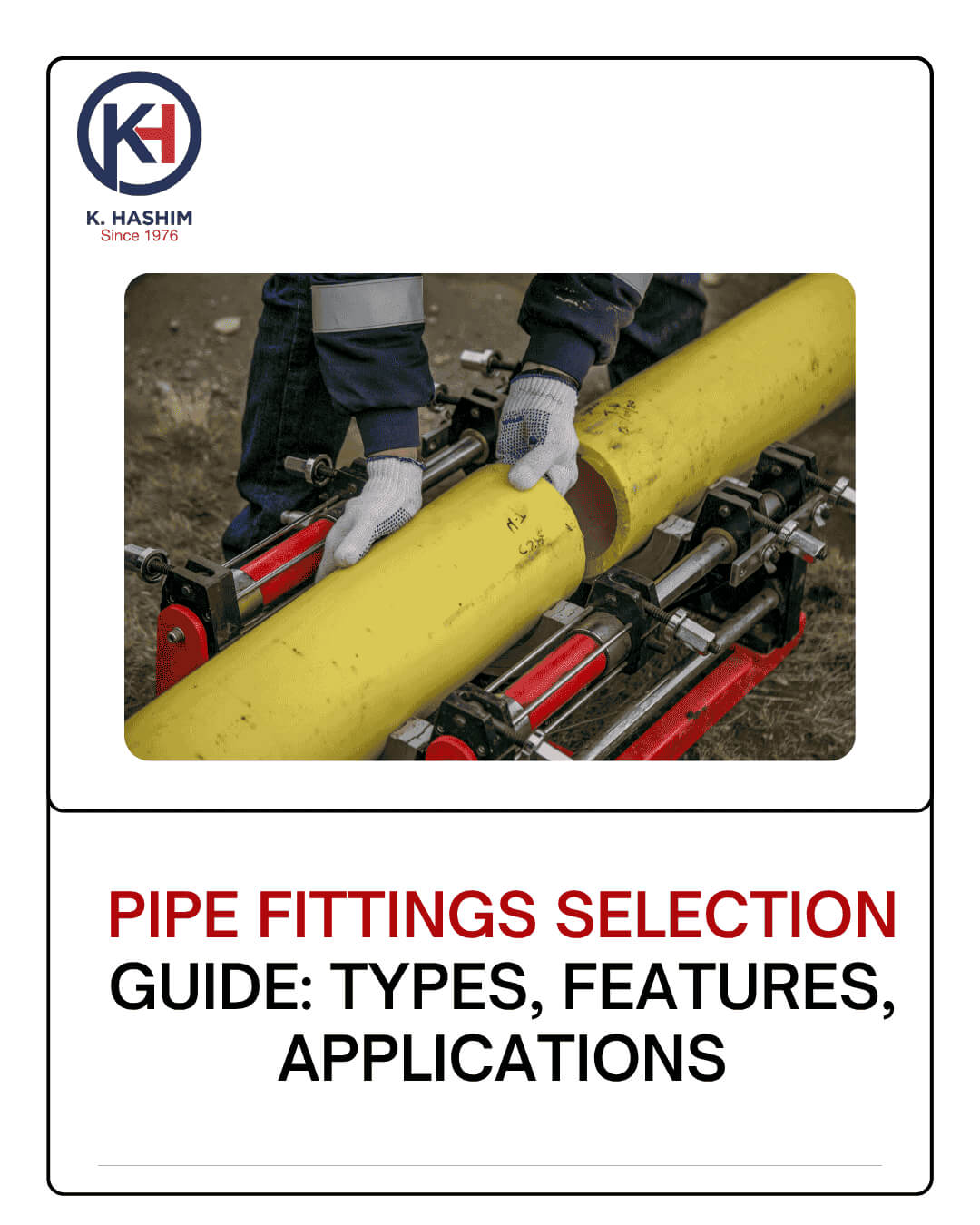
Pipe Fittings Selection Guide: Types, Features, and Applications

Selecting the right pipe fittings is one of the most important decisions in plumbing, industrial piping, and construction systems. The performance, safety, and efficiency of any piping network depend heavily on the quality and compatibility of its fittings. Whether it’s for water distribution, gas lines, HVAC systems, or industrial fluid transport, understanding how to make the right pipe fittings selection can prevent leaks, corrosion, and long-term maintenance issues.

In this guide, we’ll explore the most common types of pipe fittings, their features, materials, and practical applications across residential, commercial, and industrial sectors.

Understanding the Importance of Pipe Fittings Selection

Every piping system needs secure connections to ensure smooth fluid flow and structural integrity. Proper pipe fittings selection ensures the right size, material, pressure rating, and joint type for the system. Engineers and contractors must also consider the medium being transported, whether water, gas, oil, or chemicals, to choose compatible materials like stainless steel, brass, PVC, or copper.

A well-planned pipe fittings selection process guarantees longevity, leak resistance, and energy efficiency. It also reduces downtime in maintenance and enhances overall system performance.

Types of Pipe Fittings and Their Applications

Pipe fittings come in a wide variety of shapes and functions, each designed for specific tasks such as changing direction, connecting pipes, or closing ends. Below are some of the most commonly used fittings and their roles in plumbing and industrial applications.

1. Threaded Connectors: The Role of the Barrel Nipple

A Barrel Nipple is a short piece of pipe with external threads on both ends, used to connect two female-threaded fittings or valves. It’s commonly found in plumbing systems, oil and gas pipelines, and compressed air setups. When you focus on pipe fittings selection, consider the thread type (BSP or NPT) and the pressure rating to ensure compatibility with your system.

Barrel nipples are available in stainless steel, carbon steel, and brass, providing excellent resistance to corrosion and temperature variations.

2. End Closures and Safety: Using a Cap

A cap fitting is used to seal the end of a pipe. It’s essential in situations where a pipe system may be extended later or temporarily closed during testing. During the pipe fittings selection process, caps are chosen based on size, material, and whether the system will experience internal pressure.

Stainless steel and PVC caps are ideal for plumbing and water lines, while threaded carbon steel caps are used in high-pressure industrial environments.

3. Joining Pipes Efficiently: The Function of a Coupling

A coupling connects two pipes of the same diameter, maintaining the system’s flow and structural strength. There are full couplings, half couplings, and reducing couplings, each serving different purposes depending on system requirements.

When doing a pipe fittings selection, a coupling is chosen based on the joining method, threaded, welded, or compression type, and its resistance to pressure and corrosion. Couplings are commonly used in water distribution, irrigation systems, and chemical pipelines.

4. Four-Way Flow Control: The Cross Fitting

A cross fitting, also called a four-way fitting, has four openings arranged at right angles to each other. It allows fluid to split into different directions or merge multiple flows. Proper pipe fittings selection here involves considering equal or unequal outlet sizes, depending on whether the system requires balanced or reduced flow rates.

Cross fittings are widely used in fire sprinkler systems, industrial manifolds, and HVAC systems where multiple pipelines converge.

5. Adapting Sizes: The Importance of a Hex Bushing

A hex bushing is a small but vital fitting used to connect pipes of different sizes. Its hexagonal shape makes installation easy using a wrench, ensuring a tight, leak-proof connection. During pipe fittings selection, bushings are chosen based on thread compatibility and system pressure requirements.

They are typically used in compressed air lines, water supply systems, and hydraulic installations to ensure proper flow transition between large and small pipes.

6. Reliable Connections: How a Hex Nipple Works

A hex nipple has male threads on both ends and a hexagonal center for tightening. It is used to connect two female-threaded fittings, much like a barrel nipple, but allows for easier wrench handling. During pipe fittings selection, a hex nipple is preferred for systems requiring durable metal-to-metal sealing.

These fittings are ideal for applications in oil refineries, water treatment facilities, and heavy-duty construction pipelines.

7. Sealing the System: The Plug

A plug is a small but essential fitting used to close off the end of a pipe or an unused outlet in a fitting. It can be threaded or welded depending on the piping system. A proper pipe fittings selection ensures the plug material matches the rest of the system to prevent galvanic corrosion.

Plugs are commonly used during testing phases or in systems that may require future expansion.

8. Flow Diversion and Branching: The Tee Fitting

A tee fitting has three openings, one inlet and two outlets, used to combine or split fluid flow. Available in equal and reducing variants, tees are crucial for building branch lines in plumbing and industrial systems.

When considering pipe fittings selection, tees are evaluated for their compatibility with system pressure and medium type. They are frequently used in water distribution, gas pipelines, and chemical plants.

9. Easy Maintenance and Disassembly: The Union

A union fitting allows two pipes to be easily joined and disconnected without cutting the pipe. It is perfect for systems that require frequent maintenance, inspection, or cleaning. During pipe fittings selection, a union fitting is chosen for convenience, durability, and leak resistance.

Unions are widely used in HVAC units, water heaters, and high-pressure hydraulic systems, making them one of the most versatile fittings available.

Key Considerations for Pipe Fittings Selection

When choosing the right fittings for any system, keep these essential factors in mind:

  1. Material Compatibility: Select fittings that match the pipe material to prevent corrosion or galvanic reactions.
  2. Pressure and Temperature Ratings: Ensure the fitting can withstand the operational limits of your system.
  3. Connection Type: Decide between threaded, welded, or flanged connections depending on the application.
  4. Size and Dimension: Always measure accurately to ensure tight and leak-proof fits.
  5. Standards Compliance: Opt for fittings that comply with ISO, ASTM, or ASME standards for safety and reliability.

Proper pipe fittings selection based on these factors guarantees system integrity and operational safety.

Applications of Pipe Fittings Across Industries

Pipe fittings are used in almost every industry, from plumbing to petrochemical plants. Common applications include:

  • Residential Plumbing: For water supply and drainage systems.
  • Oil and Gas: High-pressure pipelines require durable steel fittings.
  • HVAC Systems: For regulating airflow and refrigerant circulation.
  • Chemical Processing: Corrosion-resistant materials like stainless steel and PVC are preferred.
  • Agricultural Irrigation: Lightweight couplings and tees help maintain efficient water flow.

A smart pipe fittings selection approach ensures that each fitting performs reliably within its intended application.

FAQs

1. What are the different types of pipe fittings?

The main types of pipe fittings include elbows, tees, couplings, unions, reducers, caps, plugs, crosses, and nipples. Each type serves a specific function such as changing direction, connecting pipes, or sealing ends.

2. What are the applications of pipe fittings?

Pipe fittings are used in plumbing, oil and gas pipelines, chemical processing, HVAC systems, water treatment plants, and industrial fluid transfer to connect, control, or direct flow within piping networks.

3. How to choose pipe fittings?

Choose pipe fittings based on pipe material, size, pressure rating, temperature range, and media type. Also, consider corrosion resistance and compatibility with the pipe schedule (e.g., 10, 40, or 80).

4. What are the 5 examples of fittings?

Five common examples of pipe fittings are: elbow, tee, coupling, union, and plug, each designed to change direction, join sections, or close pipe ends effectively.

Conclusion

Selecting the right pipe fittings is essential for achieving long-lasting and efficient piping systems. From simple connectors like barrel nipples and couplings to specialized fittings like crosses, tees, and unions, each component plays a crucial role in performance and safety.

A well-informed pipe fittings selection ensures optimal flow, pressure management, and ease of maintenance, whether in a residential setup or a complex industrial network. By focusing on compatibility, durability, and design, you can create piping systems that stand the test of time and deliver superior functionality.

Contact us on +971 50 486 7361 for purchasing high-quality tools, a renowned provider of quality products spanning the Marine, Oilfield, and Industrial Supply sectors. With over 45 years of experience.

Explore More Expert Insights

Discover deck & engine components, marine epoxies, fasteners, fittings, flanges, valves, and gauges for your next project.

Tips On Using Fasteners For High-Temperature Applications Guide to Using Fasteners Safely in High-Temperature Settings

Guide to Choosing Steel Flanges for Industrial Piping in DubaiSelecting the Right Steel Flanges for Industrial Piping

Unlocking Potential of SS Grease Nipples in UAE IndustriesMaximize Efficiency with Stainless Steel Grease Nipples

Choosing the Right Sounding Cock Test Valve Supplier in UAEFind Trusted Sounding Cock Test Valve Suppliers in UAE

PPE Kit Guide: Safety Equipment Standards & RequirementsComprehensive PPE Kit Guide for Safety Compliance in UAE

Tips On Using Fasteners For High-Temperature Applications

Fasteners are a critical component of companies where performance, safety, and strength should never be compromised. In high temperature power plants, petrochemical refineries, aerospace industries, and automotive factories, fastener selection is key to retaining strength and proper operation. The challenge lies in controlling thermal expansion, oxidation, and load fluctuation, which can weaken the fastening solution unless properly designed.

Understanding fastener behavior in extreme heat allows engineers and technicians to prevent premature failure, extend service life, and meet safety standards. Below are guidelines that professionals give on using fasteners at high temperatures.

1. Selecting the Right Fastener Materials

Selecting the right material is the first step toward guaranteeing that one’s fasteners will serve effectively in high-heat conditions. Stainless steel, Inconel, and titanium alloys are usually selected because of their oxidation, creep, and thermal fatigue resistance.

Upon exposure to temperatures greater than 400°C, common fasteners lose tensile strength and therefore loosen or break. In applications where it matters most, however, alloy-based fasteners with high chromium and nickel content are optimal since they are scale-resistant and stable.

2. Thermal Expansion and Load Management Understanding

Metals get expanded with high temperatures. If fasteners are not chosen with thermal expansion in mind, it can lead to loosening of joints or overstressing. Engineers make use of disc spring washers to counter the load variation and maintain the clamping force in place even in the presence of fluctuating heat cycles.

By such component integration in assemblies, industries are able to reduce the likelihood of bolt fatigue or vibration-induced failure to a significant extent.

3. Heat-Resistant Coatings and Surface Treatments

Protective coatings improve the durability of fasteners. Ceramic coatings, PTFE (Teflon), and custom anti-oxidation treatments enhance heat resistance while lowering friction. Coatings also reduce galling and seizing, which are prevalent in high-heat applications.

For instance, with a copper washer and kit, sealing performance under high thermal loads is better guaranteed, hence making it ideal for application in engines, pipelines, and heat exchangers.

4. Significance of Retaining Rings and Circlips

In high-temperature equipment, fasteners tend to need additional support for maintaining rotating or moving parts. external circlips and internal circlips are widely used for achieving axial holding and preventing dislocation of parts under extreme heat and vibration.

These compact but efficient retaining rings have mechanical strength in turbines, compressors, and other rotary machines subjected to severe operating stress.

5. Lubrication and Maintenance Practices

Lubrication plays a significant role in working with high-heat exposed fasteners. In the absence of lubrication, friction is generated, which can lead to galling, wear, and failure. Grease nipples and industrial lubricants allow technicians to apply grease in the right spots, reducing downtime and extending service life.

Balanced maintenance checks, torque updates, and lubrication cycles are most critical in ensuring fasteners maintain integrity under extreme weather conditions.

6. Locking Mechanisms for Secure Joints

Severe heat has a tendency to increase the likelihood of loosening by vibration and cyclic expansion. Prevention of self-loosening is possible using high-performance locking devices such as a nord lock washer, where joints will remain tight even under fluctuating loads.

The washers find applications in industries such as aerospace, energy, and heavy-duty machinery manufacturing, where joint safety is not something to be compromised.

7. Fittings of High Precision for Pressure Systems

In applications like boilers, pipelines, and chemical plants, precise fittings are essential. Fittings like barrel nipple and hex brushing ensure leak-free connections in high-temperature, high-pressure systems. Similarly, a weldolet provides reinforced branch connections, which maintain system integrity in abusive environments.

By including the proper fittings and unions, engineers can reduce the risk of pressure loss and ensure optimal overall system efficiency.

8. Keys and Unions for Rotating Equipment

Rotating equipment under hot applications demands reliable torque transmission. Parallel shaft keys play a vital role in ensuring power transfer from shafts to components without slipping. In combination with a union, they provide safe, dismountable joints that are simple to maintain and can dissipate heavy mechanical and thermal loads.

These solutions are especially essential in motors, pumps, and turbines where downtime costs are extremely high.

9. Monitoring Fastener Performance in Service

Even the strongest fasteners deteriorate under adverse conditions if they are not inspected. Using non-destructive test (NDT) methods such as ultrasonic testing or thermal imaging, one can detect early signs of fatigue, creep, or micro-cracking.

In addition, digital torque monitoring systems help ensure bolts are tightened to specification precision, which is essential when maintaining joint integrity in high-temperature service.

10. Applications Where High-Temperature Fasteners Are Required

  • Aerospace engines require lightweight, heat-resistant fasteners that can withstand rapid temperature changes.
  • Automotive exhaust systems rely on high-temperature washers and circlips to dissipate vibration and repeated heat cycles.
  • Oil & gas pipelines need secure joints utilizing nipples, unions, and weld fittings to maintain system integrity.
  • Power plants use spring washers, keys, and locks to protect turbines and boilers during long exposure to high heat.

In each case, the correct choice of fastener guarantees safety, efficiency, and final reliability.

11. Role of Advanced Tool in Fastener Installation

Proper installation of high-temperature fasteners requires the correct tools. Advanced torque wrenches, hydraulic tensioners, and power tools are the ideal instruments for precise tightening. In such cases as turbine assembly or boiler repair, technicians employ power tools to apply controlled torque to attain proper preload without distorting the fastener.

High-performance power tools are not only time savers but also offer repeatable accuracy, which is the most important thing when working in industries where safety is the number one concern.

12. Future Trends in High-Temperature Fasteners

With companies heading towards cleaner energy and new-generation manufacturing processes, fastener technology is also evolving. We are seeing trends like:

  • Intelligent fasteners that contain sensors to monitor tension and heat in real time.
  • Sustainable coatings that are resistant to oxidation without using poisonous chemicals.
  • Additive manufacture of bespoke fasteners designed for certain high-temperature uses.

These technologies will assist industries in increasing reliability while decreasing the cost of maintenance.

FAQS

1. What fasteners are available for high temperature application?

Inconel, stainless steel (A286, 304, 316), titanium, and alloy steel fasteners.

2. Which type of fastener is recommended in hot and humid marine climates?

316 stainless steel fasteners are best due to superior corrosion resistance.

3. What is the heat treatment process for fasteners?

Processes include annealing, quenching, tempering, and carburizing to improve strength and toughness.

4. What kind of bolt is best for high heat?

Inconel bolts are ideal as they retain strength and resist oxidation at extreme temperatures.

Conclusion

Use of fasteners under high-temperature environments needs precision, experience, and suitable materials. From Copper Washer & Kit for sealing to Nord Lock Washer used for locking, each component has its role in the attainment of system stability. Support parts such as Disc Spring Washers, Grease Nipples, and Parallel Shaft Keys also help towards enhanced performance under harsh heat and pressure.

Installed by precise tools and maintained through frequent inspections, these fasteners are reliable and long-lasting in industries where failure is not an option. Through the application of these expert recommendations, engineers and technicians can supply dependable fastening solutions resistant to harsh thermal conditions.

Call K.Hashim LLC on +971 6 533 8006 for purchasing high-quality tools, a trusted supplier of building materials and industrial solutions.

Explore More Expert Insights

Discover deck & engine components, marine epoxies, fasteners, fittings, flanges, valves, and gauges for your next project.

Pipe Fittings Selection Guide: Types, Features, ApplicationsComplete Guide to Choosing Pipe Fittings for Every Job

Guide to Choosing Steel Flanges for Industrial Piping in Dubai Selecting the Right Steel Flanges for Industrial Piping

Unlocking Potential of SS Grease Nipples in UAE Industries Maximize Efficiency with Stainless Steel Grease Nipples

Choosing the Right Sounding Cock Test Valve Supplier in UAEFind Trusted Sounding Cock Test Valve Suppliers in UAE

PPE Kit Guide: Safety Equipment Standards & Requirements Comprehensive PPE Kit Guide for Safety Compliance in UAE