Weld Neck Vs Slip On Flanges Which Should You Choose

Get the flange wrong and you will not find out until the line is already under pressure.

Across oil and gas, water treatment, HVAC and general industrial piping, weld neck flanges and slip on flanges are the two designs engineers reach for most often. Both connect pipes, valves and equipment to the same ASME B16.5 dimensions, yet the way each one is built and welded changes how it handles stress, heat and vibration over the life of the system.

Choose poorly and the result is either a leak waiting to happen or money spent on strength a low pressure line never needed. Here is how the two compare and which one your project calls for.

What Is A Weld Neck Flange

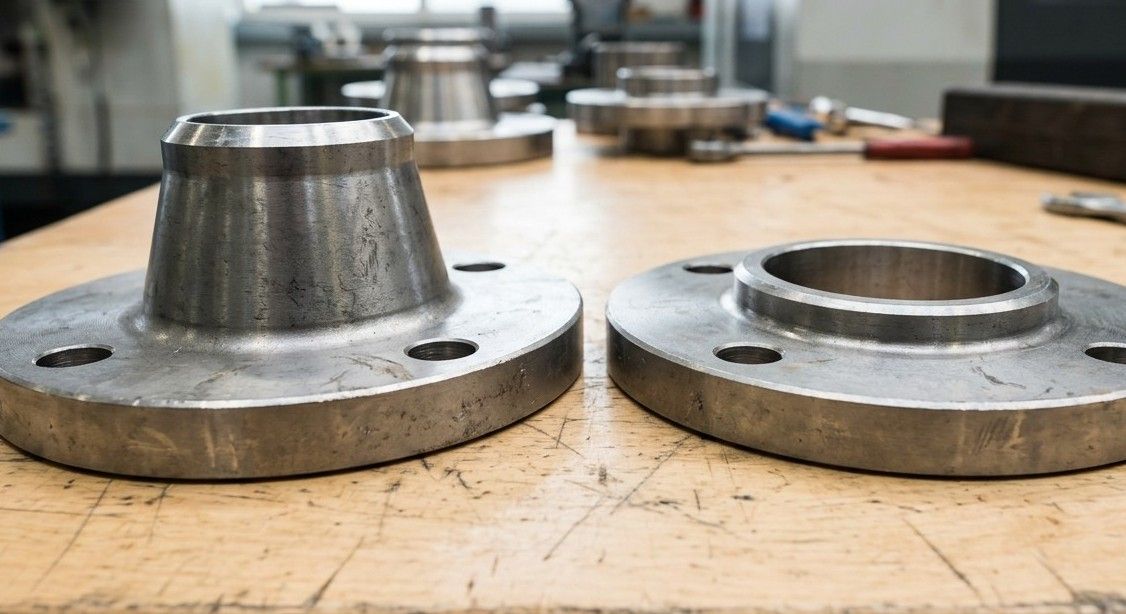
A weld neck flange is built around a long tapered hub that narrows gradually from the flange body into the pipe wall. That taper does real work, spreading load evenly across the joint instead of letting stress pile up in one place.

The flange meets the pipe through a single full penetration butt weld, the same weld used to join one length of pipe to another. Because the bore lines up with the pipe bore, flow passes through with very little turbulence.

The design also pays off at inspection time, since that butt weld can be checked with radiographic or ultrasonic testing, giving engineers confidence in the joint before the line ever sees pressure.

These weld neck flanges are machined to standard pipe schedules in carbon steel, stainless steel and alloy grades, for exactly the high pressure and high temperature lines this design was built to handle.

What Is A Slip On Flange

A slip on flange takes a simpler approach. It is a flat ring with a bore just large enough for the pipe to slide through.

Once it is in position, two fillet welds hold it in place, one on the outer face and one on the inner bore. There is no tapered hub here, so the transition from pipe to flange happens more abruptly than it does on a weld neck design.

That simplicity is the point. Slip on flanges go on faster, align more easily and forgive a pipe that was cut slightly long or short, all while costing less to produce. The same material range is available as slip on flanges for cooling water, compressed air, HVAC and other utility lines where speed and cost outweigh the need for extreme pressure ratings.

Weld Neck Vs Slip On Flange Key Differences

The table below lines up both flange types against the factors that actually decide a specification.

Factor Weld Neck Flange Slip On Flange
Weld Type Single full penetration butt weld Two fillet welds
Stress Distribution Gradual through tapered hub More concentrated at weld toe
Bore Alignment Matches pipe bore exactly Slightly larger than pipe
Fatigue Resistance Higher Lower
Weld Inspection Radiographic or ultrasonic testing possible Surface testing only
Installation Speed Slower, needs precise alignment Faster, easier fit up
Material Cost Higher Lower
Best Suited For High pressure and critical service Low to moderate pressure service

When To Choose A Weld Neck Flange

Reach for a weld neck flange whenever a joint cannot fail.

  • High pressure systems rated Class 300 and above
  • High temperature lines that expand and contract often
  • Piping near pumps or compressors that creates vibration
  • Lines carrying hazardous, toxic or flammable fluids
  • Projects where the weld must pass radiographic testing
  • Systems where long term reliability matters more than upfront cost

When To Choose A Slip On Flange

A slip on flange earns its place wherever conditions stay steady and budget matters as much as build.

  • Low pressure utility lines such as cooling water or compressed air
  • HVAC and general building piping
  • Water treatment and distribution networks
  • Temporary, test or bypass connections
  • Large diameter, low pressure lines where material cost matters most
  • Sites where pipe length on the ground may vary slightly

Cost And Installation Comparison

A slip on flange almost always costs less than its weld neck equivalent, simply because it uses less material and a simpler welding method.

How much you actually save depends on size and pressure class, as the table below shows.

Pressure Class Typical Cost Gap Installed Cost Note
Class 150 Slip on runs around 20 to 30 percent cheaper Gap narrows once welding labour is added
Class 300 Slip on stays moderately cheaper Extra weld inspection can close the gap
Class 600 and above Weld neck is usually required Cost difference becomes far less relevant

Whatever the size, total installed cost should weigh in welding labour and inspection, not just the sticker price of the flange itself.

Where To Source Flanges In The UAE

Beyond weld neck and slip on types, K. Hashim LLC works as a complete flanges supplier in UAE.

The range covers blind, lap joint, plate, socket weld, spectacle and threaded flanges in carbon steel, stainless steel and alloy grades, so every flanged connection on a project can come from one source.

Conclusion

Both weld neck and slip on flanges earn their place once the operating conditions are clear.

Weld neck flanges suit high pressure, high temperature and cyclic service where strength and inspection matter most, while slip on flanges suit stable, low pressure utility lines where cost and installation speed take priority.

Weigh up pressure class, temperature, vibration and what a leak would cost you before you order, and the right choice becomes obvious.

Get Expert Help Choosing The Right Flange For Your Project

Getting the choice between weld neck and slip on flanges right protects the safety, performance and long term cost of a piping system.

K Hashim LLC supplies certified weld neck and slip on flanges across multiple sizes, classes and materials for oil and gas, construction and industrial projects throughout the UAE.

Reach out to our team for guidance on choosing the right flange for your system.

Explore More Expert Insights

Explore our expert insights to stay updated on the latest piping solutions, flange types, and industrial best practices.


Stud Bolts vs Hex Bolts: Which Fastener Is Right for Your Application?

When engineers and procurement specialists sit down to plan a project, fastener selection is one of the first real decisions on the table. Choosing between stud bolts and hex bolts carries direct consequences for joint integrity, sealing performance, and long-term maintenance costs. Both fasteners hold assemblies together but they do it in fundamentally different ways, and the wrong choice can result in leaks, loosening, and unplanned downtime that no project budget accounts for.

What makes this decision worth getting right is that these two fasteners are not interchangeable alternatives. They are purpose-built for different conditions, different loads, and different service environments.

Understanding what separates them at a mechanical level and knowing where each one performs at its best is what allows engineers, contractors, and procurement teams to make a specification they can stand behind.

What Are Stud Bolts?

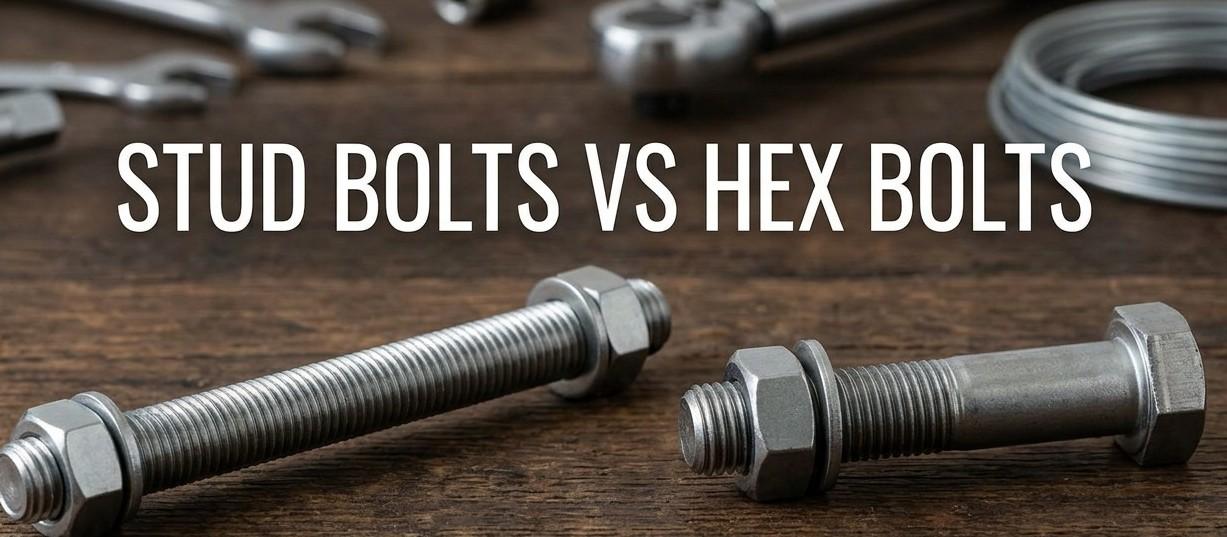
Stud bolts are headless, fully or partially threaded rods that secure joints using nuts on both ends. Both ends thread into the assembly and the clamping force is distributed evenly across both nuts. This headless design makes them well suited for tight or confined spaces where a bolt head would obstruct access or create an uneven bearing surface.

Industries like oil and gas, petrochemicals, and power generation rely on stud bolts almost exclusively for flanged pipeline connections and pressure vessels where leakage cannot be tolerated.

Common types of stud bolts

  • Fully threaded studs with threads running the entire length for maximum grip
  • Double-end studs with threads at both ends and a plain shank in the middle
  • Tap-end studs with different thread lengths at each end for use with tapped holes

What Are Hex Bolts?

Hex bolts are one-piece fasteners with a six-sided head and a threaded shank, tightened using a wrench or socket applied directly to the head. This makes installation fast and practical in applications where access is limited to one side of the assembly. Their availability across multiple grades, sizes, and materials makes them the standard choice for construction frames, machinery housings, automotive assemblies, and equipment brackets.

Common types of hex bolts

  • Standard hex bolts with partial thread and plain shank for clearance hole applications
  • Fully threaded hex bolts with threads along the full shank for shorter grip applications
  • Flange hex bolts with an integrated flange under the head for wider load distribution

Key Differences Between Stud Bolts and Hex Bolts

The differences between these two fasteners go deeper than appearance. Understanding the mechanical behavior of each one helps engineers match the right fastener to the right service condition.

Feature Stud Bolts Hex Bolts
Head Design No head, nuts on both ends Hexagonal head, one nut
Torque Application Applied to nuts, not the stud body Applied directly to the bolt head
Load Distribution Even across both ends Concentrated at the head end
Access Requirement Both sides of the joint needed Single-sided access is sufficient
Typical Pressure Rating Up to PN40 and above Typically up to PN16
Best Environment High pressure, high temperature General structural and mechanical
Maintenance Nuts can be split without damaging the stud Head can round off or seize in tapped holes

Installation Method and Access Requirements

Hex bolts only need access from one side of the joint, which makes them convenient for blind-hole applications and tight assemblies where reaching behind the component is not possible. A single wrench or socket drives them in and secures the connection without any additional hardware on the reverse side.

Stud bolts require clear access to both sides of the joint because a nut must be fitted and tightened on each end. This is not a limitation in most flange applications since through-access is standard, but it does rule stud bolts out for blind-hole situations where one side is inaccessible.

Load Distribution and Clamping Force Accuracy

When torque is applied to the head of a hex bolt, a meaningful portion of that energy is absorbed by friction between the head bearing surface and the mating component and between the thread flanks. The bolt body also experiences torsional stress as it rotates and this twisting does not contribute to clamping force, making precise and repeatable preload harder to achieve.

Stud bolts handle this differently. Torque goes only to the nut, the stud body goes into pure tension, and the clamping force is far more accurate and uniform. For gasketed joints where even a small difference in compression across the sealing face can cause a leak, this distinction is critical to reliable performance.

Performance in High Pressure and High Temperature Service

For pipelines, pressure vessels, heat exchangers, and reactors, stud bolts are not just preferred — they are specified by code. Standards like ASME B16.5 mandate stud bolts for flanged connections in critical service because their pure-tension loading method ensures the gasket is compressed uniformly across the entire sealing face.

Even when the system goes through thermal cycling with expansion and contraction from temperature changes, a properly preloaded stud bolt maintains joint integrity in a way that a hex bolt typically cannot. Hex bolts perform reliably in moderate-stress structural applications but the stress concentration at the head-shank junction becomes a liability under sustained high loads or dynamic vibration.

Explore a complete range of industrial stud bolts and hex bolts in materials and grades suited for both standard and critical service conditions.

Material Options and Corrosion Resistance

Both fastener types are available in carbon steel, alloy steel, and stainless steel, but the material specifications most commonly associated with each reflect their typical service environments. Stud bolts in high-temperature piping are most often manufactured to ASTM A193 Grade B7, a chromium-molybdenum alloy that retains strength at temperatures up to around 482°C and is typically paired with ASTM A194 Grade 2H heavy hex nuts.

For higher temperatures approaching 593°C, Grade B16 is used. Hex bolts in structural applications commonly follow ASTM A325 or A307 grades, while stainless steel grades are available across both types for environments involving moisture, chemicals, or marine exposure.

Maintenance, Replacement, and Long-Term Cost

If a hex bolt seizes in a tapped hole due to corrosion or over-torquing, the head can round off and extracting it often means drilling out the fastener and re-tapping the hole, which is a costly and time-consuming repair. The issue is compounded in critical systems where downtime carries financial and safety implications.

With stud bolts, the exposed nuts absorb wear and corrosion first. A seized or damaged nut can be split and removed without touching the stud itself, and the stud can often be reused or replaced without disturbing the flange or surrounding components. In systems that undergo regular inspection and maintenance cycles, this serviceability advantage adds up considerably over time.

Choosing the Right Fastener for Your Project

If the connection involves a gasketed flange, operates under elevated pressure or temperature, or sits inside a system where leakage would be dangerous or costly, stud bolts are the right choice. If the connection is structural, mechanical, or general-purpose and operating conditions are stable, hex bolts offer practical and cost-effective performance.

Budget plays a role as well. Hex bolts are widely available and easy to source in bulk at competitive prices, while stud bolts carry a higher unit cost that is easily justified by their service life and reliability in demanding environments. Getting the selection right at the specification stage avoids costly corrections later in the project lifecycle.

Conclusion

Stud bolts and hex bolts each have a clear role in industrial and structural applications. Stud bolts deliver the precise clamping force, sealing integrity, and maintenance flexibility that high-pressure and high-temperature systems demand. Hex bolts bring versatility, ease of installation, and broad availability to the full range of general-purpose fastening needs. Selecting the right one from the start protects the integrity of the connection and reduces the risk of failures down the line.

Hashim LLC supplies high quality bolts and fastening components designed to meet the demands of industrial operations across the UAE, from standard structural assemblies to critical high-pressure pipeline systems.

Partner with our fastener specialists for dependable bolt solutions tailored to your project specifications and operating requirements.

Explore More Expert Insights

Explore our expert insights to stay updated on the latest piping solutions, flange types, and industrial best practices.

Nylock nuts vs Standard Nuts: Key Differences Explained

In industrial and mechanical applications, loose fasteners can lead to equipment damage, maintenance issues, and safety risks. Choosing between a Nylock nut and a standard nut is important for maintaining secure threaded connections, especially in environments exposed to vibration and dynamic loads.

Although both fasteners serve the same basic purpose, their locking mechanisms work very differently. Standard nuts rely on thread friction and clamp force, while Nylock nuts use a nylon insert that creates prevailing torque to resist loosening during operation.

This guide explains the differences between Nylock nuts and standard nuts, including vibration resistance, temperature performance, reusability, and material options. It also helps identify which fastening solution is best suited for specific industrial and mechanical applications.

What Is a Standard Nut?

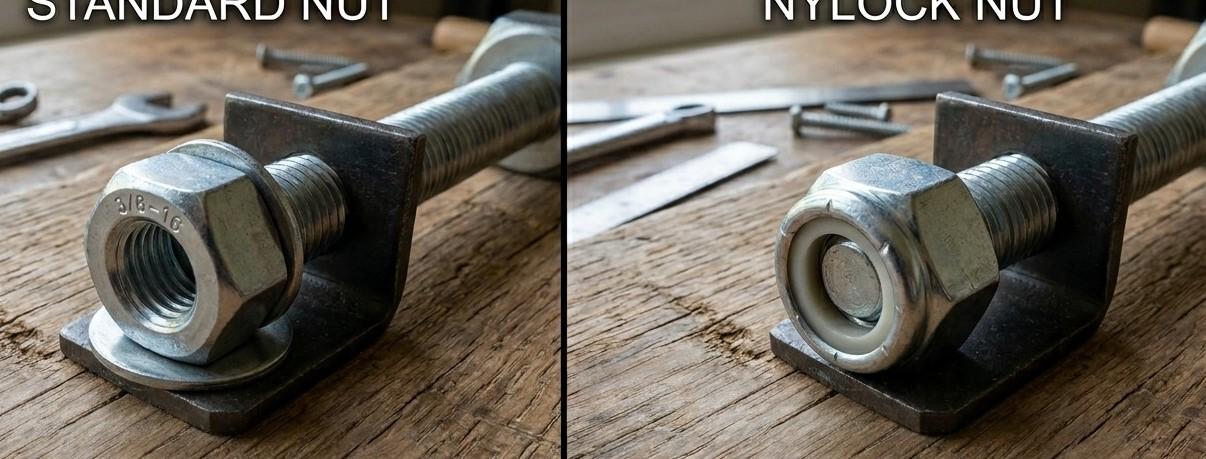
A standard nut, often called a hex nut, is the most widely used fastening component in mechanical assemblies worldwide. It threads onto a bolt and is torqued down to a specified value, generating a clamping force between the mating surfaces.

That clamping force creates friction between the threads, and friction is what holds the joint together. Standard nuts depend entirely on preload to stay in position since they carry no independent locking feature of their own.

In a perfectly static environment this friction keeps the nut in place for years. The moment an assembly starts to vibrate, however, the nut becomes vulnerable to gradual rotation and backing off.

Standard nuts conform to DIN 934 or ANSI B18.2.2 and come in a range of materials and grades. Key characteristics include:

  • Available in carbon steel, stainless steel, brass, and alloy steel
  • Free-spinning design allows fast hand installation before final torque
  • Unlimited reusability as long as threads remain undamaged
  • Lower unit cost compared to any locking nut variant
  • Require additional measures like lock washers in vibrating environments

What Is a Nylock nut?

A Nylock nut, also called a nylon insert lock nut, features a nylon collar embedded in the top portion of the nut. When bolt threads reach this collar they must force their way through the nylon, which deforms slightly and grips the bolt with consistent compressive pressure.

This grip is what makes the Nylock nut fundamentally different. The locking action does not come from bolt tension or clamp force but from the mechanical interference between the nylon and the thread flanks.

This means the nut resists rotation even when vibration reduces or eliminates the original clamp load. The nylon insert is typically made from polyamide, which retains its elastic recovery properties across a wide temperature range for general industrial use.

Core features of a Nylock nut include:

  • Nylon collar permanently bonded inside the top of the nut body
  • Prevailing torque that holds the nut even after bolt tension is lost
  • Dimensional compliance to ISO 7042 or ISO 7043 depending on variant
  • Available in steel, stainless steel, and titanium base materials
  • Not free-spinning, requiring a wrench through the nylon engagement zone

How the Locking Mechanism Actually Works

When a standard nut is tightened, the friction holding it in place comes from two contact zones. The first is between the underside of the nut and the bearing surface, and the second is between the mating thread flanks of the nut and bolt.

Research using the Junker vibration test, the globally accepted standard for fastener loosening behavior, consistently shows that transverse vibration overcomes these friction zones far more easily than axial loading. Once friction drops below the self-loosening threshold, the nut begins to back off one microscopic increment at a time.

A Nylock nut adds a third retention mechanism that does not depend on thread friction at all. The nylon collar creates prevailing torque, which is resistance that exists independently of bolt tension.

Even if vibration strips away all clamp load, the nylon still grips the bolt and holds the nut in position. Laboratory testing confirms that Nylock nuts retain their position through thousands of vibration cycles where standard nuts have already fully backed off.

Key Differences Between Nylock nuts and Standard Nuts

The table below summarizes the most important performance and application differences between the two nut types to support clear procurement decisions.

Feature Standard Nut Nylock Nut
Locking Mechanism Thread friction only Nylon insert creates prevailing torque
Vibration Resistance Low High
Temperature Limit Limited by material only Nylon softens around 120–250°C
Reusability Unlimited Reduced after each removal
Installation Torque Standard torque at seating only Higher torque required through nylon zone
Typical Materials Carbon steel, stainless steel, brass Steel or titanium with nylon insert
Thread Damage Risk Minimal Low, nylon adds slight resistance
Cost Lower upfront Higher upfront, lower lifecycle cost
Best Environment Static, non-vibrating assemblies Dynamic loads, vibration, safety-critical joints
Applicable Standards DIN 934, ANSI B18.2.2 ISO 7042, ISO 7043, DIN 985

Material Options and Their Significance

Both nut types are available across multiple material grades, and the right choice depends on the environmental conditions the assembly will face. The three main tiers are carbon steel, stainless steel, and titanium.

Carbon steel

Carbon steel Nylock nuts and standard nuts are the most economical option for dry indoor environments where corrosion is not a concern. They are widely used in general machinery, consumer products, and construction applications.

Stainless steel

Stainless steel versions offer improved corrosion resistance and work well in food processing, mild marine environments, and chemical handling equipment. One trade-off is that stainless on stainless can gall without lubrication, so an anti-seize compound is recommended during installation.

Titanium

Titanium represents the highest performance tier for both nut types. Titanium alloy grade 5, known as Ti-6Al-4V, delivers a tensile strength of approximately 130,000 psi at a density roughly 40 percent lower than steel.

Its passive oxide layer regenerates after surface scratching, providing corrosion resistance that far exceeds stainless steel in saltwater and acid environments.

When a reputable Nylock nuts supplier combines titanium with a high-grade nylon insert and manufactures to ISO 7043, the result is a fastener suited for aerospace, offshore, and advanced medical applications.

Titanium Nylock nuts offer specific advantages that no other material combination can match:

  • Weight savings of up to 40 percent compared to equivalent steel fasteners
  • Self-healing oxide layer that resists saltwater, acids, and chloride attack
  • Fatigue strength retention up to 50 percent of ultimate tensile strength after one million stress cycles
  • Biocompatibility making them suitable for medical device and implant tooling
  • No coating required, eliminating coating wear and delamination over time

Temperature Performance and Its Limits

Temperature behavior is one of the most critical factors when selecting between these nut types, especially in industrial and mechanical environments operating near heat sources.

Standard nuts have no polymer component, so their temperature range is governed entirely by the alloy used. High-grade steel nuts can function in temperatures well above 500 degrees Celsius in non-oxidizing conditions without any loss of mechanical performance.

Nylock nuts carry a built-in temperature constraint because nylon loses its elastic recovery when heated beyond its softening point. Standard polyamide inserts begin to soften around 120 degrees Celsius and lose meaningful locking force above that threshold.

Higher-specification nylon grades extend the usable range to approximately 250 degrees Celsius. Applications involving these environments typically require an upgraded insert:

  • Exhaust systems and turbocharger mounting brackets
  • Heat exchanger flanges and industrial boiler connections
  • Engine compartment fasteners near hot surfaces
  • Industrial ovens and furnace equipment enclosures
  • Hydraulic systems operating at sustained elevated temperatures

Above 250 degrees Celsius, all-metal distorted-thread locking nuts are the appropriate choice. A reliable nylock nuts supplier will provide technical data sheets showing locking torque retention at each temperature level for every product in their line.

Vibration Resistance: The Defining Test

Vibration testing is where Nylock nuts prove their value most clearly and where the limitations of standard nuts become impossible to ignore.

The Junker test applies controlled transverse vibration to a bolted joint and measures the rate at which the nut backs off. Standard hex nuts begin to loosen within the first few hundred cycles and typically reach near-zero preload within a few thousand cycles depending on amplitude and frequency.

Nylock nuts tested under identical conditions retain their position across tens of thousands of cycles. Even after bolt elongation relaxes and tension drops, the nylon collar keeps the nut from rotating backward on the thread.

Industries that have adopted Nylock nuts specifically for vibration control include:

  • Automotive manufacturing for chassis, suspension, and drivetrain connections
  • Commercial aviation for engine mounts, landing gear, and control surface linkages
  • Rail equipment assembly for bogies and underframe structural joints
  • Industrial pump and motor construction operating under continuous cyclic loads
  • Marine vessels exposed to constant engine vibration and wave-induced movement

This performance advantage translates directly into reduced maintenance intervals, fewer fastener-related failures, and greater overall system reliability.

Reusability and Maintenance Considerations

One practical limitation of Nylock nuts is their reduced reusability compared to standard nuts. Each time a Nylock nut is removed from a bolt, the nylon insert undergoes some permanent deformation, so the prevailing torque on the second installation is lower than on the first.

Engineering standards and most fastener manufacturers recommend replacing Nylock nuts after disassembly, particularly in safety-critical applications. The reason is reliability rather than cost, since the price of a replacement nut is negligible compared to the risk of a failed joint.

Standard nuts can be reused indefinitely as long as threads are undamaged. This makes them the practical choice for components requiring frequent removal such as:

  • Inspection panels and maintenance access covers
  • Test fixtures and laboratory equipment
  • Adjustable frames and production jigs
  • Consumer products designed for user servicing
  • Any assembly where fastener removal happens on a regular schedule

When to Choose a Nylock nut?

Selecting the right nut type starts with an honest assessment of the operating environment. Nylock nuts are the correct specification in the following situations.

The assembly experiences vibration from any source. Engine harmonics, road input, equipment cycling, and fluid pulsation all create the transverse movement that gradually backs off standard nuts over thousands of operating hours.

The joint is safety-critical and a loose fastener could cause injury or equipment failure. Applications in this category include:

  • Steering linkages and tie rod ends
  • Brake caliper and master cylinder mounting
  • Overhead hoists and lifting equipment
  • Structural connections in bridges and elevated platforms
  • Aircraft control surface and landing gear assemblies

The assembly is difficult or expensive to access for routine retightening. Remote installations, buried components, and permanently enclosed assemblies benefit from the set-and-forget reliability that Nylock nuts provide between service intervals.

The joint material is soft or prone to creep such as aluminum, plastic, or composite structures. As the bearing material compresses and preload drops over time, the nylon insert keeps the fastener from backing out entirely.

When to Choose a Standard Nut?

Standard nuts remain the dominant fastener by volume for valid engineering reasons. Specifying Nylock nuts across every application adds unnecessary cost and complexity without improving performance.

Purely static structural assemblies such as building frameworks, shelving systems, and non-vibrating enclosures do not generate the transverse motion that causes loosening. Standard nuts with correct torque values are fully adequate in these conditions.

Standard nuts are also the better choice in the following scenarios:

  • High-precision torque applications like cylinder head bolts where consistent friction coefficients are essential for accurate torque-to-yield readings
  • Assemblies requiring frequent disassembly such as inspection panels and test fixtures where a new locking nut would be needed every time
  • Cost-sensitive, low-risk applications where the consequences of a loose nut are minor and do not justify the added expense
  • Applications using thread-locking compounds as the primary retention method where a nylon insert would interfere with compound adhesion
  • Precision bearing preload adjustments where controlled, repeatable friction is critical to correct function

Procurement and Supplier Selection

For industrial buyers, fastener quality depends as much on the manufacturing process as on the design specification. Dimensional compliance to ISO 7043 or DIN 985 ensures interchangeability, but nylon insert consistency, bonding method, and thread accuracy all directly affect real-world locking performance.

When evaluating a Nylock nuts supplier for critical applications, the baseline requirement is ISO 9001 certification covering the full manufacturing process. Aerospace supply chains require AS9100 certification and medical applications require ISO 13485.

Beyond certification, procurement teams should verify the following before placing orders:

  • Material test reports with chemical composition and mechanical property data for each batch
  • Lot traceability documentation linking finished fasteners back to raw material heat numbers
  • Sample locking torque test data confirming prevailing torque values meet or exceed ISO minimums
  • Production capacity and minimum order quantities that align with project volume requirements
  • Availability of stock in standard sizes to support urgent or unplanned maintenance requirements

Lead times for specialty sizes and materials, particularly titanium, typically range from eight to twelve weeks for custom orders. Building this into project schedules and confirming stock availability for common sizes will prevent delays during critical assembly phases.

Conclusion

The choice between Nylock nuts and standard nuts comes down to operating conditions, joint criticality, and long-term fastening reliability. Standard nuts provide a practical and cost-effective solution for static, low-vibration applications where regular maintenance and frequent disassembly are expected. Nylock nuts offer superior resistance against loosening in environments exposed to vibration, dynamic loads, and continuous movement, making them ideal for safety-critical and high-performance assemblies.

K Hashim LLC supplies premium titanium Nylock nuts and precision-engineered titanium fasteners designed to meet the demands of aerospace, marine, petrochemical, and industrial applications worldwide, from standard ISO 7043 configurations to custom manufacturing specifications.

Contact our fastener specialists for technical guidance, material certifications, and dependable fastening solutions tailored to your project requirements.

Explore More Expert Insights

Explore our expert insights to stay updated on the latest piping solutions, flange types, and industrial best practices.

Weld Neck vs. Slip-On Flanges: Which One Should You Choose?

Choosing the wrong flange type can lead to leaks, system failures, costly downtime, and serious safety risks. When comparing weld neck vs. slip-on flanges, the right choice depends on your operating pressure, temperature, installation requirements, and long-term reliability needs.

This guide breaks down the key differences, technical specifications, and ideal applications for both flange types helping you make the right decision for your piping system.

What Is a Weld Neck Flange?

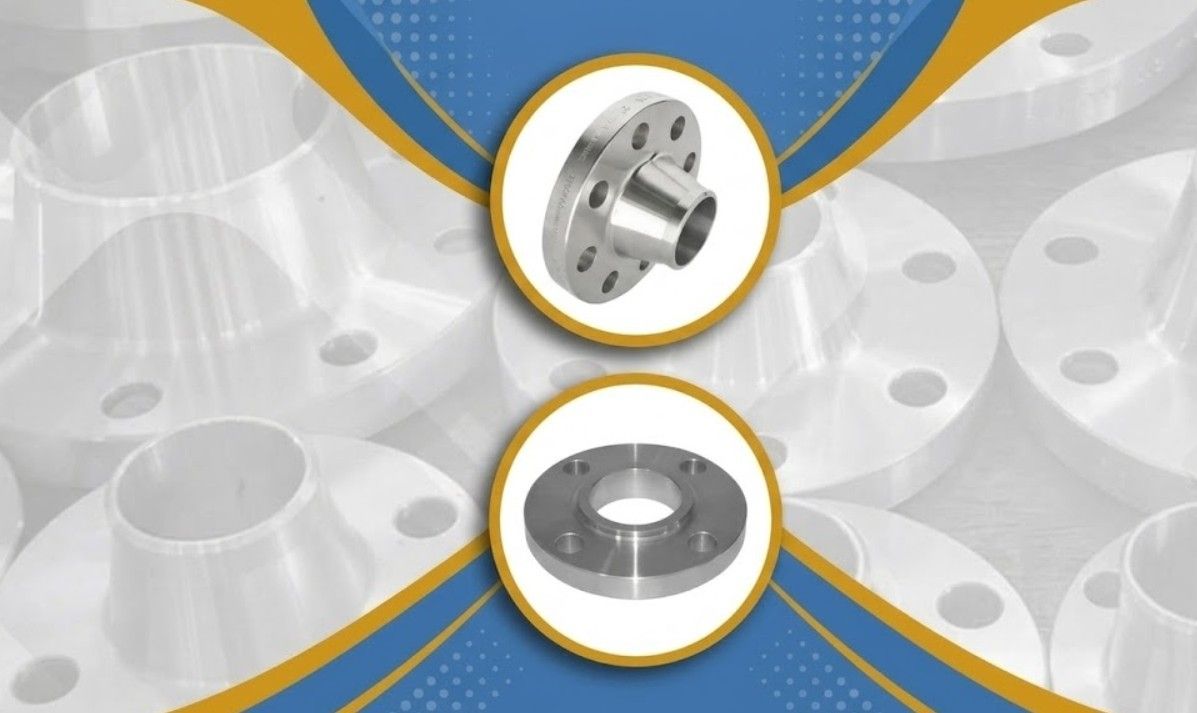
A weld neck flange features a long tapered hub that gradually transitions into the pipe wall, distributing stress evenly across the joint. It connects to the pipe via a full-penetration butt weld, which can be radiographically or ultrasonically tested to verify weld integrity under ASME B16.5 and ASME B31.3 requirements.

The tapered hub is the defining feature: it transfers load progressively into the pipe wall, minimizing stress concentration at the joint. This makes weld neck flanges the preferred choice wherever structural integrity and inspect ability are non-negotiable.

Where Weld Neck Flanges Perform Best

  • High-pressure and high-temperature piping systems
  • Oil and gas pipelines and petrochemical operations
  • Refinery and offshore platform installations
  • Power generation steam systems
  • Cryogenic fluid handling
  • Any service where joint failure carries catastrophic consequences

What Is a Slip-On Flange?

A slip-on flange slides over the pipe end and is secured with two fillet welds — one on the hub face and one at the internal bore. The bore is machined slightly larger than the pipe outside diameter, allowing easy alignment and faster fit-up before welding.

Without the tapered hub found on weld neck flanges, slip-on flanges are simpler to install and more economical to procure. However, the fillet weld design offers less structural integrity, making them best suited to lower-pressure, lower-risk applications.

Where Slip-On Flanges Are the Practical Choice

  • Water distribution and utility piping
  • HVAC and cooling systems
  • General industrial and low-pressure service lines
  • Food and beverage processing
  • Maintenance, repair, and retrofit scenarios

Weld Neck vs. Slip-On Flanges: Key Technical Differences

1. Strength and Pressure Tolerance

The tapered hub of a weld neck flange transfers load gradually into the pipe wall, reducing stress concentration and supporting pressure ratings up to Class 2500 under ASME B16.5. Slip-on flanges rely on two fillet welds, which are inherently less robust. Their effective pressure capacity is typically around two-thirds that of an equivalent weld neck under the same class rating, making them suitable for low-to-medium pressure applications only.

2. Welding Method

Weld neck flanges use a full-penetration butt weld, which forms a seamless, high-integrity connection with the pipe. Slip-on flanges use two fillet welds — faster to deposit, but less structurally sound. The fillet weld creates a geometric discontinuity at the weld toes, which becomes a potential fatigue initiation point under cyclic or dynamic loading.

3. Radiographic Testing and Code Compliance

The butt weld on a weld neck flange can be radiographically tested (RT) or ultrasonically tested (UT) to confirm internal weld integrity, as required under ASME B31.3 and API 570 for critical service. Fillet welds on slip-on flanges cannot be RT examined. This typically excludes them from Category M fluid service, lethal service designations, and any application where full volumetric weld examination is mandatory.

4. Fatigue and Cyclic Load Performance

In systems subject to vibration, thermal cycling, or pressure surges, the butt-weld joint of a weld neck flange delivers superior fatigue resistance due to more uniform stress distribution. Slip-on fillet welds are more susceptible to fatigue cracking under repeated dynamic loading and are generally not recommended where cyclic conditions are significant.

5. Installation Complexity

Slip-on flange installation is faster and less skill-intensive. The pipe slides through the bore without demanding precise fit-up, reducing labour costs in maintenance or retrofit scenarios. Weld neck flanges require accurate pipe preparation, careful alignment, and qualified welding procedures — but this investment directly supports long-term joint reliability in systems that are costly or difficult to access later.

6. Flow Characteristics

A weld neck flange can be bored to match the pipe inside diameter exactly, producing a smooth, uninterrupted flow path that minimises turbulence and erosion in corrosive or flow-sensitive services. Slip-on flanges may introduce a minor bore step at the pipe junction — negligible in most general service applications, but relevant in precise flow measurement or sanitary piping systems.

Comparison Table: Weld Neck vs. Slip-On Flanges

Feature Weld Neck Flange Slip-On Flange
Weld Type Full-penetration butt weld Two fillet welds
Pressure Rating Class 150 to 2500 Typically Class 150 to 300
Temperature Service High temperature compatible Low to moderate
Radiographic Testing Yes, fully testable Not applicable
Fatigue Resistance Excellent Limited
Installation Complexity Higher skill required Simple and fast
Unit Cost Higher Lower
Best Application Critical and high-integrity service General and utility service

Material Options for Both Flange Types

Both weld neck and slip-on flanges are available across a wide range of materials to suit different service environments. As a trusted flanges supplier in UAE, stocks all major grades and standards:

  • ASTM A105 carbon steel — standard pressure and temperature applications
  • ASTM A182 F304 / F316 stainless steel — corrosive, hygienic, or chemical environments
  • ASTM A182 F11 / F22 alloy steel — elevated temperature service
  • Duplex and super-duplex stainless steel — aggressive chloride or offshore conditions

Material selection must account for the process fluid, operating temperature, external environment, and applicable code requirements.

Cost Considerations: Beyond the Unit Price

Slip-on flanges are typically 20–40% cheaper to purchase than equivalent weld neck flanges. However, unit price alone does not tell the full story. Total installed cost includes welder labour, weld inspection, testing, and the potential expense of future maintenance or failure.

In low-pressure utility systems, slip-on flanges offer genuine value. In high-temperature or high-pressure service at Class 600 and above, the modest price saving can be far outweighed by the cost of a single joint failure, production shutdown, or safety incident.

How to Choose Between Weld Neck and Slip-On Flanges

Use the following criteria to guide your selection:

Choose a weld neck flange when:

  • Operating pressure exceeds Class 300 or involves high temperatures
  • The system is subject to vibration, thermal cycling, or pressure surges
  • The process fluid is hazardous, toxic, or highly flammable
  • Code compliance requires volumetric weld examination (RT/UT)
  • Long-term reliability is critical and access for repair is limited

Choose a slip-on flange when:

  • The system operates at low to medium pressure
  • The fluid is non-hazardous and consequences of leakage are manageable
  • Installation speed and lower upfront cost are priorities
  • The piping specification explicitly permits fillet-weld construction

Applications at a Glance

Weld Neck Flange Applications: Oil and gas pipelines, petrochemical and refinery operations, high-pressure steam systems, power generation, offshore platforms, chemical reactors, rotating equipment discharge lines.

Slip-On Flange Applications: Water distribution, HVAC and cooling loops, compressed air and nitrogen lines, firewater mains, food and beverage processing, general utility and maintenance piping.

Conclusion

The choice between weld neck and slip-on flanges comes down to operating conditions, service criticality, and long-term cost. Weld neck flanges deliver superior strength, fatigue resistance, and code compliance for demanding, high-integrity applications. Slip-on flanges offer a practical, cost-effective solution for stable, low-pressure utility services.

Hashim LLC supplies high quality flanges and piping components designed to meet the demands of industrial operations across the UAE — from standard utility systems to critical high-pressure installations.

Partner with our flanges specialists for dependable flange solutions tailored to your project specifications and operating requirements.

Explore More Expert Insights

Explore our expert insights to stay updated on the latest piping solutions, flange types, and industrial best practices.