
- Abrasives & Drilling
- Buttweld Fittings
- Camlock Couplings and Fittings
- Clamps & Couplings
- Deck & Engine Store Supplies
- Fasteners & Hardware
- Fittings & Flanges
- Gaskets
- High-Pressure Pipe Fittings
- Hoses
- Industrial Epoxies & Spray Coatings
- Industrial Fasteners – Bolts, Nuts & Screws
- Industrial Gaskets & Sealing Products
- Lifting & Rigging
- Marine
- Marine Valves & Flow Control Solutions
- Oilfield & Industrial Supplies
- Packing & Industrial Materials
- Pipe Couplings & Expansion Joints
- PPE & Chemicals
- Safety
- Safety Items & Personal Protective Equipment
- Steel Flanges for Piping Systems
- Tools
- Valves
- Industrial Area 1, Sharjah, UAE
- sales@khashim.com
- info@khashim.com
- +971 6 533 8006
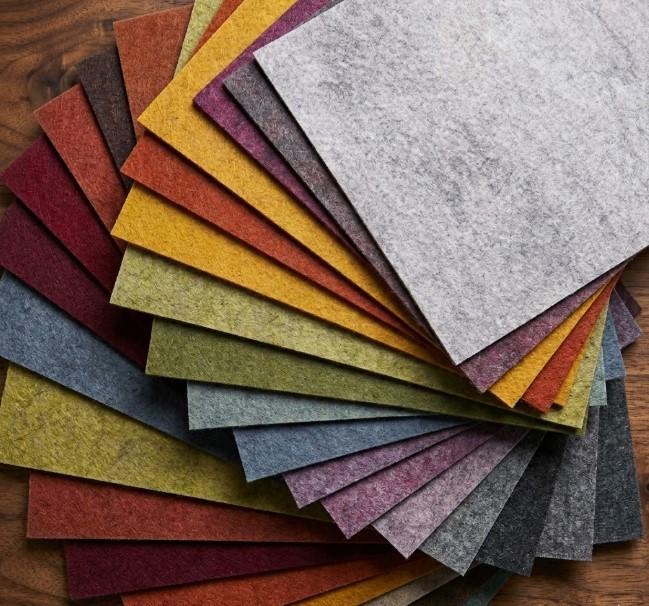
What is Wool Felt Sheet? Types, Properties and Uses
Wool felt sheets are versatile, nonwoven textile materials used across industries such as manufacturing, construction, automotive, and crafts. Unlike woven fabrics, wool felt is produced by compressing natural wool fibers together using heat, moisture, and pressure.
This process creates a dense, durable, and flexible material with excellent insulation and cushioning properties. Due to its unique structure and performance benefits, wool felt continues to be widely used in both traditional and modern applications.
Understanding its types, properties, and uses helps businesses and professionals select the right material for specific needs.
What is a Wool Felt Sheet?
Definition and Composition
A wool felt sheet is a flat, dense material made by matting wool fibers together rather than weaving them. The fibers naturally interlock due to microscopic scales on their surface, forming a strong and uniform structure.
This nonwoven composition provides several advantages:
- No fraying when cut
- Uniform thickness and density
- High durability compared to many textiles
How Wool Felt is Manufactured
The manufacturing process directly impacts the quality and performance of wool felt sheets. It typically involves three main stages.
Fiber Preparation
Raw wool is cleaned to remove impurities and then carded into thin layers. This step ensures consistency in fiber distribution.
Felting Process
Heat, moisture, and mechanical pressure are applied to compress the fibers. The natural scales on wool fibers interlock tightly, forming a cohesive sheet.
Finishing
The material is pressed, trimmed, and sometimes treated to improve smoothness or enhance specific properties such as stiffness or resistance.
Types of Wool Felt Sheets
Based on Composition
100% Wool Felt
This is the highest quality felt made entirely from natural wool. It offers excellent durability, resilience, and insulation properties, making it ideal for industrial and premium applications.
Blended Wool Felt
Blended felt combines wool with synthetic fibers. This reduces cost while maintaining acceptable performance. It is commonly used in general-purpose and decorative applications.
Eco-Friendly Wool Felt
Produced from recycled or sustainably sourced wool, this type is gaining popularity due to increasing demand for environmentally responsible materials.
Based on Manufacturing Method
Pressed Wool Felt
Pressed felt is created using traditional compression techniques. It is dense, strong, and widely used in sealing, gasketing, and mechanical applications.
Needle-Punched Felt
This type is made by mechanically entangling fibers using barbed needles. It is less dense but more flexible, making it suitable for insulation and padding.
Woven Wool Felt
A combination of weaving and felting processes results in a material with higher strength and dimensional stability. It is used in precision industrial applications.
Based on Industrial Grading
SAE Grade Felt
Standardized by density and hardness, SAE-grade felt is commonly used in automotive and machinery components.
Technical or Industrial Felt
These are customized felts designed for specific requirements such as high temperature resistance, chemical exposure, or heavy-duty performance.
Properties of Wool Felt Sheets
1. Mechanical Strength and Durability
- Wool felt offers high resilience and maintains its shape even after repeated compression, making it suitable for demanding industrial applications
- Its dense fiber structure provides strong tensile strength and excellent resistance to wear, ensuring long-term durability
2. Thermal Insulation
- The natural structure of wool traps air, creating an effective barrier against heat transfer and improving energy efficiency
- It performs reliably in both hot and cold environments, making it ideal for insulation and temperature control applications
3. Acoustic and Vibration Control
- Wool felt absorbs sound efficiently due to its porous structure, helping reduce noise levels in various environments
- It also dampens vibrations between surfaces, improving performance and reducing mechanical stress in equipment
4. Moisture Absorption and Resistance
- Wool fibers can absorb a significant amount of moisture without feeling wet, maintaining comfort and functionality
- The presence of natural lanolin provides initial resistance to water, helping the material perform well in humid conditions
5. Fire Resistance
- Wool felt is naturally flame-resistant and does not easily ignite, making it safer for high-temperature applications
- It does not melt or drip and tends to self-extinguish, which is important for safety-critical environments
6. Environmental Benefits
- Wool felt is made from renewable natural fibers and is biodegradable, making it an environmentally responsible choice
- It has a lower carbon footprint compared to synthetic materials and supports sustainable manufacturing practices
Wool Felt Properties Overview Table
| Property | Description | Key Benefit |
|---|---|---|
| Mechanical Strength | High resilience and tensile strength | Long lifespan and durability |
| Thermal Insulation | Traps air within fibers | Energy efficiency and heat control |
| Acoustic Performance | Absorbs sound and vibrations | Noise reduction and comfort |
| Moisture Handling | Absorbs moisture without damp feel | Stability in humid conditions |
| Fire Resistance | Naturally flame-resistant | Safer for industrial use |
| Environmental Impact | Biodegradable and renewable | Eco-friendly solution |
Uses of Wool Felt Sheets
Industrial Applications
Wool felt is widely used in industrial settings due to its durability and performance. It serves both functional and protective roles.
Common industrial uses include:
- Gaskets and seals to prevent leakage
- Pads for vibration control in machinery
- Filtration systems for air and fluids
In manufacturing plants, wool felt is often placed between moving metal parts to reduce friction and extend equipment life.
Construction and Building Industry
In construction, wool felt contributes to energy efficiency and comfort.
It is used for:
- Thermal insulation in walls and roofs
- Acoustic panels in offices and studios
- Underlayment for flooring systems
With the rise of sustainable construction, wool felt is increasingly preferred in eco-friendly building designs.
Automotive Industry
The automotive sector relies heavily on wool felt for noise reduction and component protection.
Typical applications include:
- Interior padding and trims
- Door and window seals
- Engine compartment insulation
These uses help improve ride comfort and reduce noise vibration levels.
Textile and Apparel Applications
Wool felt has long been used in clothing and fashion products due to its softness and flexibility.
Examples include:
- Hats and jackets
- Shoe linings and insoles
- Protective padding in garments
Its breathable nature adds comfort, making it suitable for wearable products.
Furniture and Home Applications
In homes, wool felt serves both functional and decorative purposes.
Common uses include:
- Furniture pads to prevent scratches
- Rugs, mats, and coasters
- Cushion padding
These applications highlight its ability to combine durability with aesthetic appeal.
Craft and DIY Projects
Wool felt is a preferred material in creative industries due to its ease of use.
It is widely used for:
- Handmade decorations
- Toys and art projects
- Embroidery and design work
Its non-fraying edges make it especially suitable for cutting and shaping.
Medical and Orthopedic Uses
Wool felt is also used in healthcare applications where comfort and cushioning are essential.
Examples include:
- Orthopedic padding
- Insoles for foot support
- Pressure relief materials
Its softness and shock absorption properties make it ideal for these uses.
Key Insights and Expert Perspective
From an industry standpoint, wool felt offers a balance between performance and sustainability. Engineers and designers often choose it for applications requiring vibration damping, insulation, and durability.
A practical example can be seen in machinery maintenance. Using wool felt pads between moving components reduces wear and noise, ultimately lowering maintenance costs and increasing equipment lifespan.
In construction, wool felt insulation contributes to energy efficiency by minimizing heat loss. This aligns with global trends toward sustainable and energy-efficient buildings.
AI Overview
Wool felt sheets are durable, eco-friendly materials offering insulation, sound absorption, and versatility across industrial, automotive, and craft applications for long-term performance and efficiency.
FAQs
What are the properties of wool felt?
Wool felt has high durability, thermal insulation, and excellent sound absorption due to its dense fiber structure.
What is wool felt sheet used for?
Wool felt sheets are used in insulation, automotive parts, sealing, filtration, and vibration control applications.
What are the 7 properties of wool?
The seven key properties of wool are elasticity, insulation, moisture absorption, durability, breathability, flame resistance, and resilience.
What are the properties and uses of wool?
Wool has excellent thermal insulation, high elasticity, and strong moisture control abilities. It is used in clothing, insulation materials, acoustic panels, automotive interiors, and industrial applications.
Conclusion
Wool felt sheets are a highly versatile and sustainable material offering a unique combination of durability, insulation, sound absorption, and moisture control. Their natural fiber structure makes them suitable for a wide range of applications, from industrial uses like sealing, vibration control, and insulation to everyday uses in furniture, automotive interiors, and crafts.
Because of their eco-friendly nature and long service life, wool felt products are increasingly preferred over synthetic alternatives in modern industries focused on efficiency and sustainability. Selecting the right grade and thickness ensures optimal performance across different environments and applications.
Ready to Upgrade your Industrial Fluid Connections?
Partner with K. Hashim LLC today and experience expert guidance, premium-grade materials, and reliable solutions tailored for your applications.
Explore More Expert Insights
Explore our expert insights to stay updated on the latest piping solutions, flange types, and industrial best practices.
— Key Points for Maintenance and Upkeep of Marine Valves: Essential tips to keep your marine valves performing reliably.
— What Are Rubber Expansion Joints? Types & Applications: Flexible solutions for piping systems across industries.
— Rubber vs Metal Expansion Joints: Which Is Better: Comparing durability and performance of rubber and metal expansion joints.
— Flanges for Piping Systems: Types, Uses & Applications: A complete guide to flange types, uses, and industry applications.
— Exploring the Role of Marine Valves in Ship Systems: Marine valves ensuring efficient ship systems in UAE shipyards.
Popular Posts

April 4, 2024

April 22, 2024


May 28, 2024