
- Abrasives & Drilling
- Buttweld Fittings
- Camlock Couplings and Fittings
- Clamps & Couplings
- Deck & Engine Store Supplies
- Fasteners & Hardware
- Fittings & Flanges
- Gaskets
- High-Pressure Pipe Fittings
- Hoses
- Industrial Epoxies & Spray Coatings
- Industrial Fasteners – Bolts, Nuts & Screws
- Industrial Gaskets & Sealing Products
- Lifting & Rigging
- Marine
- Marine Valves & Flow Control Solutions
- Oilfield & Industrial Supplies
- Packing & Industrial Materials
- Pipe Couplings & Expansion Joints
- PPE & Chemicals
- Safety
- Safety Items & Personal Protective Equipment
- Steel Flanges for Piping Systems
- Tools
- Valves
- Industrial Area 1, Sharjah, UAE
- sales@khashim.com
- info@khashim.com
- +971 6 533 8006
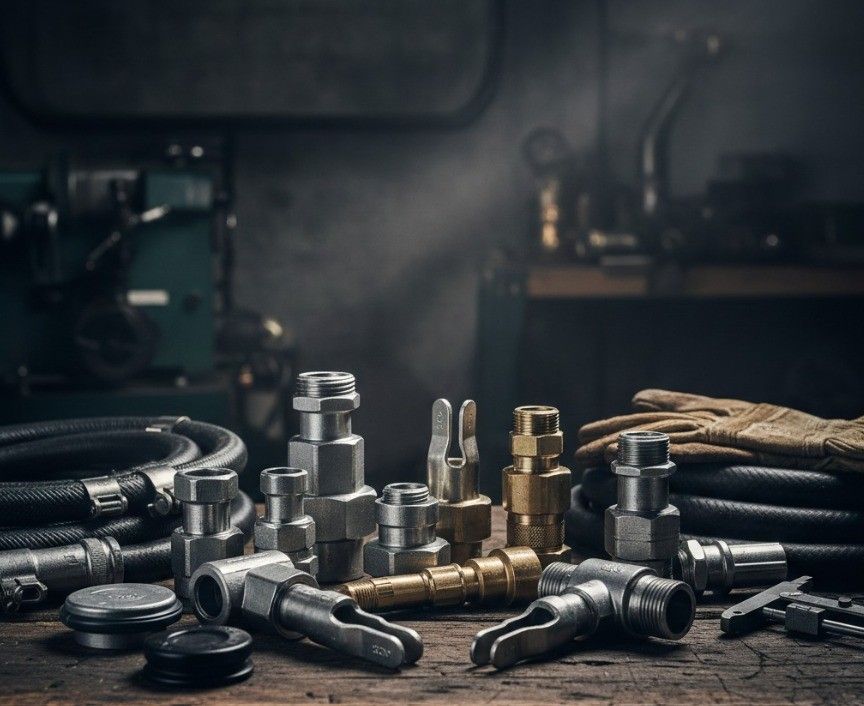
Complete Guide to Camlock Couplings: How They Work & Applications
Camlock couplings are critical components in fluid handling systems, widely used across industries such as chemical, petroleum, and food processing. Their design ensures quick, secure, and leak-free connections, enabling efficient transfer of liquids, powders, and gases.
Understanding the types, materials, and applications of camlock couplings can help businesses choose the right solution for safety and operational efficiency.
What Are Camlock Couplings?
Camlock couplings, also known as cam and groove fittings, are mechanical connectors that join hoses and pipelines without the need for tools. They feature a cam arm mechanism that locks the male and female ends together, providing a reliable seal. These fittings are designed to withstand high pressure and frequent disconnections, making them indispensable in industrial operations.
Key Components of Camlock Couplings
- Cam Arms: Lever mechanisms that lock the coupling securely.
- Gasket: Creates a leak-proof seal, typically made from EPDM, Nitrile, or PTFE.
- Female Coupler: Receives the male adapter and houses cam arms.
- Male Adapter: Inserts into the female coupler for connection.
- Body Material: Stainless steel, aluminum, or brass options are chosen based on fluid type and pressure.
Types of Camlock Couplings
Camlock couplings are categorized based on end connections and material compatibility:
- Type A: Female coupler to male NPT thread
- Type B: Female coupler to male adapter
- Type C: Male adapter to female coupler
- Type D: Female coupler to female coupler
- Type E: Male adapter to male NPT thread
- Type F: Female coupler to male adapter with threads
Each type serves specific industrial requirements, including chemical transport, petroleum, and food-grade applications.
Materials Used in Camlock Couplings
Selecting the right material ensures durability, safety, and operational efficiency:
- Stainless Steel 304 & 316: These couplings are widely used in chemical, marine, and food-grade applications because of their corrosion resistance and strength. For example, SS camlocks are commonly installed in high-pressure chemical lines where hygiene and durability are critical.
- Aluminum: Lightweight and resistant to corrosion, aluminum couplings are ideal for low-pressure water or irrigation systems, providing easy handling without compromising performance. Aluminium Camlocks are frequently selected for portable fluid transfer setups and temporary connections.
- Brass: Known for excellent compatibility with petroleum and chemical fluids, brass couplings provide long-lasting, leak-proof connections in fuel distribution or lubrication systems. Brass Camlocks are often used in industrial fuel lines and chemical transfer setups.
- Polypropylene: Resistant to acids, alkalis, and many industrial chemicals, polypropylene couplings are used in agriculture and food processing applications, especially where lightweight, corrosion-resistant fittings are needed.
Material choice depends on factors such as fluid type, temperature, and environmental exposure.
How Camlock Couplings Work
The operation of camlock couplings is simple yet highly effective. The cam arms on the coupler are pulled back to allow insertion of the adapter, then closed to lock it in place. This mechanism creates a secure, leak-proof connection without tools.
Key functional aspects include:
- Quick connect and disconnect capabilities for fast operations
- Sealing gaskets that prevent leaks and contamination
- Pressure handling to maintain system integrity under varying loads
Regular inspection and cleaning of gaskets ensure long-term reliability and prevent costly downtime.
Applications of Camlock Couplings
Industries relying on efficient fluid transfer benefit significantly from camlock couplings:
Chemical Processing
Camlock couplings are widely used in chemical plants to transfer acids, solvents, and other reactive fluids safely, minimizing spillage and contamination risks.
Agriculture
In agriculture, camlocks facilitate efficient irrigation and fertilizer distribution, allowing quick setup and secure hose connections for large-scale operations.
Petroleum and Fuel Distribution
These couplings ensure leak-free handling of petroleum, diesel, and other fuels, providing safe and reliable fluid transfer in transport and storage systems.
Food and Beverage
Stainless steel camlocks are ideal for food-grade applications, maintaining sanitary conditions while transferring liquids like juices, oils, and dairy products.
Marine and Offshore
Marine and offshore operations rely on corrosion-resistant camlocks for water, fuel, and chemical lines, ensuring durability in harsh environments.
Selecting the correct type and material ensures operational efficiency and compliance with industry standards.
Advantages of Using Camlock Couplings
Camlock couplings offer several operational benefits:
- Reduce installation time with tool-free connections
- Provide reliable leak-proof performance
- Compatible with a wide range of fluid types
- Easy to clean and maintain, ensuring hygiene in food applications
- Durable under high pressure and harsh environments
These advantages make camlock couplings an industry-standard solution for many fluid handling systems.
Maintenance and Safety Tips
Proper maintenance of camlock couplings extends lifespan and ensures safety:
- Inspect gaskets regularly for wear and tear
- Ensure cam arms operate smoothly without obstruction
- Clean after each use to prevent chemical or microbial build-up
- Avoid using damaged or mismatched couplings to prevent leaks or system failure
Following these guidelines enhances system reliability and reduces operational risks.
Choosing the Right Camlock Coupling
When selecting a camlock coupling, consider:
- Material Compatibility: Ensure the coupling material is resistant to the specific fluid being transferred, whether it’s chemicals, fuel, or food-grade liquids.
- Operating Pressure and Temperature: Select a coupling that can withstand the system’s pressure levels and temperature ranges to maintain safety and performance.
- Coupling Type: Choose the appropriate type based on hose or pipe configuration, such as Type A, B, C, D, E, or F, for a secure and efficient connection.
- Frequency of Use: Consider how often the coupling will be connected and disconnected; high-use applications require more durable materials and design.
Selecting the correct specifications helps prevent operational delays, reduces maintenance issues, and ensures long-term system performance.
Future Trends & Innovations in Camlock Couplings (2026 Update)
The camlock coupling industry is evolving rapidly to meet growing demands for efficiency, safety, and sustainability. New innovations focus on advanced materials, such as high-performance polymers and corrosion-resistant alloys, which extend service life and reduce maintenance costs.
Smart coupling technologies are emerging, integrating IoT sensors to monitor pressure, flow, and connection integrity in real time, enabling predictive maintenance and minimizing downtime. Environmental sustainability is also a priority, with eco-friendly manufacturing processes and recyclable materials gaining traction in industrial applications.
Additionally, ergonomic designs with lighter, more durable couplings improve operational efficiency and worker safety, especially in high-frequency fluid transfer systems. These trends indicate that camlock couplings are not just functional components but increasingly intelligent and sustainable solutions for modern industrial needs.
FAQ
What is the main difference between camlock couplings and threaded fittings?
Camlock couplings offer quick connect/disconnect, whereas threaded fittings require tools and more installation time.
Can camlock couplings be used for chemical transfers?
Yes, selecting the right material like stainless steel or polypropylene ensures safe chemical transfer.
How do I prevent leaks in camlock connections?
Regular inspection of gaskets and proper alignment of cam arms prevents leaks and ensures secure connections.
Are camlock couplings suitable for food-grade applications?
Yes, stainless steel couplings with sanitary gaskets are ideal for food and beverage fluid transfer.
Conclusion
Camlock couplings provide fast, reliable, and safe connections for a wide range of industrial and commercial fluid transfer applications. Proper selection, material choice, and maintenance are critical for optimal performance.
Sourcing from a trusted supplier guarantees quality and reliability, and K. Hashim LLC is a leading camlock coupling supplier in the UAE, offering top-grade couplings for industrial, chemical, and marine applications.
Contact our technical specialists to ensure the right fit for enhanced operational efficiency.
Explore More Expert Insights
Explore our expert insights to stay updated on the latest piping solutions, flange types, and industrial best practices.
- Rubber vs Metal Expansion Joints: Which Is Better: Comparing durability and performance of rubber and metal expansion joints.
- Flanges for Piping Systems: Types, Uses & Applications: A complete guide to flange types, uses, and industry applications.
- Difference Between Seamless vs Welded Pipe: Understand the key differences to choose the perfect pipe for your project.
- Epoxy vs Polyurethane Coatings: Which One Is Better?: Choosing the right coating for maximum protection and durability.
- Choosing the Best Camlock Fitting: A Simple Guide: Choose the right camlock fitting with expert insights on materials, applications, and performance.
Popular Posts

April 4, 2024

April 22, 2024


May 28, 2024