
- Buttweld Fittings
- Camlock Couplings and Fittings
- Clamps & Couplings
- Deck & Engine Store Supplies
- Fittings & Flanges
- High-Pressure Pipe Fittings
- Hoses
- Industrial Epoxies & Spray Coatings
- Industrial Fasteners – Bolts, Nuts & Screws
- Industrial Gaskets & Sealing Products
- Lifting & Rigging
- Marine Valves & Flow Control Solutions
- Oilfield, Marine & Industrial Supplies
- Pipe Couplings & Expansion Joints
- Safety Items & Personal Protective Equipment
- Steel Flanges for Piping Systems
- Tools, Abrasives & Drilling
- Industrial Area 1, Sharjah, UAE
- sales@khashim.com
- info@khashim.com
- +971 6 533 8006
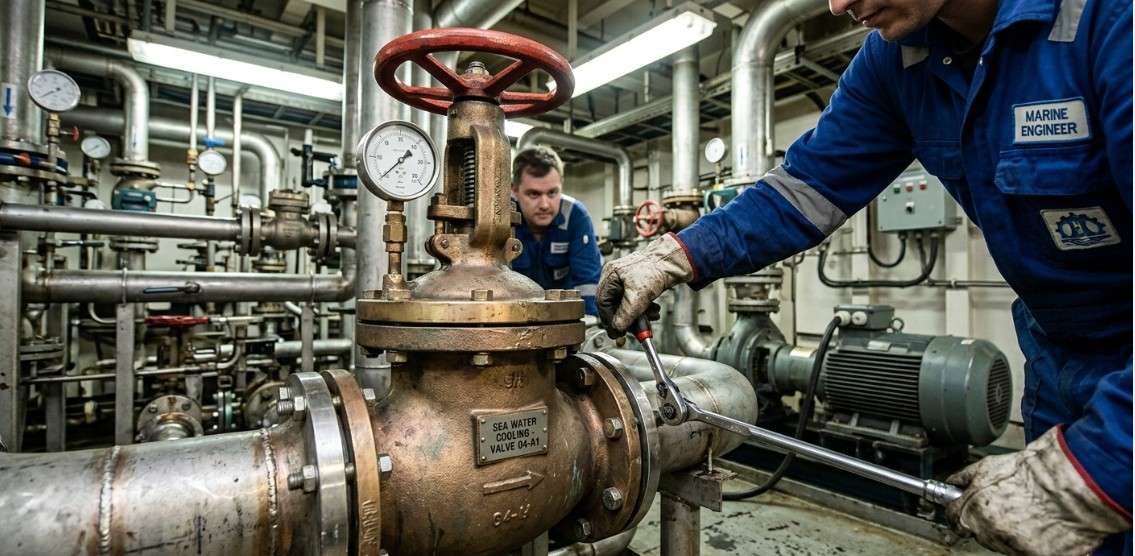
Understanding Marine Valves and Their Role in Ship Systems
In addition, Dubai’s bustling ports and strategic Gulf location make maritime operations a cornerstone of regional commerce and logistics. Behind the scenes, one crucial yet often overlooked set of components keeps vessels safe and operational: marine valves. From stabilizing ballast water to ensuring fire‑fighting systems respond instantly, these precision devices are the unsung heroes of every ship system.
But how do ship operators in Dubai and across the UAE choose the right valves for fuel, cooling, and ballast systems? Also, whether you’re responsible for ship maintenance, procurement, or engineering in the UAE maritime sector, understanding how different marine valves function and why they matter is essential for safety, compliance, and cost‑effective operation. In addition, this guide looks at marine valves in ship systems in detail.
Marine Valves in Ship Systems: What Are Marine Valves and Why They Matter
Marine valves are mechanical devices used to regulate, direct, or control the flow of liquids and gases in ship pipelines. Also, they are designed to endure corrosive sea environments, high pressure, and temperature extremes.
Moreover, without these valves, essential ship systems such as fuel delivery, cooling circuits, ballast management, and bilge pumping would fail to operate safely or efficiently. A malfunctioning valve can cause leaks, system imbalance, or even safety hazards at sea.
Core Types of Valves Used Onboard
Furthermore, understanding the various valve types will help owners and engineers select the right solution for each application.
Gate Valve
Gate valves are built for full on/off service, especially where minimal pressure drop is critical. Moreover, they are commonly found in seawater intake lines, ballast piping, and emergency shutoff points.
Globe Valve
Globe valves provide precise flow regulation with excellent throttling capability, making them ideal for fuel oil systems, lubricating circuits, and cooling water lines where fine control is necessary.
Ball Valve
Ball valves use a rotating sphere to control flow. In addition, their quarter‑turn operation offers quick shut‑off with tight sealing, making them indispensable in fuel transfer, emergency shutdown systems, and critical engine lines.
Butterfly Valve
Butterfly valves are lightweight and compact, with a disc that pivots to regulate fluid flow. Furthermore, they are widely used in large‑diameter ballast systems and ventilation lines where space efficiency and fast operation matter.
Check Valve
Check valves prevent backflow, automatically stopping fluid from moving in the wrong direction. In addition, this protects pumps and prevents flooding in bilge and ballast systems.
Safety & Relief Valves
Built to respond under excessive pressure, safety and relief valves protect boilers, compressors, and hydraulic systems from overpressure situations.
Also, each valve type plays a distinct role depending on ship size, system pressure, fluid type, and operational priorities.
| Valve Type | Primary Function | Common Materials | Typical Applications |
|---|---|---|---|
| Gate Valve | Full on/off service | Stainless Steel, Bronze | Seawater intake, ballast lines, emergency shutoff |
| Globe Valve | Flow regulation and throttling | Stainless Steel, Brass | Fuel oil systems, cooling water circuits |
| Ball Valve | Quick shut-off with tight sealing | Stainless Steel, Bronze | Fuel transfer, hydraulic systems, engine lines |
| Butterfly Valve | Lightweight, space-saving flow control | Stainless Steel, Ductile Iron | Ballast systems, ventilation lines |
| Check Valve | Prevents backflow | Bronze, Stainless Steel | Bilge pumps, ballast discharge lines |
| Safety/Relief Valve | Pressure protection | Stainless Steel, Alloy Steel | Boilers, compressors, high-pressure hydraulic circuits |
Key Ship Systems Where Valves Are Vital
Moreover, Marine valves are integrated across nearly every system onboard. Furthermore, here’s how they contribute to smooth vessel operations:
Ballast Water Management
In addition, ballast systems maintain vessel stability by controlling water intake and discharge. Also, valves in this system must handle large flow volumes and high pressure without corrosion.
Fuel and Oil Lines
Valves regulate and shut off fuel oil, lubricants, and hydraulic fluid across engine rooms. Moreover, in Dubai’s busy ports like Jebel Ali and Port Rashid, reliable fuel system valves reduce risk and ensure compliance with safety standards.
Cooling Systems
Furthermore, Marine engines generate significant heat. In addition, valves control seawater or freshwater circulation to prevent overheating, protecting machinery and improving efficiency.
Fire‑fighting and Safety Systems
Also, rapid valve response in fire mains and suppression systems can be life‑saving. Moreover, fire‑safe valve designs help meet SOLAS and IMO requirements.
Bilge and Wastewater Systems
Valves manage liquids collected in hull compartments and maintain environmental compliance by ensuring controlled discharge and minimal leakage.
Choosing the Right Marine Valves in Dubai
Furthermore, selecting the appropriate valve for each application requires technical evaluation across several factors:
- Fluid type and operating pressure – seawater, oil, gas, or chemicals
- Material suitability and corrosion resistance, such as marine‑grade stainless steel or bronze
- Compliance with classification society standards (DNV, ABS, LR, BV)
- Connection types and maintenance access
In addition, partnering with suppliers experienced in UAE maritime conditions ensures you get valves engineered for local sea salinity, temperature ranges, and regulatory expectations.
Material and Design: Resilience at Sea
Also, ships operate in one of the harshest environments imaginable. Valves must withstand:
- Saltwater corrosion
- Thermal shock and expansion
- Vibration and mechanical stress
Moreover, materials like marine‑grade stainless steel, bronze, and special alloys provide high corrosion resistance and long service life. Advanced valve designs also incorporate stem seals and protective coatings to minimize maintenance cycles.
Bronze and Gunmetal Alloys
Furthermore, many small-to-medium valves are cast from bronze or gunmetal. These copper-based alloys develop a protective patina that prevents deep-seated oxidation, ensuring the valve remains functional for decades.
Marine Valve Selection often comes down to matching the alloy to the specific fluid. For example, zinc-free bronze is preferred for seawater to avoid “dezincification,” a process that weakens the metal structure.
High-Grade Stainless Steel
In addition, for chemical tankers or high-temperature exhaust systems, stainless steel is the industry standard. It offers superior strength and heat resistance, though it can be susceptible to “pitting” if not maintained correctly in stagnant seawater.
Also, Marine engineers often specify 316L stainless steel for its low carbon content. Also, this helps prevent corrosion at the weld points, which is a common failure area in complex shipboard piping networks.
Maintenance and Lifecycle Management
Moreover, regular inspection and care are non‑negotiable for valve longevity. Best practices include:
- Scheduled testing under operating conditions
- Seal replacement before failure
- Cleaning of valve internals to prevent debris buildup
- Lubrication of moving parts
Furthermore, digital monitoring systems and IoT‑enabled valve diagnostics are becoming the new standard in predictive maintenance, significantly reducing unplanned downtime.
Future Trends in Marine Valve Technology
Marine engineering is embracing automation and smart systems. In addition, here’s what’s shaping the future:
- Remote‑actuated valves for fast emergency response
- Digital monitoring and predictive diagnostics
- High‑efficiency, low‑energy flow control designs
- Materials engineered for cryogenic and alternative fuel systems
These advancements support safer, more efficient, and greener maritime operations across the Gulf and beyond.
AI Overview
This blog explains how marine valves work in ship systems, their types, materials, and maintenance, providing Dubai maritime professionals insights for safe and efficient vessel operations.
FAQs
What are marine valves?
Marine valves are devices that control, regulate, and direct fluid or gas flow in ship systems. Moreover, they ensure safety and efficiency in operations like ballast, fuel, and bilge management.
Why valves are important in maritime industry?
Valves prevent leaks, backflow, and system failures while maintaining compliance with maritime safety standards. Furthermore, they are critical for ship stability and crew safety.
What is Cf8m in valve?
CF8M is a corrosion-resistant stainless steel alloy used in marine valves for durability in saltwater and high-temperature applications.
Where can I buy certified marine valves in Dubai?
Certified marine valves in Dubai are available from local suppliers and shipyards compliant with IMO and SOLAS standards.
How often should marine valves be inspected in UAE ports?
Regular inspection every 6–12 months is recommended to prevent corrosion, leaks, and operational failures in harsh UAE maritime conditions.
Conclusion
Also, Marine valves are critical components that ensure the safe, efficient, and compliant operation of ship systems. Moreover, from regulating ballast water to safeguarding fuel, cooling, and fire-fighting systems, choosing the right valve type, material, and maintenance plan is essential for reliability and longevity. Furthermore, in Dubai’s maritime industry, selecting high-quality valves reduces downtime, protects vessels, and keeps operations aligned with international safety standards.
In addition, sourcing from a trusted supplier guarantees performance and durability, and K. Hashim LLC is a leading marine valve and industrial components provider in the UAE, delivering premium products and expert guidance for ship systems, engineering, and maintenance.
Contact marine valve specialists to secure the optimal solution for your vessel’s operational efficiency.
Explore More Expert Insights
Explore our expert insights to stay updated on the latest piping solutions, flange types, and industrial best practices.
- Common Flange Installation Mistakes & How to Avoid Them: Prevent leaks and ensure safety with proper flange installation
- Everything You Need to Know About Camlock Couplings: Complete guide to camlock couplings, selection, and safe usage.
- Rubber vs Metal Expansion Joints: Which Is Better: Comparing durability and performance of rubber and metal expansion joints.
- Flanges for Piping Systems: Types, Uses & Applications: A complete guide to flange types, uses, and industry applications.
- Difference Between Seamless vs Welded Pipe: Understand the key differences to choose the perfect pipe for your project.
For general background, read the Valve article on Wikipedia.
Popular Posts

April 4, 2024

April 22, 2024


May 28, 2024
Stores index
- 01Marine valves19 products
- 02Fittings & flanges10 products
- 03Gaskets & sealing20 products
- 04Fasteners20 products
- 05High-pressure fittings13 products
- 06Epoxies & coatings30 products
- 07Deck & engine store20 products
- 08Safety & PPE12 products
- 09Lifting & rigging7 products
- 10Hoses6 products
- 11Clamps & couplings6 products
- 12Tools & abrasives4 products
- 13Buttweld fittings9 products
- 14Steel flanges8 products
- 15Camlock couplings4 products
- 16Oilfield supplies4 products
- 17Couplings & expansion joints2 products
How an order works
- Send your listItem, size, grade, quantity and delivery location.
- We check stockAvailability is confirmed from our Sharjah warehouse.
- You receive a quotationPriced for your approval, with the delivery terms.
- DeliveryFree on orders of AED 3,000 and above.