
- Buttweld Fittings
- Camlock Couplings and Fittings
- Clamps & Couplings
- Deck & Engine Store Supplies
- Fittings & Flanges
- High-Pressure Pipe Fittings
- Hoses
- Industrial Epoxies & Spray Coatings
- Industrial Fasteners – Bolts, Nuts & Screws
- Industrial Gaskets & Sealing Products
- Lifting & Rigging
- Marine Valves & Flow Control Solutions
- Oilfield, Marine & Industrial Supplies
- Pipe Couplings & Expansion Joints
- Safety Items & Personal Protective Equipment
- Steel Flanges for Piping Systems
- Tools, Abrasives & Drilling
- Industrial Area 1, Sharjah, UAE
- sales@khashim.com
- info@khashim.com
- +971 6 533 8006
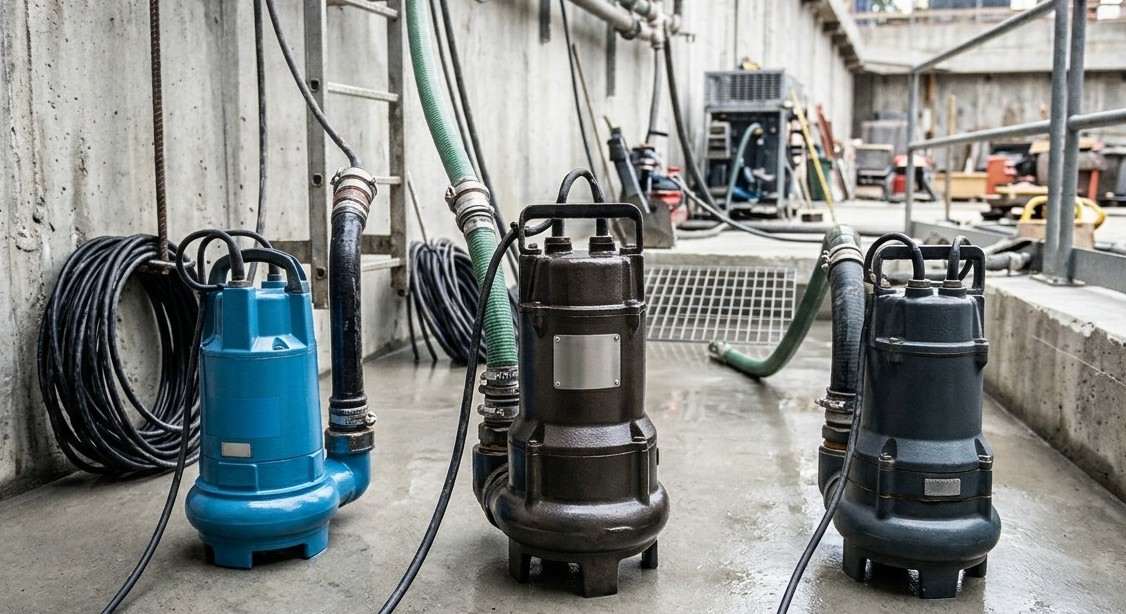
Marine Pumps Buying Guide: Types, Uses & Selection Tips
Marine pumps move water, fuel, and waste through a vessel’s critical systems. Selecting and using the right pump depends on fluid characteristics, flow rates, and power compatibility. The main types are dynamic pressure (centrifugal) pumps, positive displacement pumps, submersible pumps, and diaphragm pumps. Corrosion resistance, serviceability, and class approval decide long-term reliability.
What Are Marine Pumps Used For?
These pumps move liquids through critical vessel systems, including engine cooling, bilge drainage, ballast control, fuel transfer, firefighting, and sewage handling. Each application demands different pressure, flow, and material specifications, so one pump rarely suits every duty on the same vessel.
- Engine and generator cooling with raw seawater
- Bilge pumping and emergency dewatering
- Ballast water transfer for trim and stability
- Fuel and lubricating oil transfer
- Fire main and deck wash service
- Sewage and greywater handling
Which Types of Marine Pumps Are Available?
Four types dominate marine service: dynamic pressure (centrifugal) pumps, positive displacement pumps, submersible pumps, and diaphragm pumps. Centrifugal units suit high-volume water transfer such as cooling and ballast, while positive displacement designs handle viscous fluids like fuel and lubricating oil with steady flow. Submersible and diaphragm pumps cover bilge and dewatering tasks where space or dry-running tolerance matters.
Browse the range of industrial marine pumps, including centrifugal, submersible, and hand pumps to compare options by duty.
The anchor text is descriptive and commercial-intent, with no generic phrasing. The link sits outside the conclusion, and K Hashim LLC still appears only once, in the conclusion. The IMO link remains the single external link, and the word count stays close to 1,000.
Dynamic Pressure (Centrifugal) Pumps
Dynamic pressure pumps use a spinning impeller to move large volumes at moderate pressure. They are simple, compact, and economical. Self-priming variants restart without manual filling, which suits raw water and fire main systems. They struggle with viscous fluids and air entrainment.
Positive Displacement Pumps
Positive displacement pumps trap a fixed fluid volume and push it through the discharge. Gear, screw, and vane designs deliver consistent flow for fuel, oil, and sludge. They need relief valves to prevent overpressure and typically demand closer maintenance than centrifugal units.
Submersible and Diaphragm Pumps
Submersible pumps sit below the waterline and suit bilge and emergency dewatering. Air-operated diaphragm pumps tolerate solids and run dry without damage, making them useful for sludge, slops, and tank stripping. Both are easier to install in tight engine room spaces.
Which Pump Type Fits Which Marine Job?
Match the pump type to the dominant fluid, flow demand, and duty cycle. Dynamic pressure pumps fit seawater cooling and ballast, positive displacement pumps fit fuel and lube oil, submersible pumps fit bilge service, and diaphragm pumps fit sludge and slops. Use the table below as a first-pass filter.
| Pump Type | Best For | Main Limitation |
| Centrifugal | Cooling, ballast, fire main | Poor with viscous fluids |
| Positive displacement | Fuel, lube oil | Needs relief protection |
| Submersible | Bilge, dewatering | Limited head |
| Diaphragm | Sludge, slops, solids | Lower flow rates |
How Do You Choose the Right Marine Pump?
Choose a suitable pump by matching five factors to the duty: fluid type, flow rate, total head, materials, and certification. Define these values first, then add a 10 to 20 percent margin for fouling and wear over the pump’s service life. Skipping this step is the most common cause of undersized or oversized selections.
- Fluid properties: viscosity, temperature, solids content, and corrosiveness.
- Flow and head: required capacity and total dynamic head, including pipe losses.
- Materials: bronze, stainless steel, or duplex alloys resist seawater; cast iron corrodes quickly.
- Class approval: confirm DNV, ABS, Lloyd’s Register, or BV certification where required.
- Drive and power compatibility: electric, hydraulic, or engine-driven, matched to available supply.
What Mistakes Should Buyers Avoid?
Buyers should avoid undersizing suction piping, ignoring net positive suction head, choosing materials by price alone, mixing dissimilar metals, and skipping spare parts planning. These errors cause cavitation, galvanic corrosion, premature seal failure, and costly unplanned downtime far from port. Fixing them after installation costs far more than specifying correctly.
How Do Regulations Affect Marine Pump Selection?
Regulations affect vessel pump selection by dictating discharge limits, fire safety capacity, redundancy, and equipment certification. Bilge and sewage pumps must directly support compliance with MARPOL discharge rules, while dedicated emergency fire pumps must meet SOLAS capacity and independence requirements. Review the International Maritime Organization’s MARPOL framework for current discharge standards.
How Often Should Marine Pumps Be Maintained?
Inspect onboard pumps at every scheduled service interval and follow the manufacturer’s recommended running-hours plan, adjusting intervals for harsh duty. Check seals, bearings, impellers, and shaft alignment regularly, because saltwater, heat, and persistent vibration accelerate wear on every rotating component.
- Flush with fresh water after every raw seawater duty
- Replace mechanical seals and wear rings strictly on schedule
- Monitor vibration, bearing temperature, and motor current
- Keep critical spares aboard, including impellers and seal kits
Final Thoughts on Marine Pumps
Reliable marine pumps depend on correct type selection, proper materials, regulatory compliance, and disciplined maintenance. Treat every purchase as a lifecycle decision, balancing upfront price against maintenance, spares, and downtime risk. For vessel operators sourcing certified equipment from a trusted marine pumps supplier in Dubai, UAE, K Hashim LLC can help specify the right pump for each application.
Not Sure Which Pump Fits Your Vessel?
Send us your duty details and we will match them to the right pump type, materials, and class approval. We also review flow rate, head, and power compatibility so the pump you order is the pump that performs.
Request a Pump CheckFrequently Asked Questions
What Is the Most Common Type of Marine Pump?
Dynamic pressure (centrifugal) pumps are the most common type of vessel pump because they combine high flow, simple construction, and low maintenance demands. They handle seawater cooling, ballast water transfer, and fire main service reliably on most commercial vessels, workboats, and yachts. Self-priming versions suit bilge and deck wash duty.
How Long Do Marine Pumps Last?
Onboard pumps typically last five to fifteen years, depending on duty, materials, and maintenance. Bronze and stainless steel units in clean service often reach the upper end of that range, while pumps handling abrasive, silty, or corrosive fluids wear faster. Regular seal replacement and fresh water flushing extend service life considerably.
What Size Marine Pump Do I Need?
Size a vessel pump by calculating required flow rate and total dynamic head, then adding a 10 to 20 percent margin. Include pipe friction, fitting losses, elevation, and suction conditions in the head calculation, then plot the duty point on the manufacturer’s performance curve. Aim to operate near the best efficiency point.
Explore More Expert Insights
- Pipe Fittings Selection Guide: Types, Features, and Applications: A wider look at choosing the right fitting across residential, commercial and industrial piping.
- Choosing Steel Flanges for Industrial Piping in Dubai: Key factors for selecting the right flange to pair with your buttweld fittings.
- Differences Between Gate Valves and Globe Valves: A comparison to help you choose the right valve for flow control alongside your piping.
- Importance of Expansion Joints in Building Construction: Why expansion joints matter for pipeline and structural durability.
- 5 Signs Your Industrial Hose Needs Replacement: Key signs that your industrial hose needs replacing before failure occurs.
Popular Posts

April 4, 2024

April 22, 2024


May 28, 2024
Stores index
- 01Marine valves19 products
- 02Fittings & flanges10 products
- 03Gaskets & sealing20 products
- 04Fasteners20 products
- 05High-pressure fittings13 products
- 06Epoxies & coatings30 products
- 07Deck & engine store20 products
- 08Safety & PPE12 products
- 09Lifting & rigging7 products
- 10Hoses6 products
- 11Clamps & couplings6 products
- 12Tools & abrasives4 products
- 13Buttweld fittings9 products
- 14Steel flanges8 products
- 15Camlock couplings4 products
- 16Oilfield supplies4 products
- 17Couplings & expansion joints2 products
How an order works
- Send your listItem, size, grade, quantity and delivery location.
- We check stockAvailability is confirmed from our Sharjah warehouse.
- You receive a quotationPriced for your approval, with the delivery terms.
- DeliveryFree on orders of AED 3,000 and above.