
- Abrasives & Drilling
- Buttweld Fittings
- Camlock Couplings and Fittings
- Clamps & Couplings
- Deck & Engine Store Supplies
- Fasteners & Hardware
- Fittings & Flanges
- Gaskets
- High-Pressure Pipe Fittings
- Hoses
- Industrial Epoxies & Spray Coatings
- Industrial Fasteners – Bolts, Nuts & Screws
- Industrial Gaskets & Sealing Products
- Lifting & Rigging
- Marine
- Marine Valves & Flow Control Solutions
- Oilfield & Industrial Supplies
- Packing & Industrial Materials
- Pipe Couplings & Expansion Joints
- PPE & Chemicals
- Safety
- Safety Items & Personal Protective Equipment
- Steel Flanges for Piping Systems
- Tools
- Valves
- Industrial Area 1, Sharjah, UAE
- sales@khashim.com
- info@khashim.com
- +971 6 533 8006
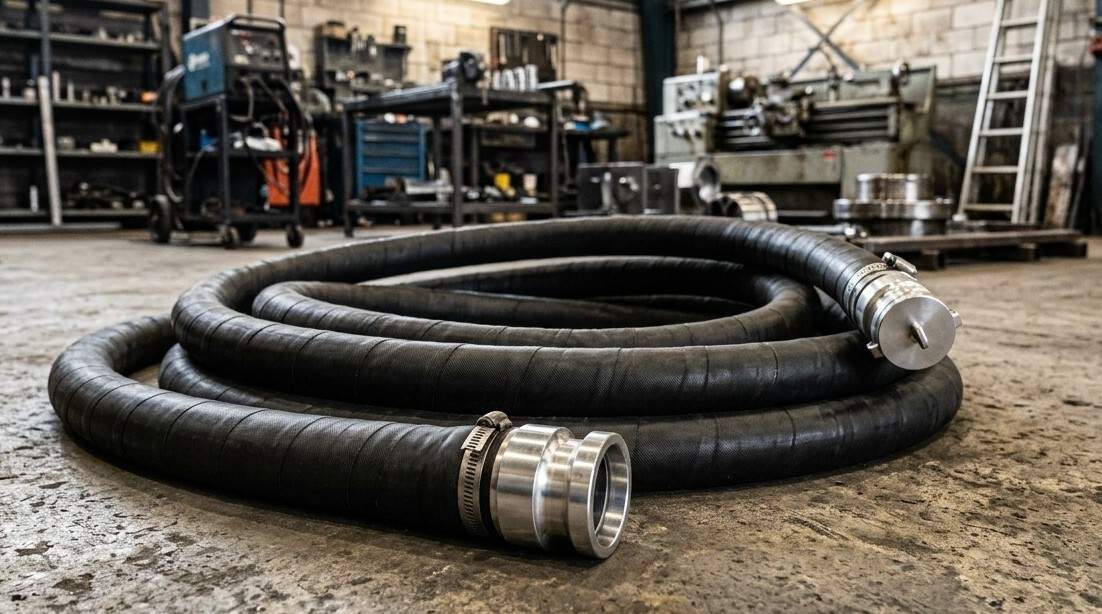
5 Signs Your Industrial Hose Needs Replacement
A worn industrial hose rarely fails without warning. Most of the time it gives small clues long before it actually bursts or leaks. The problem is that many teams miss these clues because they look minor at first glance.
Knowing what to look for can save you from unplanned downtime, safety incidents and expensive repairs. Below are the most common signs that tell you a hose is nearing the end of its working life.
Why Industrial Hoses Wear Out Over Time
Every hose goes through constant stress. Heat, pressure, vibration and exposure to chemicals slowly wear down the rubber or synthetic layers inside. Even a well made hose cannot last forever under these conditions.
Understanding how wear happens makes it easier to spot the early signs before they turn into a bigger problem.
1. Cracks Cuts or Surface Damage
The outer cover is the first line of defense for any hose. Once you see cracks, cuts or fraying on the surface, the internal layers are already exposed to damage.
This kind of wear usually comes from sun exposure, friction against nearby equipment or contact with sharp edges. A hose in this condition should not be trusted for continued use.
2. Leaks Around Fittings or Along the Body
Leaks are one of the clearest signs that a hose has failed internally. You may notice damp spots, dripping fluid or a slow drop in pressure across the system.
Sometimes the leak starts small and only shows up as a faint smell or a slight stain near a connection point. Waiting too long to fix this can lead to contamination or complete hose failure.
3. Bulges Soft Spots or Blistering
A bulge or soft spot on a hose means the inner layers have started to separate. This usually happens due to age, excess pressure or repeated heat exposure.
A hose with a visible bulge should be taken out of service right away. Continuing to use it under pressure increases the risk of a sudden rupture.
4. Stiffness or Loss of Flexibility
Hoses are meant to stay flexible so they can absorb movement and vibration without cracking. Once a hose becomes stiff or hard to bend, it has lost that ability.
Stiffness often comes from long term exposure to heat, chemicals or sunlight. A rigid hose cannot flex properly and is far more likely to crack under pressure.
5. Age and Service Life
Even a hose that looks fine on the outside can be close to failure if it has been in use for many years. Most industrial hoses have a recommended service life, and this depends on the operating conditions.
If your hose is nearing or past this recommended period, it is safer to replace it before it fails rather than waiting for a visible problem to appear.
At A Glance Warning Signs And What To Do
For a faster read, this summary breaks down each sign and what to do about it.
| Warning Sign | Common Cause | Recommended Action |
|---|---|---|
| Cracks or Cuts | UV exposure, friction | Replace immediately |
| Leaks at Fittings | Worn seals, loose connections | Inspect and replace |
| Bulges or Soft Spots | Internal layer separation | Stop use right away |
| Stiff or Brittle Feel | Heat or chemical exposure | Replace before failure |
| Nearing Service Life | Natural aging of materials | Plan proactive replacement |
Selecting the Right Hose for Replacement
Picking the correct hose is just as important as recognizing when to replace one. The wrong hose for your pressure rating, fluid type or temperature range can fail even faster than the one you are replacing. If you are unsure which type suits your system, it helps to look at a detailed guide on industrial hose types materials uses and fittings before making a decision.
You can also browse our full hose range to compare options built for different industrial applications.
Maintenance Practices That Extend Hose Life
- Inspect hoses regularly for cracks, leaks, or stiffness
- Avoid tight bends or twisting during installation
- Keep hoses away from direct heat and sharp surfaces
- Store spare hoses in a cool dry place away from sunlight
- Use the correct fittings and torque during assembly
Following these habits reduces the chances of early failure and keeps your equipment running safely for longer.
Final Thoughts
Industrial hoses do not usually fail without notice. Cracks, leaks, bulges, stiffness and simple age are all signs that tell you when it is time to act. Paying attention to these details protects your equipment, your team and your operations from unnecessary downtime.
Regular inspection and timely replacement remain the most effective way to keep any hydraulic or industrial system running smoothly.
Get Expert Support For Industrial Hose And Safety Solutions
Reliable equipment is essential for maintaining safe and efficient operations across demanding industries. K. Hashim LLC supplies high quality industrial hoses and safety solutions designed to support operational reliability and workplace safety.
Get in touch with our team to find the right hose and safety solution for your workplace.
Explore More Expert Insights
Discover guides on all hardware, building materials, and electrical products for your next project.
- Pilot Ladder and Manila Rope Guide for Safe Boarding: Guidance on pilot ladders and manila rope for safe vessel boarding.
- Different Types of Electrical Accessories and Their Uses: Overview of common electrical accessories and their uses.
- What Are Welding Gauges? Types, Uses, and How They Work: Basics of welding gauges and their inspection role.
- What Is a Mitutoyo Digital Caliper? Types, Uses & Accuracy: Guide to Mitutoyo digital calipers and accuracy.
- Top Guide to Mitutoyo Bore Gages for Internal Diameter Measurement: Understanding bore gages for internal measurements.
Popular Posts

April 4, 2024

April 22, 2024


May 28, 2024