
- Abrasives & Drilling
- Buttweld Fittings
- Camlock Couplings and Fittings
- Clamps & Couplings
- Deck & Engine Store Supplies
- Fasteners & Hardware
- Fittings & Flanges
- Gaskets
- High-Pressure Pipe Fittings
- Hoses
- Industrial Epoxies & Spray Coatings
- Industrial Fasteners – Bolts, Nuts & Screws
- Industrial Gaskets & Sealing Products
- Lifting & Rigging
- Marine
- Marine Valves & Flow Control Solutions
- Oilfield & Industrial Supplies
- Packing & Industrial Materials
- Pipe Couplings & Expansion Joints
- PPE & Chemicals
- Safety
- Safety Items & Personal Protective Equipment
- Steel Flanges for Piping Systems
- Tools
- Valves
- Industrial Area 1, Sharjah, UAE
- sales@khashim.com
- info@khashim.com
- +971 6 533 8006
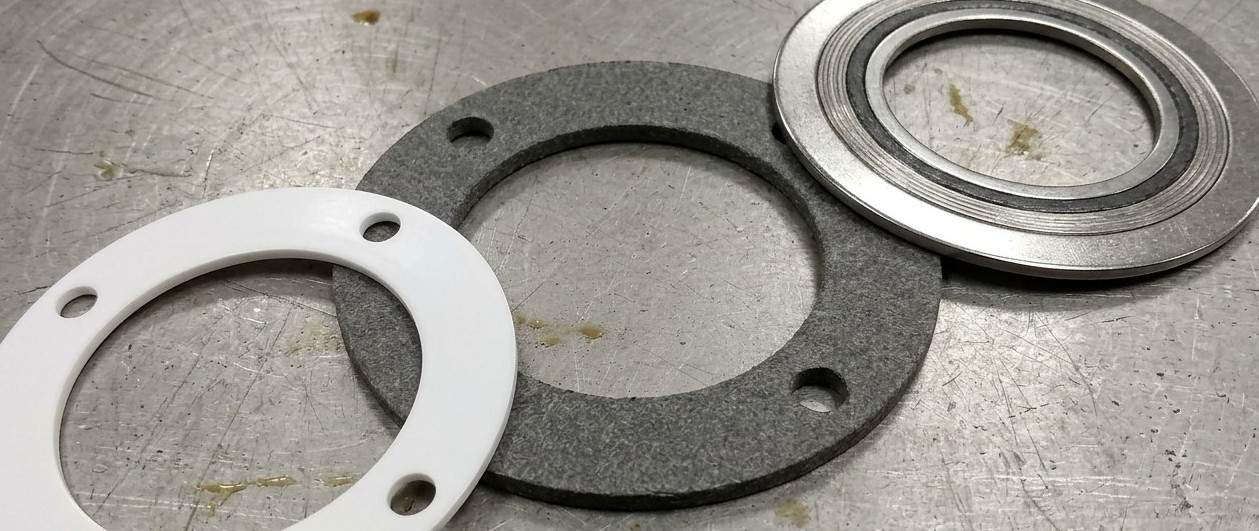
High Temperature Gasket Material And Thickness Guide
Heat is one of the toughest tests a gasket ever faces. Engines, boilers, exhaust systems and process pipelines all push sealing materials to their limits, and a gasket that cannot cope with sustained heat will eventually harden, crack or lose its seal. Picking the right material and thickness from the start saves time, money and unplanned downtime later.
This guide breaks down the common types of high temperature gasket materials, their approximate heat ranges, typical thicknesses and where each one works best, so you can match the right product to your application with confidence.
Why Temperature Rating Matters So Much
Every gasket material has a point where it starts to lose its mechanical strength. Once a gasket crosses that limit even for short periods, it can harden, shrink or develop small cracks that let fluid or gas escape.
A few things happen when a gasket is used above its rated temperature.
- The material loses flexibility and can no longer compress evenly
- Compression set increases, meaning the gasket does not spring back after pressure is released
- Chemical resistance drops, making the gasket more vulnerable to oils, fuels and steam
- Seal life shortens, leading to repeat maintenance and possible leaks
Because of this, engineers usually pick a material rated well above the expected operating temperature rather than one that only just meets it. This extra margin protects the seal during temperature spikes and long duty cycles.
If you need dependable sealing products for demanding conditions, you can browse our range of industrial gaskets supplier options built for a wide range of heat and pressure requirements.
Types Of High Temperature Gasket Materials
Different materials suit different heat ranges and media. Here are the main types used across industrial applications.
- Nitrile Rubber offers good resistance to oils and fuels and suits automotive and pump applications with moderate heat exposure
- Neoprene handles moisture and weathering well and is often chosen for battery housings and outdoor seals
- EPDM Rubber resists steam, ozone and many chemicals, making it common in water systems and HVAC equipment
- Silicone Rubber stays flexible across a wide temperature range and is used in ovens, ductwork and food grade equipment
- PTFE provides excellent chemical resistance and is favoured in pharmaceutical and corrosive chemical lines
- Graphite copes with very high heat and pressure together, making it a standard choice for steam systems
- Ceramic Fibre handles extreme heat but is stiff and brittle, so it is mainly used in furnace and exhaust joints
- Solid Metal And Spiral Wound Gaskets combine metal with a soft filler to seal high pressure, high temperature flange joints
The table below summarises the approximate temperature range and typical use for each type.
| Material | Approximate Temperature Range | Common Applications |
|---|---|---|
| Nitrile Rubber | Up to 120°C | Fuel systems, pumps, oil seals |
| Neoprene | Up to 150°C | Battery housings, moisture seals |
| EPDM Rubber | Up to 150°C | Water systems, outdoor seals |
| Silicone Rubber | Up to 260°C | HVAC, food processing, ovens |
| PTFE | Up to 260°C | Chemical lines, pharmaceutical plants |
| Graphite | Up to 550°C | Steam lines, high-pressure joints |
| Ceramic Fibre | Up to 1000°C | Furnace joints, exhaust systems |
| Spiral Wound Metal | Up to 1000°C | Petrochemical and power plant flanges |
Silicone and PTFE cover most general industrial needs, while graphite, ceramic fibre and metal based gaskets step in for extreme heat and high pressure environments such as steam plants and furnace connections.
Silicone Gaskets For High Heat Applications
Silicone rubber remains one of the most popular high temperature gasket materials because it holds its flexibility across a wide range of conditions. It resists ozone, handles moisture well and can often be approved for food and pharmaceutical use.
Silicone gaskets are commonly found in ovens, HVAC ductwork, medical equipment and electrical enclosures. They also come in different colours, with red oxide silicone being the standard shade used for high heat variants.
If you want a broader understanding of how sealing materials are chosen for different equipment, our article on the sealing product selection guide walks through the key factors engineers weigh before settling on a material.
Choosing The Right Gasket Thickness
Thickness affects how well a gasket fills surface irregularities and how much load it can handle once compressed. A gasket that is too thin may not seal properly on an uneven flange, while one that is too thick can be harder to compress evenly and may extrude under pressure.
Here is a general reference for thickness selection based on typical use cases.
| Thickness | Best Suited For |
|---|---|
| 1 mm to 1.5 mm | Smooth flanges, light-duty seals |
| 2 mm | General industrial gaskets, moderate pressure |
| 2.5 mm | Uneven or rough flange surfaces |
| 3 mm and above | High-pressure joints, heavy vibration areas |
A good rule to remember is that thinner gaskets suit smoother, well machined flanges, while thicker gaskets are better for surfaces with pitting, scratches or slight warping.
Where High Temperature Gaskets Are Commonly Used
High temperature gaskets show up in more places than most people realise. Some of the more common applications include the following.
- Engine and exhaust systems in vehicles and heavy machinery
- Boiler and steam piping connections
- Furnace doors and industrial oven seals
- Flange joints in petrochemical and power plants
- HVAC ductwork and equipment housings
Flange condition plays a large role in how well any of these gaskets perform. If you are working with piping systems, our comparison of weld neck vs slip on flanges explains how flange type affects sealing performance and gasket selection.
Practical Tips For Choosing The Right Material
Selecting a high temperature gasket does not have to be complicated if you work through a few basic checks first.
- Confirm the maximum operating temperature and add a safety margin
- Check what fluids or gases the gasket will be exposed to
- Match the gasket thickness to the flange condition and surface finish
- Consider pressure ratings alongside temperature to avoid blowouts
- Use proper bolt tightening sequence and torque to prevent uneven compression
Correct bolt tightening matters just as much as material choice, since uneven load can cause a gasket to fail even if the material itself is rated correctly for the job. Our guide on stud bolts vs hex bolts is a useful read if you want to understand how fastener choice affects joint integrity.
Conclusion
High temperature gaskets are only as reliable as the material and thickness chosen for the job. Silicone, graphite, PTFE, ceramic fibre and metal based gaskets each cover different heat ranges and applications, and getting the thickness right helps the gasket seat properly on the flange. Taking the time to match material, thickness and installation practice to the actual operating conditions is what keeps a sealing system leak free over the long run.
Get Reliable Industrial Gaskets And Sealing Solutions
Reliable sealing components are essential for keeping equipment safe and operations running smoothly across demanding industries. K. Hashim LLC supplies a wide range of industrial gaskets and sealing products built to perform under heat, pressure and constant use.
Get in touch with our team to find the right gasket material and thickness for your application.
Explore More Expert Insights
Discover guides on all hardware, building materials, and electrical products for your next project.
- 5 Signs Your Industrial Hose Needs Replacement: Key signs that your industrial hose needs replacing before failure occurs.
- What Is an Industrial Hose? Everything You Need to Know: A beginner’s guide to industrial hose types, uses, and selection.
- What Is a Mitutoyo Digital Caliper? Types, Uses & Accuracy: Guide to Mitutoyo digital calipers and accuracy.
- Top Guide to Mitutoyo Bore Gages for Internal Diameter Measurement: Understanding bore gages for internal measurements.
- Pilot Ladder and Manila Rope Guide for Safe Boarding: Guidance on pilot ladders and manila rope for safe vessel boarding.
Popular Posts

April 4, 2024

April 22, 2024


May 28, 2024