
- Abrasives & Drilling
- Buttweld Fittings
- Camlock Couplings and Fittings
- Clamps & Couplings
- Deck & Engine Store Supplies
- Fasteners & Hardware
- Fittings & Flanges
- Gaskets
- High-Pressure Pipe Fittings
- Hoses
- Industrial Epoxies & Spray Coatings
- Industrial Fasteners – Bolts, Nuts & Screws
- Industrial Gaskets & Sealing Products
- Lifting & Rigging
- Marine
- Marine Valves & Flow Control Solutions
- Oilfield & Industrial Supplies
- Packing & Industrial Materials
- Pipe Couplings & Expansion Joints
- PPE & Chemicals
- Safety
- Safety Items & Personal Protective Equipment
- Steel Flanges for Piping Systems
- Tools
- Valves
- Industrial Area 1, Sharjah, UAE
- sales@khashim.com
- info@khashim.com
- +971 6 533 8006
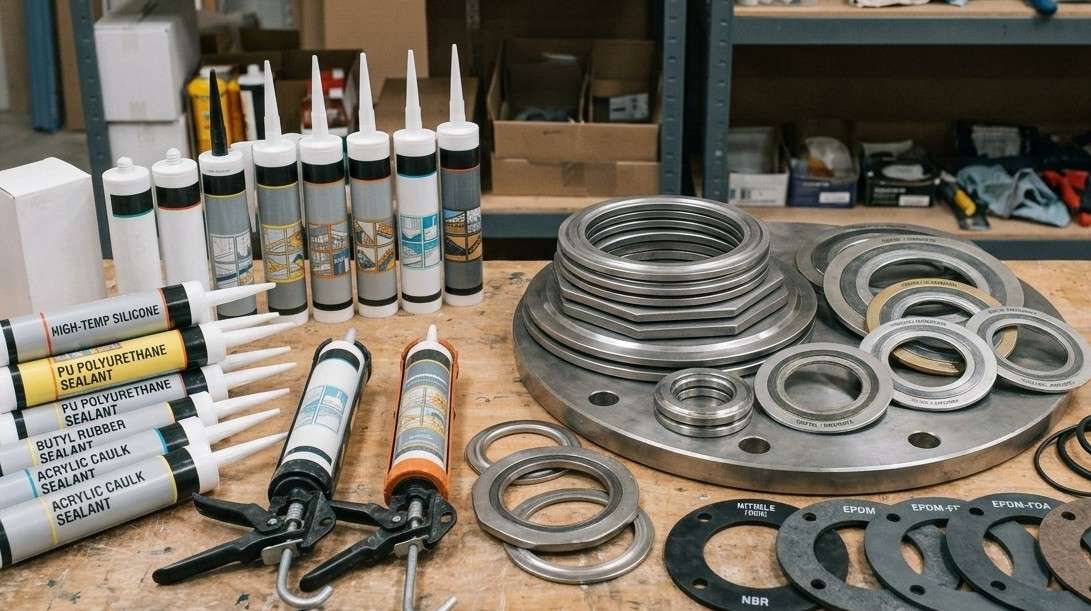
Sealing Product Selection Guide: Materials, Types & Applications
Choosing the right sealing product is essential for preventing leaks, improving equipment performance, and extending the service life of industrial systems. Whether you need a gasket for a pipeline, an oil seal for rotating machinery, or sealing tape for construction applications, selecting the correct material and design can significantly impact reliability.
With many options available, including rubber seals, PTFE gaskets, mechanical seals, foam tapes, and industrial sealing solutions, understanding your application requirements is the first step toward making the right choice.
This guide explains how to choose the right sealing product based on pressure, temperature, chemical compatibility, and operating conditions.
Why Choosing the Right Sealing Product Matters
A sealing product creates a barrier between two surfaces to prevent the movement of liquids, gases, dust, or contaminants. The wrong seal can lead to leakage, equipment failure, increased maintenance costs, and production downtime.
Industries such as oil and gas, manufacturing, construction, automotive, marine, and chemical processing depend on reliable sealing solutions to maintain safety and efficiency.
Selecting the correct sealing material helps achieve:
- Better leak prevention
- Longer equipment lifespan
- Reduced maintenance requirements
- Improved operational safety
- Higher system efficiency
Understand Your Application Requirements
Before selecting a sealing product, evaluate the conditions where the seal will operate. Different applications require different sealing materials and designs.
Identify the Type of Fluid or Medium
The material being sealed is one of the most important factors when choosing a sealing product. A seal used for water systems may not perform effectively with aggressive chemicals, oils, or high-temperature fluids.
Consider whether the application involves:
- Water or steam
- Hydraulic fluids
- Fuel and oils
- Chemicals
- Air or gases
- Food-grade materials
For example, PTFE sealing products offer excellent chemical resistance, while rubber seals are commonly used for general industrial and mechanical applications.
Check Operating Temperature
Temperature directly affects the durability and performance of sealing materials. Some sealing products are designed for extreme heat, while others are better suited for normal operating conditions.
Common sealing materials include:
| Material | Temperature Performance | Common Applications |
|---|---|---|
| Rubber | Low to medium temperature ranges | Pipes, machinery, automotive |
| PTFE | High temperature resistance | Chemical and industrial systems |
| Graphite | Extreme heat applications | Steam and high-temperature equipment |
| Silicone | Wide temperature range | Food, medical, and electrical applications |
Selecting the correct temperature-resistant sealing material helps prevent cracking, deformation, and premature failure.
Consider Pressure Requirements
Pressure rating plays a major role in selecting the right sealing product. High-pressure systems require durable materials and specially designed seals to maintain performance under demanding conditions.
For example:
- Spiral wound gaskets are widely used in high-pressure piping systems.
- Ring type joint gaskets are preferred for oil and gas applications.
- Hydraulic seals are designed for pressure control in hydraulic cylinders and equipment.
Always choose a sealing product that matches the pressure requirements of your application to ensure safe and reliable operation.
Choose the Right Sealing Material
Different sealing materials offer unique advantages depending on the application requirements. Along with individual sealing components, exploring a complete sealing products category can help identify suitable solutions, including gaskets, seals, tapes, and other industrial sealing materials for different operating conditions.
Rubber Sealing Products
Rubber seals are among the most commonly used sealing solutions due to their flexibility, durability, and resistance to vibration. They are suitable for applications where reliable sealing and movement absorption are required.
Common rubber sealing products include:
- Rubber gaskets
- Rubber sheets
- O-rings
- Rubber strips
- Rubber profiles
Rubber sealing products are widely used in plumbing systems, automotive components, construction projects, and industrial equipment.
PTFE Sealing Products
PTFE, commonly known as Teflon, is a high-performance sealing material known for its excellent chemical resistance, low friction, and ability to handle high temperatures.
PTFE gaskets and seals are commonly used in:
- Chemical processing systems
- Industrial pipelines
- Valve sealing applications
- Pharmaceutical equipment
They are ideal for applications where exposure to aggressive chemicals or extreme conditions is expected.
Graphite Seals and Gaskets
Graphite sealing products are designed for applications requiring high-temperature and pressure resistance. They are commonly used in steam systems, boilers, and heavy industrial equipment.
Graphite maintains sealing performance under harsh conditions and provides excellent resistance against heat and chemical exposure.
Select the Correct Type of Sealing Product
Gaskets are used between two stationary surfaces to prevent leakage and maintain reliable connections in pipelines, flanges, engines, valves, and pressure equipment. Businesses looking for reliable sealing solutions often work with an industrial gaskets supplier UAE to source products such as spiral wound, PTFE, rubber, graphite, and CNAF gaskets based on their application requirements.
Gaskets
Gaskets are used between two stationary surfaces to prevent leakage. They are commonly installed in pipelines, flanges, engines, valves, and pressure equipment.
Common gasket types include:
Spiral wound gaskets are widely used in high-pressure piping systems. Choosing reliable spiral wound gasket suppliers in UAE helps ensure the right sealing solution for demanding applications.
- Rubber gaskets
- PTFE gaskets
- CNAF gaskets
- Graphite gaskets
- Ring joint gaskets
Mechanical Seals
Mechanical seals are designed for rotating equipment where preventing fluid leakage is critical. They allow movement between components while maintaining a secure seal.
Common applications include:
- Pumps
- Mixers
- Compressors
- Rotating machinery
Sealing Tapes
Sealing tapes provide a simple and effective method for preventing leaks and improving surface bonding.
Common types include:
- PTFE thread seal tape
- Double-sided foam tape
- Single-sided sealing tape
These products are commonly used in plumbing, construction, electrical, and maintenance applications.
Consider Installation Conditions
Even the best sealing product can fail if it is installed incorrectly. Before selecting a seal, consider installation requirements such as:
- Available installation space
- Surface condition
- Required compression level
- Maintenance requirements
- Replacement frequency
Proper installation ensures better sealing performance and reduces the chances of leakage or equipment damage.
Common Mistakes When Selecting Sealing Products
Many sealing failures happen because of incorrect product selection or poor installation practices.
Choosing Price Over Quality
Low-quality sealing products may reduce initial costs but often result in frequent replacements, downtime, and increased maintenance expenses.
Ignoring Chemical Compatibility
A sealing material that works for water applications may fail when exposed to chemicals, fuels, or industrial fluids.
Selecting Incorrect Dimensions
The wrong size or thickness can prevent proper sealing and lead to leakage issues.
Overlooking Environmental Conditions
Outdoor and industrial environments may expose seals to UV rays, moisture, temperature changes, and harsh operating conditions. Selecting a suitable material helps maintain long-term performance.
Applications of Industrial Sealing Products
Industrial sealing products are used across various sectors where leak prevention and equipment protection are essential.
Common industries include:
- Oil and gas
- Petrochemical
- Construction
- Manufacturing
- Automotive
- Marine
- Power generation
- Water treatment
From pipeline systems to heavy machinery, reliable sealing solutions help improve safety, efficiency, and operational reliability.
How to Choose a Reliable Sealing Product Supplier
A trusted sealing product supplier can help identify the right solution based on your application requirements. Before purchasing, consider suppliers that offer:
- Wide range of sealing products
- Quality-tested materials
- Technical guidance
- Custom sealing solutions
- Industry-specific products
Working with an experienced supplier ensures you receive the correct sealing product for your equipment and operating conditions.
Conclusion
Choosing the right sealing product depends on pressure, temperature, chemical compatibility, and application requirements. Selecting the correct material, such as rubber, PTFE, or graphite, helps prevent leaks, reduce maintenance needs, and improve equipment reliability.
With experience in industrial supply solutions, K. Hashim LLC supports customers in selecting suitable sealing products for various applications. For expert guidance and product details, contact our team to find the right sealing solution for your specific requirements.
Explore More Expert Insights
Discover guides on all hardware, building materials, and electrical products for your next project.
- Pilot Ladder and Manila Rope Guide for Safe Boarding: Guidance on pilot ladders and manila rope for safe vessel boarding.
- Different Types of Electrical Accessories and Their Uses: Overview of common electrical accessories and their uses.
- What Are Welding Gauges? Types, Uses, and How They Work: Basics of welding gauges and their inspection role.
- What Is a Mitutoyo Digital Caliper? Types, Uses & Accuracy: Guide to Mitutoyo digital calipers and accuracy.
- Top Guide to Mitutoyo Bore Gages for Internal Diameter Measurement: Understanding bore gages for internal measurements.
Popular Posts

April 4, 2024

April 22, 2024


May 28, 2024