
- Abrasives & Drilling
- Buttweld Fittings
- Camlock Couplings and Fittings
- Clamps & Couplings
- Deck & Engine Store Supplies
- Fasteners & Hardware
- Fittings & Flanges
- Gaskets
- High-Pressure Pipe Fittings
- Hoses
- Industrial Epoxies & Spray Coatings
- Industrial Fasteners – Bolts, Nuts & Screws
- Industrial Gaskets & Sealing Products
- Lifting & Rigging
- Marine
- Marine Valves & Flow Control Solutions
- Oilfield & Industrial Supplies
- Packing & Industrial Materials
- Pipe Couplings & Expansion Joints
- PPE & Chemicals
- Safety
- Safety Items & Personal Protective Equipment
- Steel Flanges for Piping Systems
- Tools
- Valves
- Industrial Area 1, Sharjah, UAE
- sales@khashim.com
- info@khashim.com
- +971 6 533 8006
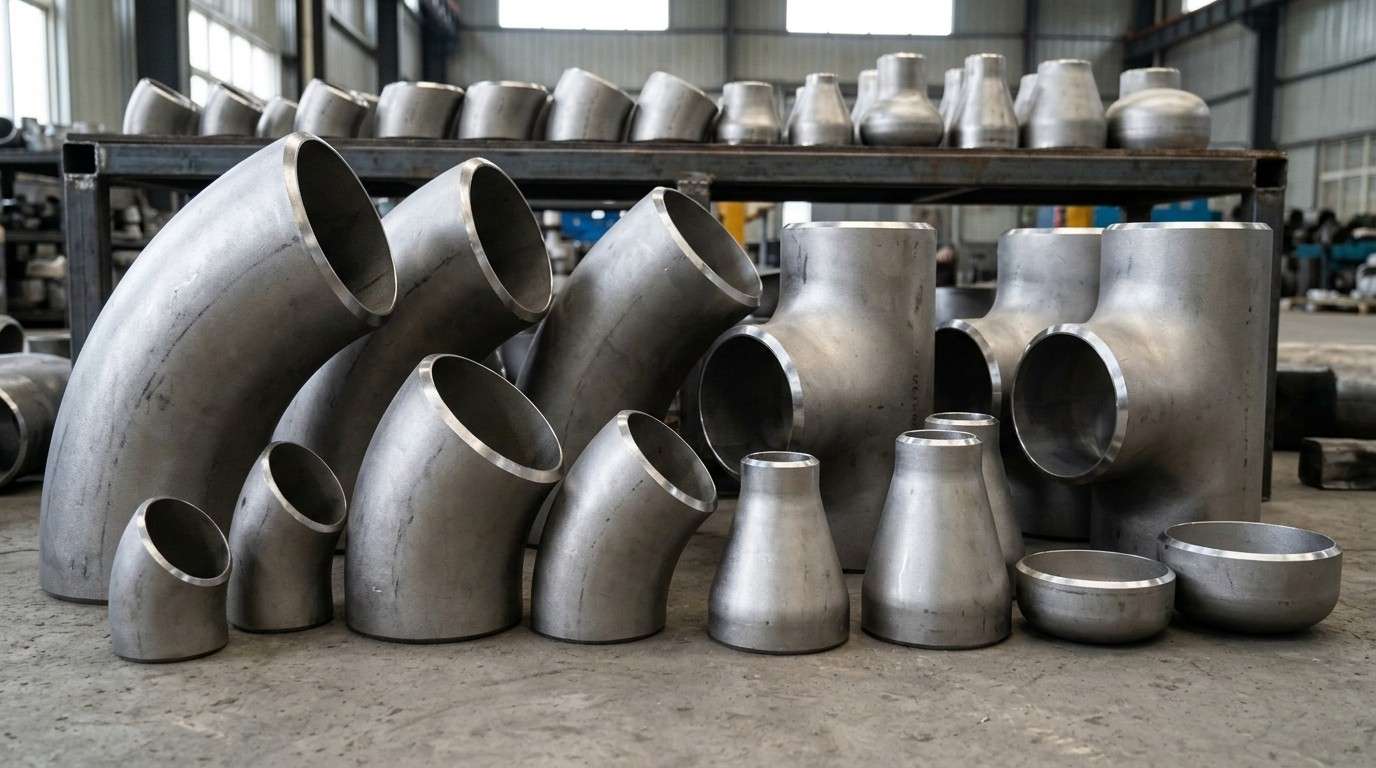
Ultimate Guide to Buttweld Fittings: Types, Uses and Benefits
Anyone working with industrial piping has come across buttweld fittings at some point. They sit quietly inside a pipeline, yet they carry the full pressure of the system on their shoulders. If a fitting fails, the whole line is at risk. That is why understanding what these components are, how they work and where they belong matters so much for engineers, contractors and buyers alike.
This ultimate guide to buttweld fittings, a complete overview of everything you need before your next order, breaks down the basics in plain language so you can make confident decisions the next time you are sourcing fittings for a project.
What Are Buttweld Fittings
A buttweld fitting is a factory made component that connects directly to the end of a pipe through welding rather than threads or bolts. The pipe and the fitting share the same internal bore, so the fluid inside flows without interruption. This creates a joint that is smooth, strong and far less likely to leak compared with mechanical connections.
Because of this reliability, buttweld fittings are the default choice wherever a pipeline carries high pressure, high temperature or hazardous fluids. Refineries, power plants and chemical facilities depend on them every single day.
Common Types Of Buttweld Fittings
Not every fitting does the same job. Each shape exists to solve a specific problem inside a piping network.
- Elbows change the direction of flow, usually at 45 degrees, 90 degrees or 180 degrees
- Tees split a single flow into two paths or combine two flows into one
- Reducers connect pipes of different diameters, either concentric or eccentric
- Caps close off the open end of a pipe permanently
- Stub ends pair with a lap joint flange to allow a removable connection
- Crosses connect four pipe runs at a single point
A long radius elbow is usually preferred in process lines because it creates less turbulence, while a short radius elbow is used only when space is tight.
Materials That Go Into Buttweld Fittings
The material decides how long a fitting will last and what kind of fluid it can safely carry. Carbon steel remains the most common choice because it balances strength and cost, while stainless steel is chosen when corrosion resistance is the priority.
| Material | Typical Grade | Best Suited For |
| Carbon Steel | ASTM A234 WPB | General service, oil and gas, power piping |
| Stainless Steel | ASTM A403 WP304 or WP316 | Chemical plants, food grade lines, seawater systems |
| Alloy Steel | Chrome moly grades | High temperature process piping |
Choosing the wrong material rarely shows up immediately. It usually surfaces months later as corrosion, cracking or unexpected wear, which is why material selection deserves as much attention as the fitting shape itself.
Standards That Govern Buttweld Fittings
Quality in this industry is not left to guesswork. Several standards exist to keep dimensions, tolerances and material properties consistent across manufacturers. No ultimate guide to buttweld fittings would be a complete overview without covering these, since they decide whether a fitting is fit for purpose long before it reaches a job site.
| Standard | Governing Body | What It Covers |
| ASME B16.9 | American Society of Mechanical Engineers | Dimensions and tolerances for wrought fittings |
| ASTM A234 | ASTM International | Material specification for carbon and alloy steel fittings |
| API 5L | American Petroleum Institute | Pipe specification for oil and gas service |
| ISO 9001 | International Organization for Standardization | Quality management during manufacturing |
Working with a supplier who understands these standards saves a lot of trouble later. A fitting that meets ASME B16.9 will fit correctly with pipes and flanges from other manufacturers without any surprises on site.
Where Buttweld Fittings Are Used
The versatility of buttweld fittings makes them useful across many sectors, not just one.
- Oil and gas pipelines that move fluids under extreme pressure
- Chemical processing plants handling corrosive substances
- Power generation facilities running steam and water lines
- Food and beverage plants where hygiene and smooth surfaces matter
- Water treatment and desalination systems
Each of these industries has different priorities, but they all rely on the same underlying strength that a welded joint provides.
How To Choose The Right Buttweld Fitting
Picking the correct fitting is not just about the size on paper. A few practical checks make a real difference.
- Match the fitting material to the pipe material and the fluid it carries
- Confirm the operating pressure and temperature the system will face
- Check that the fitting schedule matches the connecting pipe wall thickness
- Ask for mill test reports and heat traceability from the supplier
- Verify the fitting meets the relevant ASME or ASTM standard for the project
Skipping any of these steps often leads to costly rework once the pipeline is already installed.
A Few Words On Installation
Good fittings can still fail if installation is rushed. The pipe ends need clean, accurate beveling before welding. Tack welds should hold everything in place without shifting the alignment. Once welding is complete, inspection through visual checks or radiography confirms the joint is sound before the line goes into service.
Skilled welders following a proper welding procedure specification make the biggest difference here. Even the best fitting cannot compensate for a poorly executed weld.
Final Thoughts
Buttweld fittings might not be the most talked about part of a piping system, but they hold everything together, often under conditions that would break weaker connections. This ultimate guide to buttweld fittings, a complete overview of types, materials and standards, puts you in a much stronger position when sourcing for your next project.
If you are comparing options for your piping needs, K Hashim LLC is a good place to look through available products and get a clearer picture of what suits your application. You can also Contact our team if you want guidance on choosing the right fitting for your specific project.
Explore More Expert Insights
Explore our expert insights to learn more about buttweld fittings, their types, standards and practical applications.
- Different Types of Buttweld Fittings and Their Applications: A breakdown of buttweld fitting types, materials and where each one is used.
- Pipe Fittings Selection Guide: Types, Features, and Applications: A wider look at choosing the right fitting across residential, commercial and industrial piping.
- Choosing Steel Flanges for Industrial Piping in Dubai: Key factors for selecting the right flange to pair with your buttweld fittings.
- Differences Between Gate Valves and Globe Valves: A comparison to help you choose the right valve for flow control alongside your piping.
- Importance of Expansion Joints in Building Construction: Why expansion joints matter for pipeline and structural durability.
Popular Posts

April 4, 2024

April 22, 2024


May 28, 2024