
- Buttweld Fittings
- Camlock Couplings and Fittings
- Clamps & Couplings
- Deck & Engine Store Supplies
- Fittings & Flanges
- High-Pressure Pipe Fittings
- Hoses
- Industrial Epoxies & Spray Coatings
- Industrial Fasteners – Bolts, Nuts & Screws
- Industrial Gaskets & Sealing Products
- Lifting & Rigging
- Marine Valves & Flow Control Solutions
- Oilfield, Marine & Industrial Supplies
- Pipe Couplings & Expansion Joints
- Safety Items & Personal Protective Equipment
- Steel Flanges for Piping Systems
- Tools, Abrasives & Drilling
- Industrial Area 1, Sharjah, UAE
- sales@khashim.com
- info@khashim.com
- +971 6 533 8006
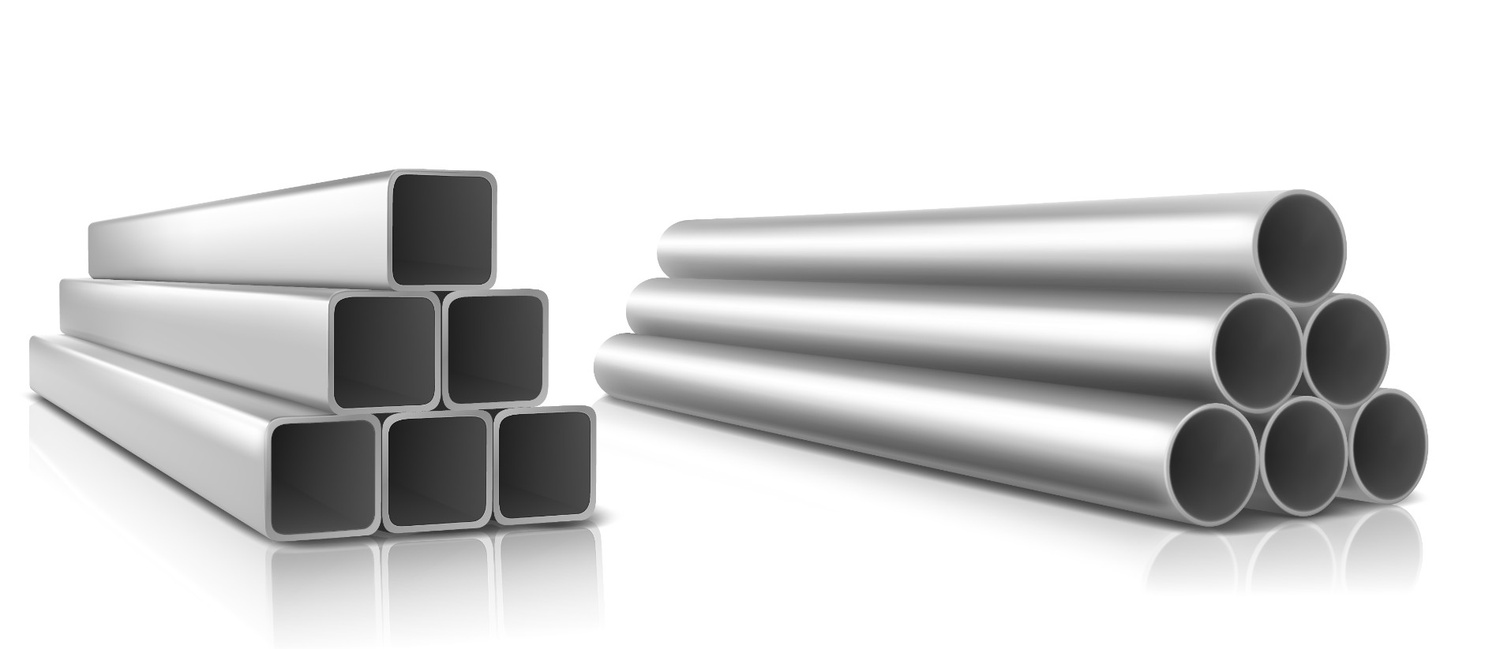
Seamless vs Welded Pipe Fittings: Which One to Choose?
In addition, understanding the difference between seamless vs welded pipe is essential for engineers, contractors, and industrial buyers who want durability, safety, and long term performance.
Steel pipes are used across oil and gas, construction, power generation, and manufacturing industries, but choosing the wrong type can lead to pressure failure, corrosion, or increased maintenance costs.
Although seamless and welded pipes may look similar, their internal structure, strength, and applications are very different.
What Is a Seamless Pipe
A seamless pipe is manufactured from a solid steel billet that is heated and pierced to form a hollow tube. The pipe is then rolled and stretched until the required diameter and wall thickness are achieved.
Since no welding is involved, the pipe has a uniform structure throughout its length. This makes seamless steel pipes highly reliable for high pressure and high temperature applications.
Seamless Pipe Manufacturing Process
The seamless pipe manufacturing process begins with heating a steel billet to high temperatures. The billet is pierced to create a hollow section and then elongated through rolling or extrusion. This process ensures consistent mechanical properties and eliminates the presence of a welded seam.
Seamless Pipe Applications
Also, seamless pipes are widely used in oil and gas pipelines, refineries, power plants, boilers, chemical processing units, and hydraulic systems. These industries require pipes that can withstand extreme pressure and temperature without failure.
What Is a Welded Pipe
A welded pipe is manufactured by forming steel plates or coils into a cylindrical shape and welding the edges together. The welded seam runs along the length of the pipe and is tested to meet industry quality standards. Modern welding technology has significantly improved the strength and reliability of welded pipes.
Welded Pipe Manufacturing Process
Welded pipe production involves rolling steel strips into a round shape and joining them using high quality welding methods. After welding, the pipe may undergo heat treatment, pressure testing, and surface finishing to enhance performance and durability.
Welded Pipe Applications
Moreover, welded pipes are commonly used in water supply systems, construction frameworks, fire protection systems, HVAC installations, and structural steel applications where operating pressure is moderate.
Manufacturing Difference Seamless and Welded Pipe
The main manufacturing difference between seamless and welded pipe is the presence of a welded joint. Seamless pipes are formed from a single piece of metal, while welded pipes rely on a welded seam. This difference affects mechanical strength, pressure handling capacity, and long term reliability.
Strength and Pressure Resistance Comparison
When comparing seamless vs welded pipe strength, seamless pipes offer better resistance to high pressure and mechanical stress due to their continuous metal structure. They perform well in extreme environments where safety is critical.
Welded pipes can also handle pressure effectively when manufactured to high standards, but the welded seam remains the most sensitive area, especially in corrosive or high stress conditions.
Cost Difference Between Seamless and Welded Pipe
Seamless pipes are more expensive due to their complex manufacturing process and higher production costs. They are typically selected for critical applications where performance is more important than cost.
Furthermore, welded pipes are more affordable and widely available in various sizes and thicknesses. Their cost effectiveness makes them suitable for large scale and budget sensitive projects.
Size Availability and Design Flexibility
Welded pipes offer greater flexibility in terms of size and customization. They can be produced in larger diameters and different wall thicknesses. Seamless pipes have limitations in size availability, particularly for large diameter applications.
Surface Finish and Dimensional Accuracy
Welded pipes generally have a smoother surface finish and more consistent dimensions, which is beneficial for structural and aesthetic applications. Seamless pipes may have a slightly rougher finish due to the manufacturing process, but this does not affect their performance.
Seamless vs Welded Pipe Which One Is Better
There is no single answer to which pipe is better. Seamless pipes are ideal for high pressure and high temperature environments, while welded pipes are suitable for standard applications where cost and availability are key considerations.
How to Choose Between Seamless and Welded Pipe
Choosing the right pipe depends on operating pressure, temperature, environmental conditions, and budget. Seamless pipes are recommended for critical high-pressure industrial applications, while welded pipes are effective for general-purpose and structural use.
Selecting the correct high-pressure pipe fittings in Dubai ensures safety, durability, and long-term performance for your project.
AI Overview
In addition, seamless vs welded pipe comparison explaining strength, manufacturing process, cost, pressure resistance, and applications to help choose the right steel pipe for industrial and construction use.
FAQs
Is seamless pipe better than welded pipe?
Yes, seamless pipes offer higher strength, pressure resistance, and corrosion performance, making them better for critical applications.
Can welded pipes be used for oil and gas?
Yes, but mainly for low-pressure and non-critical pipelines. High-pressure oil and gas lines typically require seamless pipes.
Which pipe lasts longer?
Seamless pipes generally have a longer service life, especially in harsh environments.
Why are seamless pipes more expensive?
Due to complex manufacturing, higher material waste, and stricter quality controls.
Final Conclusion
Understanding the difference between seamless vs welded pipe helps industries make informed decisions that improve safety, performance, and cost efficiency. Seamless pipes provide superior strength and reliability, while welded pipes offer flexibility and affordability.
Choosing the right pipe is only effective when you source it from a trusted supplier. K. Hashim LLC is a reliable pipe fitting supplier in UAE, providing high quality seamless and welded pipes for oil and gas, construction, mechanical, and industrial applications.
Contacting a fitting expert today will help you get the right seamless and welded pipe solution for your project and ensure long-term performance and reliability.
Explore More Expert Insights
Explore our expert insights to stay updated on the latest piping solutions, flange types, and industrial best practices.
— Epoxy vs Polyurethane Coatings: Which One Is Better?: Choosing the right coating for maximum protection and durability.
— Choosing the Best Camlock Fitting: A Simple Guide: Choose the right camlock fitting with expert insights on materials, applications, and performance.
— Differences Between Gate Valves and Globe Valves: A quick comparison to help you choose the right valve for precise flow control and long-term performance.
— Different Types of Buttweld Fittings and Their Applications: Explore Buttweld Fittings: Types and Practical Applications
— Importance of Expansion Joints in Building Construction: Importance of Expansion Joints in Building Construction
For general background, read the Pipe article on Wikipedia.
Popular Posts

April 4, 2024

April 22, 2024


May 28, 2024
Stores index
- 01Marine valves19 products
- 02Fittings & flanges10 products
- 03Gaskets & sealing20 products
- 04Fasteners20 products
- 05High-pressure fittings13 products
- 06Epoxies & coatings30 products
- 07Deck & engine store20 products
- 08Safety & PPE12 products
- 09Lifting & rigging7 products
- 10Hoses6 products
- 11Clamps & couplings6 products
- 12Tools & abrasives4 products
- 13Buttweld fittings9 products
- 14Steel flanges8 products
- 15Camlock couplings4 products
- 16Oilfield supplies4 products
- 17Couplings & expansion joints2 products
How an order works
- Send your listItem, size, grade, quantity and delivery location.
- We check stockAvailability is confirmed from our Sharjah warehouse.
- You receive a quotationPriced for your approval, with the delivery terms.
- DeliveryFree on orders of AED 3,000 and above.