- Buttweld Fittings
- Camlock Couplings and Fittings
- Clamps & Couplings
- Deck & Engine Store Supplies
- Fittings & Flanges
- High-Pressure Pipe Fittings
- Hoses
- Industrial Epoxies & Spray Coatings
- Industrial Fasteners – Bolts, Nuts & Screws
- Industrial Gaskets & Sealing Products
- Lifting & Rigging
- Marine Valves & Flow Control Solutions
- Oilfield, Marine & Industrial Supplies
- Pipe Couplings & Expansion Joints
- Safety Items & Personal Protective Equipment
- Steel Flanges for Piping Systems
- Tools, Abrasives & Drilling
- Industrial Area 1, Sharjah, UAE
- sales@khashim.com
- info@khashim.com
- +971 6 533 8006
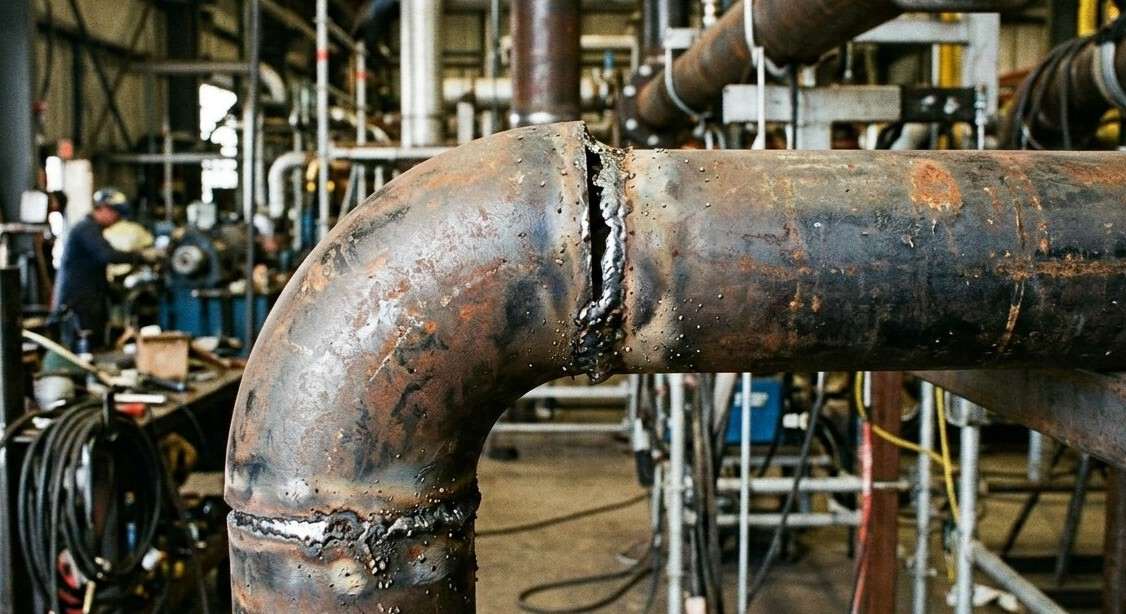
Top 10 Common Mistakes in Buttweld Pipe Fitting Installation
A piping system is only as reliable as the welds holding it together. Buttweld fittings built to ASME B16.9 standards are designed for leak proof, long lasting performance, but even a well certified elbow or tee can fail if it goes in wrong.
After years of working with fabricators, welders and procurement teams across oil, gas and industrial projects, we have seen the same installation errors show up again and again. Here are the ten most common mistakes and what to do instead.
Why Installation Quality Matters in Buttweld Piping Systems
Buttweld fittings are meant to become part of the pipe wall itself. That only happens when the joint is prepared, aligned and welded correctly. A single overlooked step can turn a certified, high quality fitting into a weak point that leads to leaks, corrosion or a full system shutdown later on.
1. Poor Edge Preparation and Beveling
Every strong weld starts before the torch is even lit. If the bevel angle, usually around 37.5 degrees, is uneven or the root face is too thick, the welder cannot achieve full penetration. That leaves a weak joint that is prone to cracking once thermal stress sets in.
2. Incorrect Root Gap During Fit Up
The root gap is the space left between the pipe and the fitting before welding begins. Set it too tight and the weld metal cannot fully penetrate the wall. Leave it too wide and you risk burn through. Precision spacers should always be used to match the Welding Procedure Specification.
3. Misalignment Between Pipe and Fitting
Internal misalignment, often called high low, happens when the bores of the pipe and fitting do not line up evenly. This creates turbulence, flow restriction and localized erosion at the joint. Internal alignment clamps are worth using on any critical or high pressure line.
4. Ignoring Material Compatibility
Mixing the wrong grade of steel with a pipe fitting happens more often than most teams expect. It can lead to galvanic corrosion or mismatched thermal expansion between the two parts. Always check the Mill Test Certificate and heat number before fit up begins.
5. Skipping Preheating on Thick Wall Fittings
Heavy wall fittings, especially Schedule 80 and above, need preheating before welding. Skipping this step allows the heat affected zone to cool too fast and become brittle, which can lead to cracking that shows up well after installation is finished.
6. Contamination and Poor Surface Cleaning
Oil, rust, moisture or grease left on the joint surface can introduce hydrogen or carbon into the weld pool. The result is porosity, tiny trapped bubbles that often only get caught later during radiographic or ultrasonic testing.
7. Missing Back Purging for Stainless Steel Lines
When welding stainless steel or chrome moly pipe, the inside of the pipe needs to be purged with an inert gas such as argon. Without this step, oxygen reacts with the hot metal and causes sugaring on the root bead, which weakens corrosion resistance significantly.
8. Applying Too Much Heat During Welding
More heat does not mean a stronger weld. Excess heat input changes the grain structure of the steel and reduces its toughness. This matters even more for fittings used in low temperature or high stress service.
9. Skipping Post Weld Heat Treatment
Certain wall thicknesses and materials require post weld heat treatment to release internal stress built up during welding. Without it, joints become far more vulnerable to stress corrosion cracking, particularly in sour or H2S environments.
10. Overlooking Non Destructive Testing
A weld can look flawless on the surface and still hide serious defects underneath. Radiographic and ultrasonic testing are not optional extras on large projects. They are the only reliable way to confirm a joint meets the required standard before it goes into service.
Mistakes and Their Consequences at a Glance
| Installation Mistake | Resulting Problem |
| Poor edge beveling | Incomplete penetration and cracking |
| Incorrect root gap | Weak joint or burn through |
| Misalignment | Turbulence and erosion |
| Skipped preheating | Brittle heat affected zone |
| Missing back purge | Loss of corrosion resistance |
| No PWHT | Stress corrosion cracking |
| No NDT | Undetected internal defects |
How to Prevent These Errors on Site
- Train welders on the specific WPS for each material and wall thickness
- Use certified fittings with traceable Mill Test Certificates
- Check bevel angle, root gap and alignment before every weld
- Never skip preheat, back purge or PWHT where the specification calls for it
- Schedule NDT as a standard step, not an optional one
Final Thoughts
The right buttweld fittings only perform well when installation is done with care at every stage. From edge preparation to final inspection, each step protects the strength and safety of the finished pipeline.
For reliable buttweld fittings and industrial piping solutions, K. Hashim LLC supplies certified products built for demanding oil, gas and marine applications. Contact our team to discuss your project requirements and find fittings that match your exact specifications.
Explore More Expert Insights
Explore our expert insights to stay updated on the latest piping solutions, flange types and industrial best practices.
- Types of Buttweld Fittings and Their Applications: A breakdown of common buttweld fitting types and where each one is used.
- Choosing Steel Flanges for Industrial Piping in Dubai: Key factors that determine the right flange for your piping system.
- Flanged Valves vs Threaded Valves What is the Difference: A comparison to help you pick the right valve connection method.
- Tips on Using Fasteners for High Temperature Applications: Guidance on selecting fasteners that hold up under heat and pressure.
- Industrial Hose Guide Types Materials Uses and Fittings: An overview of industrial hose types and how to choose the right one.
Popular Posts

April 4, 2024

April 22, 2024


May 28, 2024
Stores index
- 01Marine valves19 products
- 02Fittings & flanges10 products
- 03Gaskets & sealing20 products
- 04Fasteners20 products
- 05High-pressure fittings13 products
- 06Epoxies & coatings30 products
- 07Deck & engine store20 products
- 08Safety & PPE12 products
- 09Lifting & rigging7 products
- 10Hoses6 products
- 11Clamps & couplings6 products
- 12Tools & abrasives4 products
- 13Buttweld fittings9 products
- 14Steel flanges8 products
- 15Camlock couplings4 products
- 16Oilfield supplies4 products
- 17Couplings & expansion joints2 products
How an order works
- Send your listItem, size, grade, quantity and delivery location.
- We check stockAvailability is confirmed from our Sharjah warehouse.
- You receive a quotationPriced for your approval, with the delivery terms.
- DeliveryFree on orders of AED 3,000 and above.